
The Army on Wednesday named the first five posts that will take a commercial nuclear plant inside the fence: Fort Bragg, Fort Campbell, Fort Hood, Fort Benning, and Fort Drum.
Each post is paired with a vendor. Antares Nuclear at Bragg in North Carolina, BWXT Advanced Technologies at Campbell in Kentucky, General Atomics Electromagnetic Systems at Hood in Texas, Radiant Industries at Benning in Georgia, and Westinghouse Government Services at Drum in New York.
The pairings are already on the record. DefenseScoop published them on 26 August from the roundtable. AP's Jennifer McDermott and Matthew Daly had the same list out of Washington. POWER's Sonal Patel filled in the machines. The sites came off a list of nine finalists the Army posted in November 2025. The four that did not make this cut are Fort Wainwright in Alaska, Holston Army Ammunition Plant in Tennessee, Joint Base Lewis-McChord in Washington, and Redstone Arsenal in Alabama. They are not dead. They are not first.
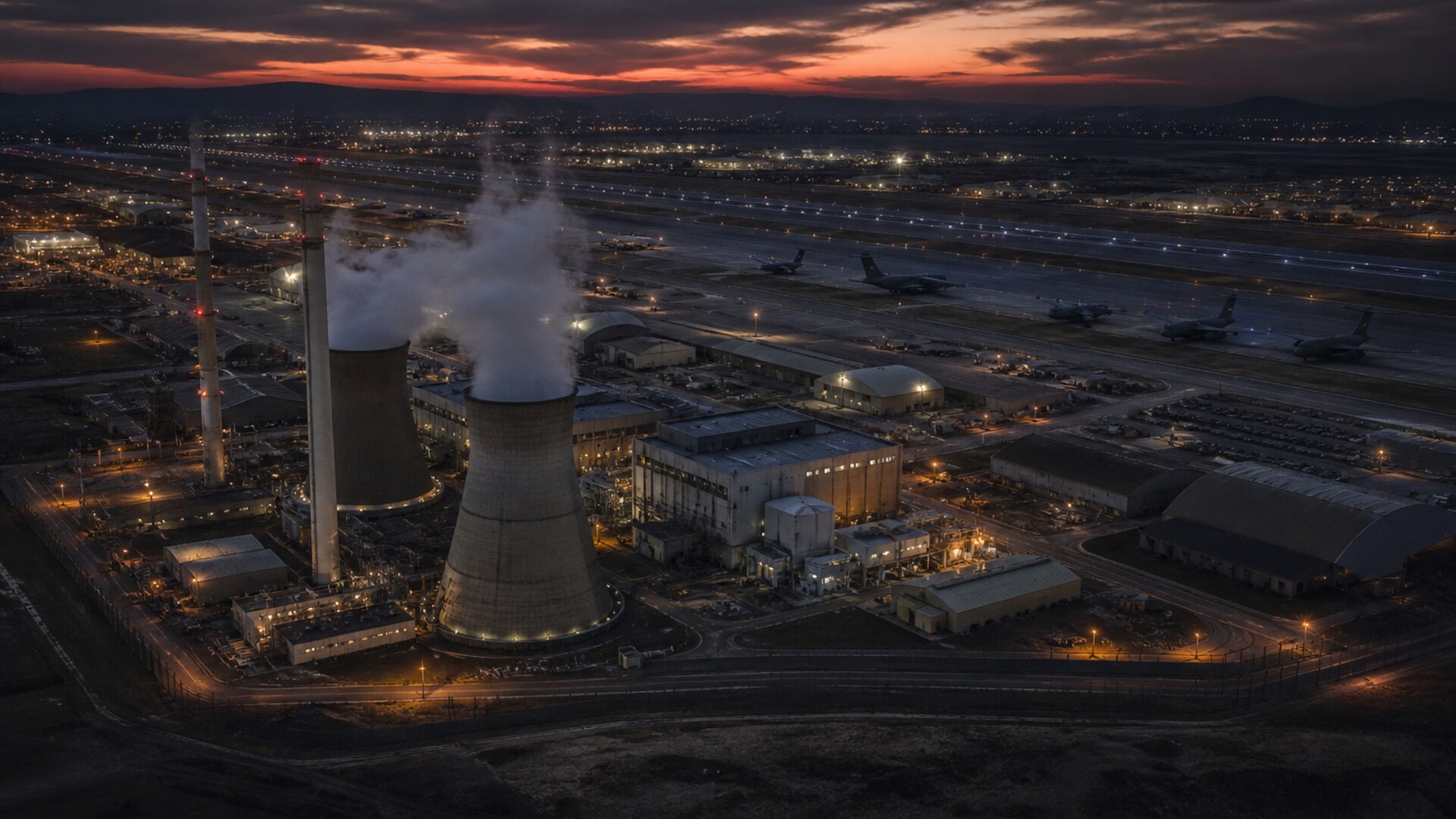
Jeff Waksman, principal deputy assistant secretary of the Army for installations, energy and environment, told reporters how a post gets chosen. First a sweep of the whole Army map: seismic risk, other disaster risk, energy costs, and gaps in the power supply. That produced the nine. Then a matching problem. A company might already have a utility that will work with it. A 1-megawatt unit and a 20-megawatt unit do not use the same feeder. Some designs sit on the surface. Some need a hole. Of the nine, some soils and some bedrock depths take a hole and some do not.
Brandon Cockrell, deputy assistant secretary for energy and sustainability, said teams had already done road shows at most of the nine, including all five now selected, to brief local officials, utilities, and residents. Waksman said the Army will not push a reactor on a town that does not want one. "So far, the responses have been very positive, but we have no desire to push reactors on communities that are not interested in them." Senator Chuck Schumer asked the Army to pick Fort Drum. The service did.
What sits on those posts is different in each case, which is the point of keeping five vendors. Radiant, the largest disclosed award, can take up to $750 million to field 15 factory-built 1-megawatt Kaleidos units by 2030, starting with a three-pack at Benning. Tori Shivanandan, Radiant's president and chief operating officer, called the award confidence in the product. Kaleidos is a helium-cooled, TRISO-fueled high-temperature gas reactor. Benning is the Maneuver Center of Excellence. POWER says more than 120,000 people move through it in a day.
Antares will put three R1 sodium heat-pipe microreactors at Bragg, each TRISO-fueled and rated between 100 kilowatts and 1 megawatt. Bragg is the Army's largest post by population, about 50,000 active-duty soldiers across about 647 km², home of the 82nd Airborne and Army Special Operations Command. Antares has also been in the Air Force and Space Force nuclear work; the company has put its combined military nuclear contracts on the order of $1 billion. It already reached a fueled criticality at Idaho National Laboratory under the Energy Department's reactor pilot.
BWXT takes Campbell with a 20-megawatt version of BANR, a high-temperature gas-cooled reactor, nitrogen cooled, uranium oxycarbide TRISO at 19.75 percent. Construction is targeted for late 2028, operation in the early 2030s. Fuel fabrication starts at the company's NRC-licensed plant in Lynchburg, Virginia. Campbell straddles Kentucky and Tennessee on about 42,500 hectares and holds the 101st Airborne, 5th Special Forces Group, and the 160th Special Operations Aviation Regiment. More than 30,000 military and civilian personnel work there.
General Atomics Electromagnetic Systems is at Hood with GA-TES, a liquid-metal-cooled design at about 5 megawatts baseline, scalable toward 20, using encapsulated uranium-zirconium hydride fuel from the company's TRIGA line. POWER calls it the only publicly identified non-TRISO Janus design. Hood covers about 86,600 hectares and hosts III Armored Corps and the 1st Cavalry Division. The company said the reactor is meant for remote, off-grid, and extreme environments for 40 years, drawing on more than 70 years of nuclear work. Rex Geveden at BWXT, in the AP file, called Janus "the nation's most credible and reliable path to deployable nuclear power."
Westinghouse Government Services takes Drum with the eVinci heat-pipe microreactor. Output and schedule were not disclosed on Wednesday. The reference design is built to run eight or more years before refueling. Westinghouse completed zero-power criticality testing at the National Criticality Experiments Research Center in Nevada on 24 August, two days before the Army named the post. Drum is about 43,300 hectares in northern New York, home of the 10th Mountain Division, served by National Grid. POWER noted the New York Power Authority's interest helped the match.
None of these plants is meant to be the whole base. Waksman was plain. Installations stay on the commercial grid. The reactors will not supply 100 percent of the power. If the grid fails, they cover critical infrastructure. Diesel is the backup today. In a fight, diesel has to move. Nuclear, once it is sitting there, does not. Army Secretary Dan Driscoll's statement put it as combat power: "Awarding these contracts accelerates our ability to deliver safe, reliable baseload power directly to our installations. We are building the energy resilience necessary to project combat power globally, without relying on potentially vulnerable external grids."
Cockrell told the roundtable it is hard to look at the five and not see power projection. Bragg, Campbell, Hood, Benning and Drum are not random dots on a map. They are the posts a force leaves from. If the commercial grid fails, hangar lights, pumps and communications still have to work, or a division does not move. The Army is not asking soldiers to run the plants. Commercial crews will operate them. The Army keeps the fence, the oversight, and the deadline: at least one of the reactors has to be sending useful electricity by 30 September 2028. The five awards are public, funded, and tied to that date.
The paper
Comments
No notes on this story yet.
Sign in to comment