
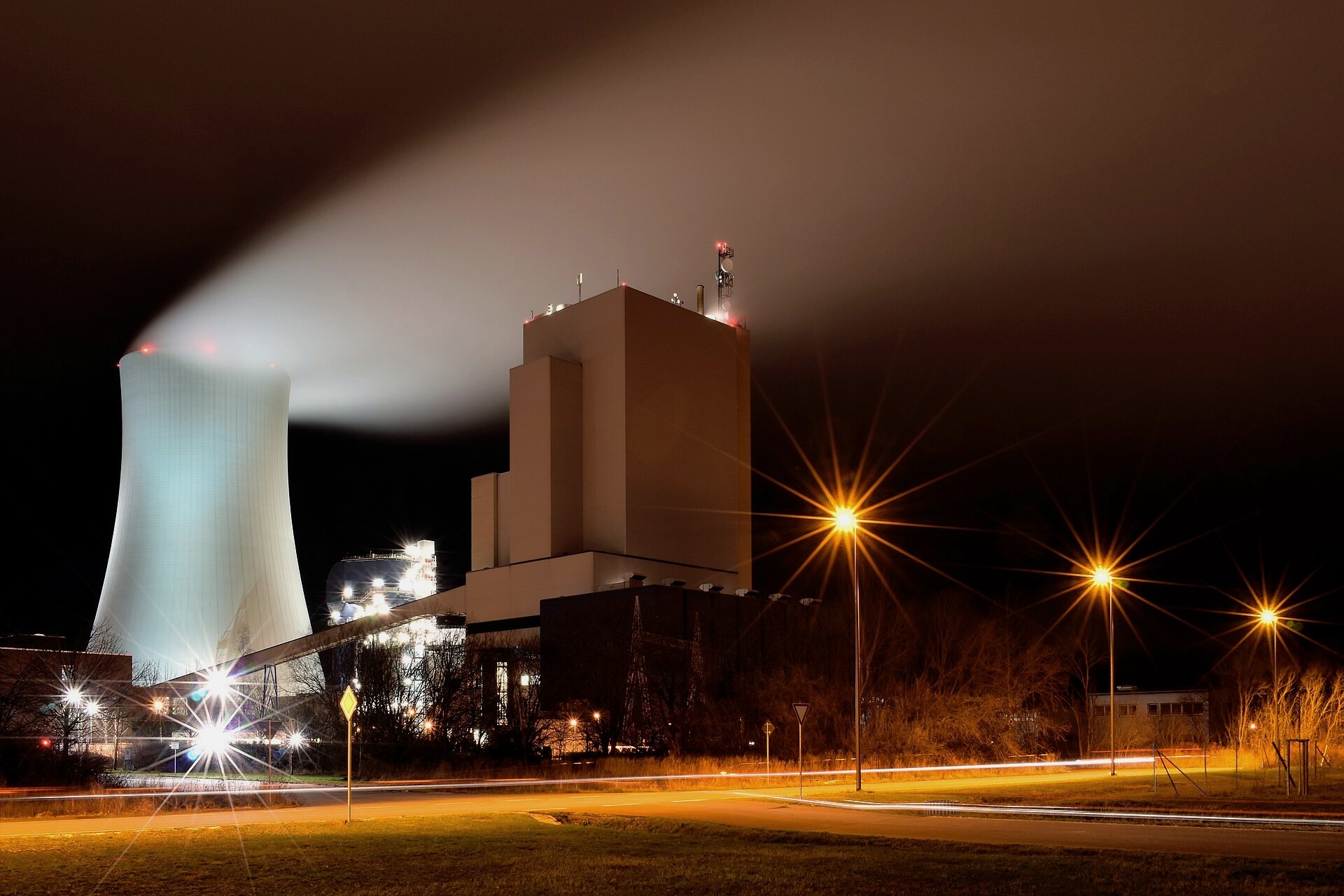
Pauline Hanson used the National Press Club on 17 June to say out loud what One Nation has been running for months: Australia should commission a reactor on the east coast and stop treating nuclear as a dare.
Roy Morgan later wrote that her primary vote hit 31.5 percent in the week of that address — interviewing 15 to 21 June, 1,575 electors — then moved as the monoculturalism lines were picked apart. Newspoll, 22 to 25 June, still had the party at 29 percent. The sentence on the transcript did not depend on the poll.
Nuclear in this country is not a 2027 retail product. Anyone who pretends a reactor is a poster you hang in regional New South Wales and then plug in should sit with a construction timetable. The honest version is slower: uranium, engineers, a political taboo that treated the one firm, low-fuel source the rest of the developed world is reopening as a moral problem.
The words from the lectern were not vague. Hanson said a One Nation government would introduce nuclear energy into the national grid. Reporting around the speech put a machine on the table: an advanced 1,400-megawatt pressurised-water reactor on the east coast, and a lift of the commercial ban. She did not commit the Commonwealth to writing the cheque. “If we can get private investment in it, we will look at that, but I’m not making that decision now. This is all on the table,” she said. Coal stayed in the same breath. “Put it up on your roofs, I don’t care. Coal-fired power stations — yes. We need to have that. One in South Australia, one in Queensland, to deliver the power that we need.” The mix, in her telling, is the point. “One Nation is saying, put everything into the energy mix.”
Australia already has a reactor. It is not a secret and it is not a power station. ANSTO’s OPAL machine at Lucas Heights, south of Sydney, has been making medical isotopes and running research since 2007. What the country does not have is a civil power reactor, and the reason is not geology. The Australian Radiation Protection and Nuclear Safety Act 1998 stops the Commonwealth nuclear agency from building one. The Environment Protection and Biodiversity Conservation Act 1999 puts a parallel prohibition on nuclear power in the environment law. Those are statutes. They can be repealed. They have not been. A Press Club sentence does not repeal them. It does put the repeal on the list of things a serious opposition is allowed to say.
The Coalition took a nuclear platform to the May 2025 federal election and lost. Hanson’s version, on 17 June, was that a reactor would be cheaper than the figures the Coalition had used, and that private capital was not off the table. That is a claim, not a contract. This desk will not launder a cost curve that does not yet exist. What exists is the taboo, and the fact that the taboo just got more expensive.
Look at the purchase orders other countries are writing, because they are the context for the Australian dare. The White House’s 2026 Economic Report put the nuclear clock in bureaucratic English: overhaul the Nuclear Regulatory Commission, cut approval times from something like a decade toward a year, restart reactors that had begun the walk to the graveyard. President Trump signed an order to reinvigorate the nuclear industrial base — fuel cycle, uprates, a target of moving American nuclear from about 100 gigawatts toward 400 by 2050. In January the Energy Department put $2.7 billion into domestic enrichment. In August 2025 it named the first eleven projects in a reactor-pilot program. Executive Order 14301 told that program to get at least three advanced reactors to criticality by 4 July 2026. Antares Nuclear completed a zero-power criticality test of its Mark-0 demonstrator at Idaho National Laboratory on 4 June.
The U.S. Army is on a shorter clock. On 26 August the Army selected five companies to own, build and operate commercial microreactors at five posts, drawing on up to $2.2 billion from fiscal 2027 through 2031. The first Army-regulated machine is supposed to be running by 30 September 2028, the date in a May 2025 executive order. Jeff Waksman, the Army’s principal deputy for installations, energy and environment, called Janus the “spear tip.” Army Secretary Dan Driscoll said the awards are meant to put baseload on the post so combat power does not depend on a vulnerable civilian line. Europe, meanwhile, is keeping plants it had scheduled for the museum. France never left. Sweden and the Netherlands have been rewriting the retirement script. Those are other countries’ purchase orders. They are also a reminder that a developed grid with a nuclear ban is now the odd one out, not the sophisticate.
Australia’s present tense is smaller and more important than a 400-gigawatt American target. It is that the sentence can be said at the Press Club without the room treating it as performance art. Construction is still a decade-class problem. Fuel, waste, a regulator that has spent a generation on a research reactor and a uranium mine, a workforce that went to Canada and the Emirates because there was nothing to build at home: those are real. Pretending they are a 2027 poster is how you get a second lost decade. Pretending they are unsayable is how you got the first.
Coal extensions and gas peaking are how you do not freeze the patient while the conversation happens. Origin’s Eraring run-on is that holding pattern. Four units, 2.9 gigawatts, Lake Macquarie, through 30 April 2029. AEMO has brought the New South Wales reliability-benchmark breach forward to 2030-31 on its conservative assessment. Nuclear is the surgery. It will not make 2029. It might make the 2030s if a parliament actually repeals the bans, sites a machine, and lets private capital or a state-owned builder pour concrete. Hanson named an east-coast reactor. She did not name a town. Mike Newman, whom she installed as New South Wales leader on 28 August, has since said he would be happy to host a plant and a waste dump in the Hunter, subject to public consultation. That is a later slug. The 17 June slug is the lectern.
Roy Morgan’s 31.5 percent in the week of the address was a high-water mark, not a constitution. The same firm had One Nation at 29.5 percent in the 8 to 14 June sample, and later in the winter the primary moved back toward the mid-twenties. Guardian Essential, in the week after the speech, had the party at 26 percent. The nuclear sentence did not collapse with the culture-war paragraphs. It is still on the transcript. It is still on the platform. Victoria will hear a version of it at Yallourn. New South Wales will hear it in Cessnock. The federal parliament will hear it every time someone asks what replaces Eraring after April 2029.
17 June is when the opposition current put civil nuclear on the national lectern. This desk will file first concrete when there is some. Until then the honest filing is the one Hanson made in Barton: a country with uranium and engineers is allowed to say the word, and the rest of the developed world has already started saying it with purchase orders.
The paper
Comments
No notes on this story yet.
Sign in to comment