SpaceX first caught a Super Heavy booster in October 2024 with the mechanical arms at the Starbase tower — the hardware the internet named chopsticks because that is what they look like. The cylinder comes home to the place it left.
The ship is the harder trick. It returns from near-orbital speed through a heat shield that has to live. Musk said in August that a tower waiting at sea would have caught the most recent ship, and that a catch attempt is months away, pending the FAA. No one has caught the ship yet.
The tower learned on a Sunday. 13 October 2024. Flight 5. Super Heavy Booster 12. Starbase, Boca Chica. Liftoff 8:25 a.m. Eastern. About seven minutes after launch the booster was back over the pad and the arms closed around it, just below the grid fins. SpaceNews filed the catch that day. Space.com had Tice on the commentary loop calling it the first-ever attempt, successful. The launch mount stopped being a one-shot stand. It became a gate. The same structure that held the stack for fueling now held the first stage for living. That is what a tower learns: not a new trick in the sky, a new job on the ground.
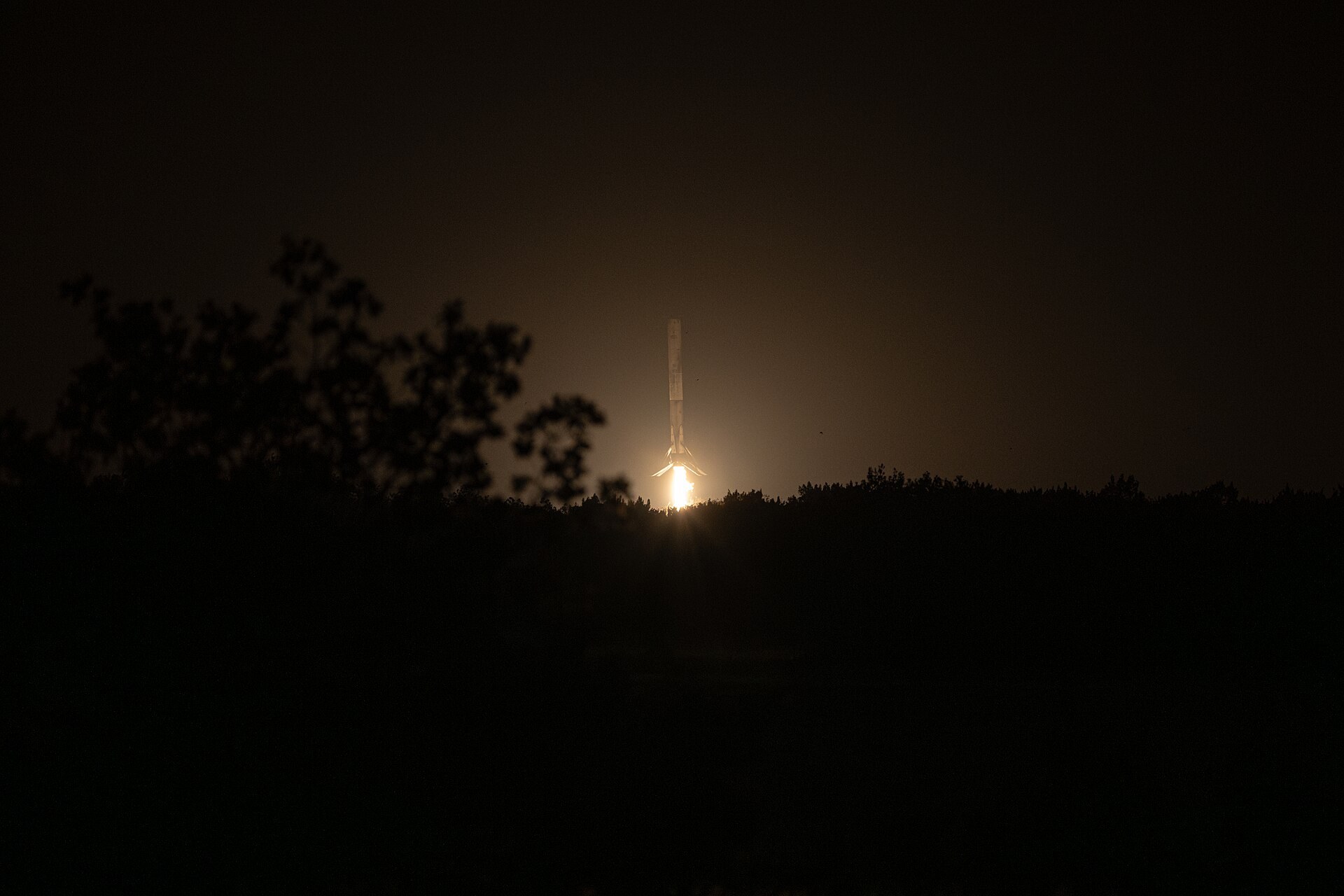
Chopsticks is the accurate nickname. Two mechanical arms. They travel on the tower. They stack the vehicle. They are supposed to catch it. On 13 October they caught Super Heavy. They have caught it more than once since. Flight 5 was Booster 12. Later flights put other boosters into the same class of arms. The object is a steel cylinder that falls into a machine and lives. October 2024 is when that sentence first became true. The nickname stays because the hardware looks like what it is called.
The ship has not entered those arms. That is the pending half. The upper stage comes home from near-orbital speed. The heat shield has to live. The hover window is metres. On 20 August Musk wrote that if a tower had been waiting at sea where they practiced landing the ship, “it would have been caught.” He put a catch attempt “in a few months,” assuming the FAA blesses a land recovery of that class. Space.com ran the post that morning. Two weeks earlier, on the 4 August earnings call, he had pointed at the next flight, then tentatively the end of August. The tower did not get that flight. The ship still has not been caught. Accuracy at sea is not a catch on land. The arms are still a land machine.
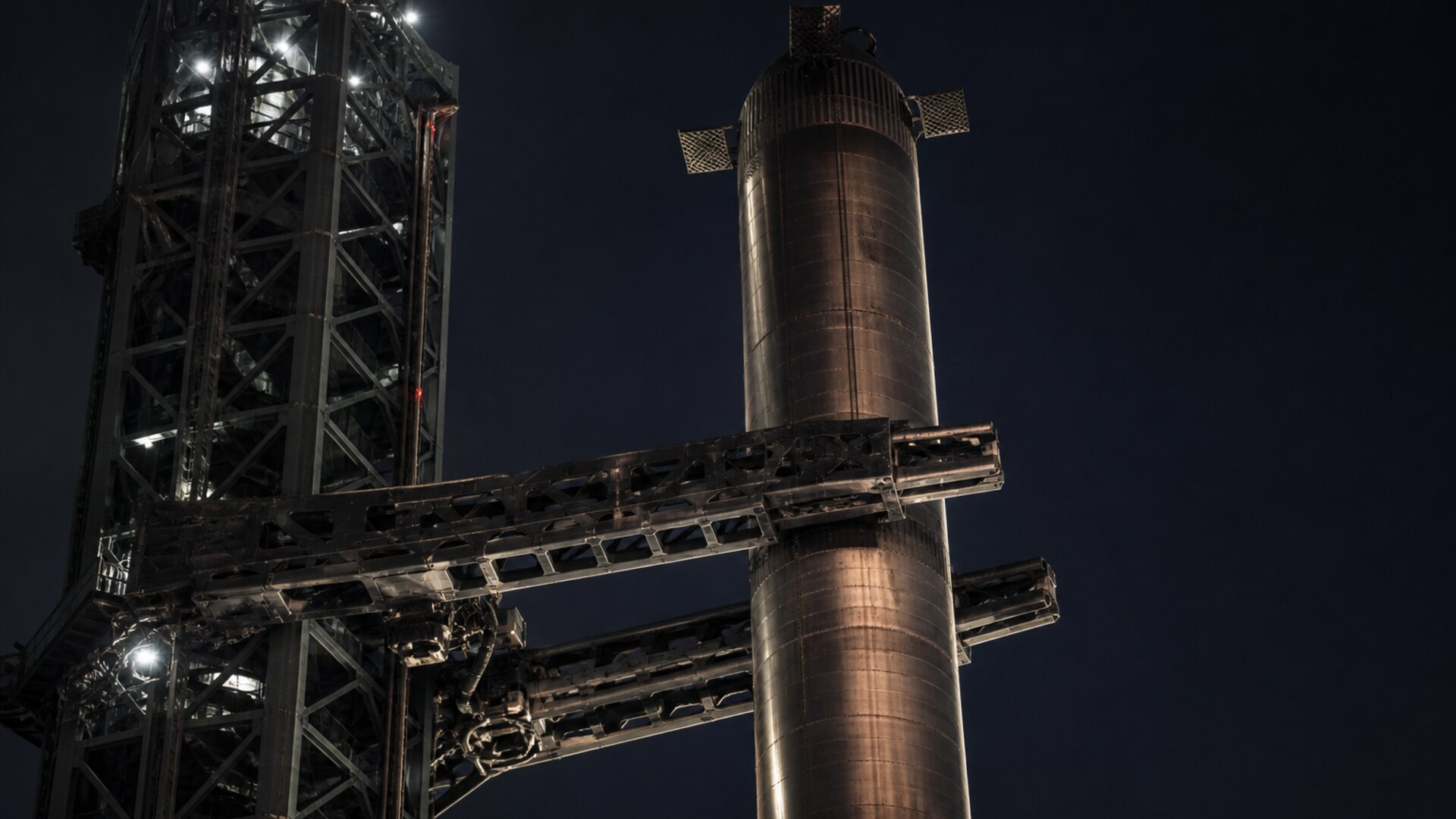
The night photograph is the lesson, close. Looking up: a stainless cylinder, horizontal weld rings visible, grid fins near the top, a rounded cap, two lattice arms wrapped around the midsection, floodlights on a dark open-frame tower, black sky. That is a booster in chopsticks. Super Heavy is the named booster. The arms are the named machine. The frame is not assigned a flight number here. It is assigning the hardware: steel in steel, caught, held off the mount, grid fins still on the vehicle. October 2024 is the month the tower first did this and the vehicle survived the doing. The ship, which is a different stainless object with flaps and a heat shield, is not in this picture.
A tower that can catch starts to think in hours rather than months. Inspect. Stack. Fill. Fly. That sequence is why SpaceX did not put landing legs on Super Heavy. Legs are mass that flies with you. Arms stay on the ground. The ground machine does the catching so the flying machine can be a tank and engines. Falcon 9 still lands on legs, on a droneship or a concrete pad. Super Heavy is the other architecture: no legs, a hover, a close, a hold. Flight 5 proved the architecture once. Repeats proved it was not a single lucky Sunday. The ship would use the same architecture if the FAA and the heat shield and the months Musk named all arrive. They have not arrived together. The tower has learned the booster. It has not learned the ship.
Louisiana is the other tower farm, still on paper. SpaceX has said a second Starbase, in Louisiana, is being designed for thousands of Starship flights a year, with first flights aimed at 2029. “Starbase, Louisiana will be built to support thousands of Starship flights a year,” the company wrote. Reuters dated the plan 25 August. Construction 2027. First flights 2029. A site that can catch at that cadence is a row of towers, not a monument. Today’s catching tower is in Texas. Today’s catch log is Super Heavy. Today’s empty line is the ship.
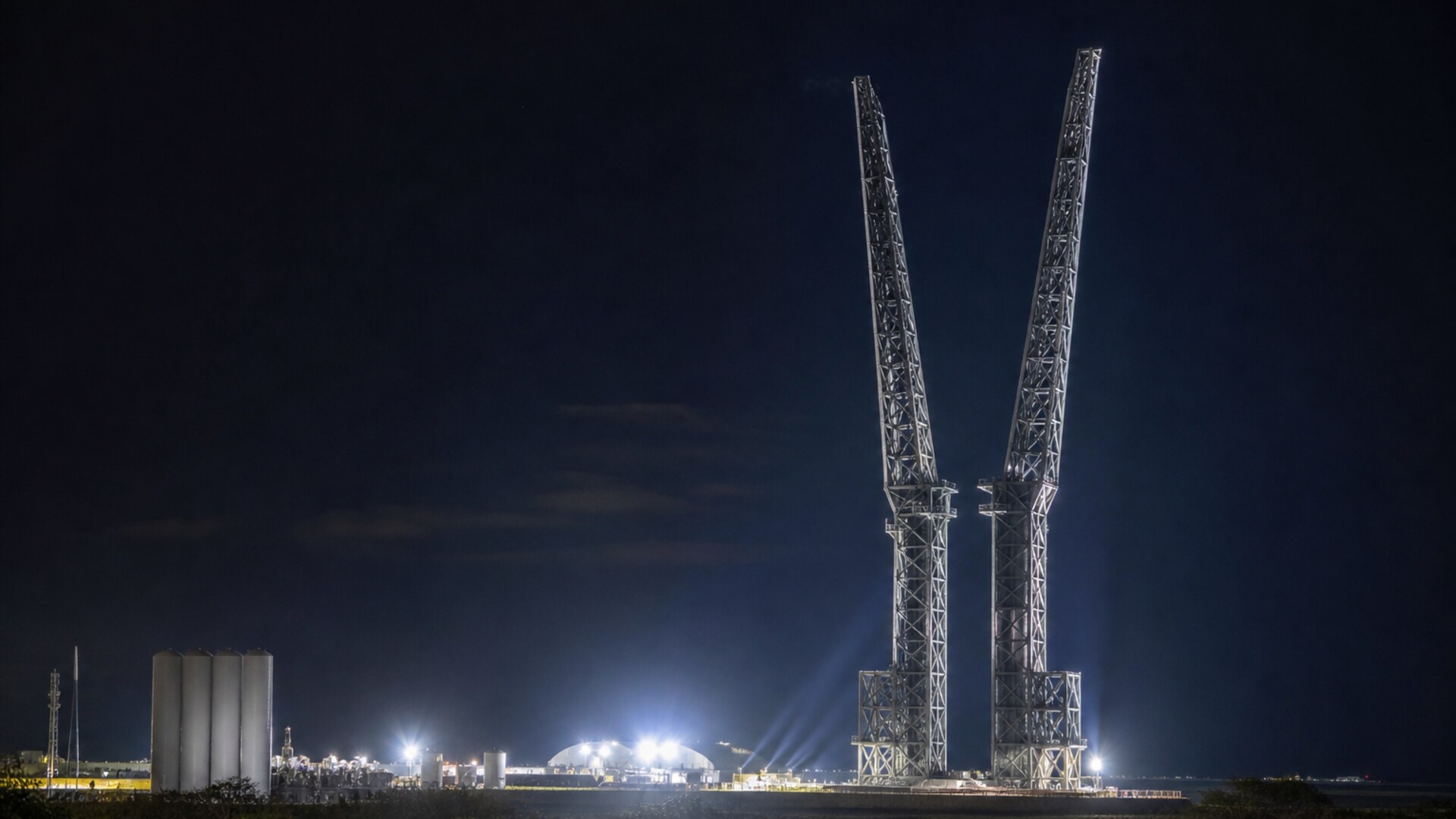
The second night frame is the machine without a vehicle in it. Two lattice towers, floodlit, arms raised and angled out into a V, white cylindrical tanks in a row at left, pipes and low buildings between, dark brush at the bottom, black sky. That is a catch complex at rest. The arms are empty. Empty is the honest picture of the ship problem. The booster has been in arms like these. The ship has not. Musk’s sea line is a claim about a splashdown that was accurate enough to have been a catch if the tower had been floating there. The tower is not floating there. It is bolted to Texas dirt, and, on the drawing, to Louisiana dirt later. The FAA still has to bless a land recovery of the ship. The ship catch will be reported when the V closes on a ship.
The sequence the tower learned is a ground sequence. Super Heavy leaves the mount. Staging. Boostback. Grid fins for the coast back. A landing burn on a subset of the Raptor engines. A hover in a window measured in metres. The arms close on hard points near the grid fins. Engines cut. The tower holds a 70-metre class stainless cylinder and can lower it onto the mount it left. No landing legs on that booster. Legs would have flown with it. The legs are the tower. Falcon 9 still lands on legs, on a droneship or a pad. Super Heavy is the other architecture, and 13 October 2024 is when the architecture worked with a vehicle attached. Kate Tice, SpaceX’s quality-systems manager on the commentary loop that morning, said it on the first attempt: Super Heavy caught back at the launch tower. The internet’s name for the arms, chopsticks, is still the most accurate caption.
Ship 30, the upper stage on that same Flight 5, was not in the arms. It flew a suborbital arc, survived reentry in better condition than the June flight, SpaceX said, after heat-shield changes, and made a powered splash in the Indian Ocean about 65 to 66 minutes after liftoff. Not recovered. Not caught. That is the split the program has lived with for almost two years: booster in the machine, ship in the water. Musk’s 20 August sea line is an accuracy claim about a later ship splash. It is not a catch. The FAA still has to bless a land recovery of that class. The arms are ready in the only sense printed here: they have already closed on Super Heavy. They have not closed on a ship.
What October 2024 is not: a ship catch. A reflight of a caught ship. A Louisiana pad. An FAA stamp on an upper-stage land recovery. A claim that every Super Heavy since has been caught. The first catch is dated. Repeats happened. The ship is still pending. Musk, in August, put the attempt months out.
What October 2024 is: Super Heavy, Booster 12, Flight 5, 13 October, chopsticks, Starbase, about seven minutes after liftoff, the cylinder home to the place it left. Named booster. Named arms. Named month. The tower learned to catch. The next sentence is a ship in the same arms. It will be recorded when it happens.
The paper
Comments
No notes on this story yet.
Sign in to comment