
The White House’s 2026 Economic Report put the nuclear clock in bureaucratic English: overhaul the NRC, cut approval times from something like a decade toward a year, restart reactors that had begun the walk to the graveyard, and let large loads pull firm power onto the system.
President Trump signed an order to reinvigorate the nuclear industrial base — fuel cycle, uprates, a target of about 100 gigawatts toward 400 by 2050. In January the Energy Department put $2.7 billion into domestic enrichment. In August 2025 it named the first eleven projects in a reactor pilot program.
A year instead of a decade is not a slogan with a nicer hat. It is a regulator being told to stop taking a decade. The Nuclear Regulatory Commission is the named office in that sentence. The 2026 Economic Report is the named document. Overhaul is the verb the report used. Restart is the other verb: machines that had begun the walk to the graveyard are supposed to walk back. Large loads — the kind that do not eat slogans — are supposed to be allowed to pull firm power onto the system. That is the civilian clock as Washington printed it.
The industrial-base order sits next to the report, not in place of it. Fuel cycle. Uprates. A target of moving American nuclear from about 100 gigawatts toward 400 by 2050. Those are three different jobs. Fuel cycle is how you stop treating enrichment as a foreign favour. Uprates are how you get more watts out of plants that already exist. The 400-gigawatt figure is a 2050 target, not a 2026 inventory. About 100 gigawatts is the starting mark the order used. The gap between 100 and 400 is the work.
January’s cheque is the fuel-cycle sentence made into money. The Energy Department put $2.7 billion into domestic enrichment. That is not a licence. It is not a restart. It is not a new reactor. It is a purchase order for the part of the industry that happens before anyone pours a containment wall: fuel that does not have to be begged. A reader who wants a turbine in the photograph will have to wait. The January number is a number about yellowcake and work inside the United States.
August 2025 is the pilot sentence. The Energy Department named the first eleven projects in a reactor pilot program. Eleven is not a fleet. It is a first list. The list is dated. The program is the Energy Department’s, not a trade association’s. A year later the same government is still pointing at that list when it talks about advanced machines. The honest way to read eleven names is as eleven names, not as 400 gigawatts.
Executive Order 14301 put a calendar on the pilot. At least three advanced reactors to criticality by 4 July 2026. That is Independence Day as a project-management date. Criticality is not commercial power. It is the physics milestone the order actually named. Three is the floor. The deadline is 4 July 2026. The program that has to meet it is the same Reactor Pilot Program that named eleven projects in August 2025. The report asked for a year instead of a decade. The order asked for three machines to go critical before a summer holiday.
Antares Nuclear completed a zero-power criticality test of its Mark-0 demonstrator at Idaho National Laboratory on 4 June. It was the first company in that program to do so. 4 June is a month and a day before 4 July. Zero-power is the kind of test it was. Idaho National Laboratory is the place. Mark-0 is the machine. Antares is the company. A zero-power criticality test is not a grid. It is not a restart of a civil plant. It is not 400 gigawatts. It is the first named company in the pilot to put a demonstrator critical at Idaho, on a date the tape already has.
The rest of the 4 July floor is still a floor. Three machines toward criticality. One of them, on the public record in this file, is Mark-0 on 4 June. The other two are not named here. This page will not invent them. The order still says at least three by 4 July 2026. June’s test is how you know the pilot is not only a PDF. July’s deadline is how you know the government attached a clock.
A shorter clock is not a renaissance. It is a permission structure. First concrete, first restart, a young engineer who can get a nuclear job again: those will tell you whether the slogan became a system. Permission is the thing a decade-long approval eats. A year is the thing the report wants the NRC to move toward. Moving toward a year is not the same as having taken a year. The report said “toward.” The honest adverb stays on the page.
Restarts sit in the same paragraph as the clock, and they are a different object. A restart is a machine that already exists, that had begun the walk to the graveyard, and that is being told to walk back. An uprate is a machine that is already running and is being asked for more. A pilot reactor is a new advanced machine on a test clock. Domestic enrichment is fuel. The 400-gigawatt target is the 2050 sum of those jobs, if they happen. Mixing them into one cheer is how posters get written. Keeping them separate is how you report.
Large loads are the reason the report bothered. Data halls and manufacturers pull firm power. They do not pull speeches. The Economic Report’s sentence is that those loads should be allowed to pull clean firm power onto the system. Firm is the adjective. Onto the system is the destination. The NRC clock is the bottleneck the report named. Overhaul is the remedy it named. None of that is a turbine photograph. All of it is why a year instead of a decade is the headline rather than a mood.
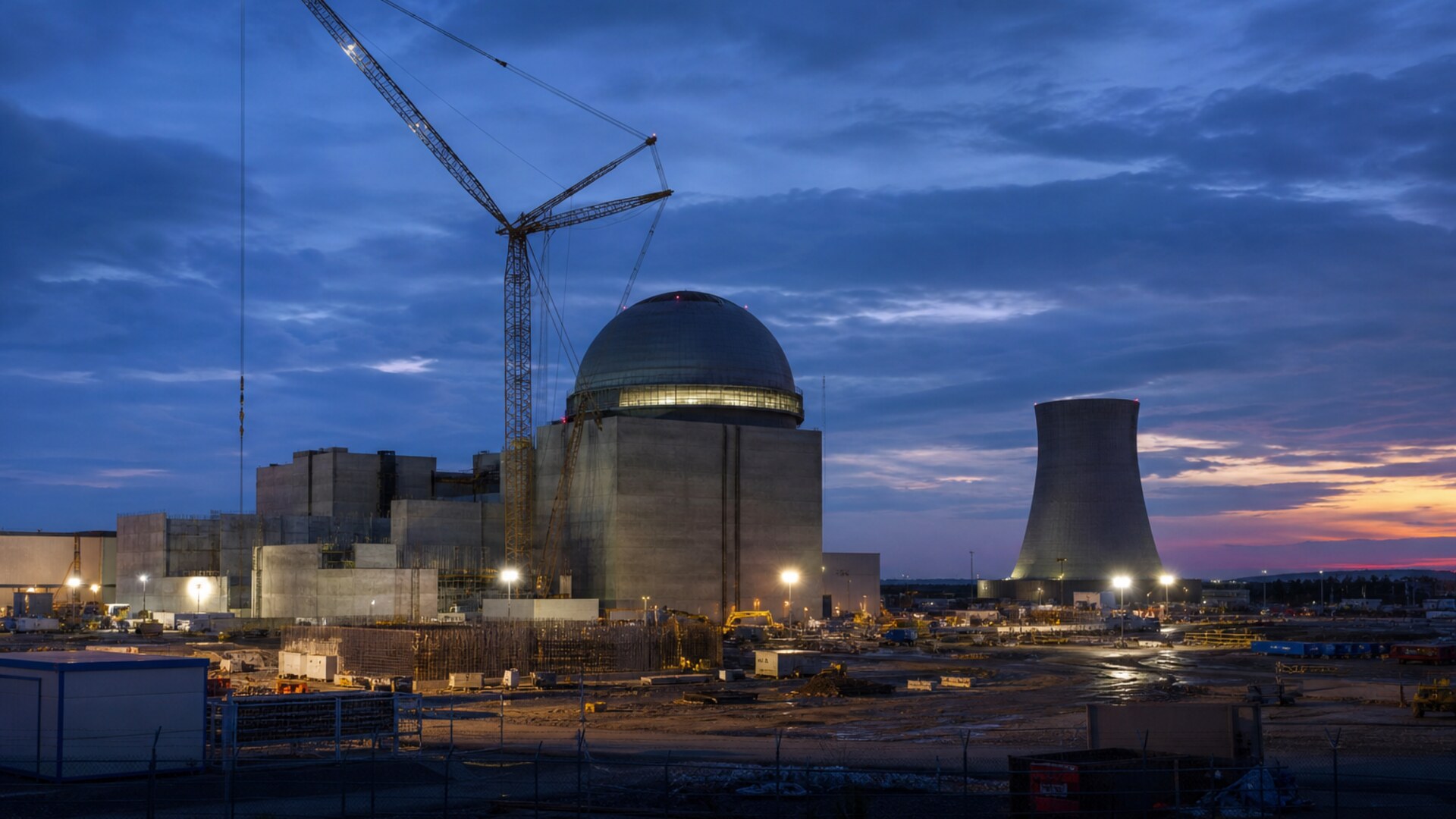
What this page is not: a claim that the NRC now takes a year. A claim that 400 gigawatts have been built. A claim that eleven pilots are eleven operating plants. A claim that a zero-power test at Idaho is commercial generation. A new quotation. A living politician’s face in the art. The art is cooling towers and an empty switchyard at dusk. A civil plant as a clock.
What this page is: the 2026 Economic Report telling the NRC to stop taking a decade; a presidential order on the nuclear industrial base, fuel cycle, uprates, and a path from about 100 gigawatts toward 400 by 2050; $2.7 billion in January for domestic enrichment; eleven reactor-pilot projects named in August 2025; Executive Order 14301 requiring at least three advanced reactors to criticality by 4 July 2026; Antares Nuclear’s Mark-0, zero-power, critical at Idaho National Laboratory on 4 June, first in that program.
Keep the dates that were already on the tape. January for the enrichment cheque. August 2025 for the eleven. 4 June for Mark-0 at Idaho. 4 July 2026 for the three-machine floor. 2050 for 400 gigawatts. A year instead of a decade for the regulator. About 100 gigawatts for the starting mark. $2.7 billion for the fuel. Eleven for the first pilot list. Three for the Independence Day count. One named company on the test clock, on 4 June, at Idaho.
A test is a test. A cheque is a cheque. A list of eleven is a list of eleven. A year is a permission structure. The named clock is a year instead of a decade. The named money is $2.7 billion. The named target is 400 gigawatts by 2050. First concrete, first restart, a young engineer who can get a nuclear job again: those have not arrived in this file. The report, the order, the cheque, the eleven, the Independence Day floor, and Mark-0 at Idaho have. That is the weather in Washington. The calendar is the news.
The paper
Comments
No notes on this story yet.
Sign in to comment