Tesla posted an “Exclusive Access: Cybercab” graphic on 22 August and named 3 September in Austin. Teslarati posted the invite it had received the same day. Electrek filed the confirmation on 24 August. The poster is the news. The date is a Thursday. The city is the one with the factory.
It is invite-only. Attendees have until 11:59 p.m. Pacific on 30 August to RSVP. They must be 21. IDs will be checked. Tesla will livestream the launch for everyone else. Not a Tesla App printed the guest rule from the invitation: one additional approved guest, and that guest cannot be a content creator. Food and refreshments. Tesla’s phrase on the invite is “experience the future of autonomy.”
The object is a two-seat car with no steering wheel and no pedals. Electrek put Tesla’s own ratings on it this week: about 103 watt-hours per kilometre, a 48 kilowatt-hour pack, 1,412 kg. That is the most efficient electric vehicle Tesla has built, on Tesla’s number. A Model Y doing the same robotaxi job runs closer to 155 to 174 watt-hours per kilometre. Two seats instead of five is the trade. The factory already knows how to stamp the smaller box.
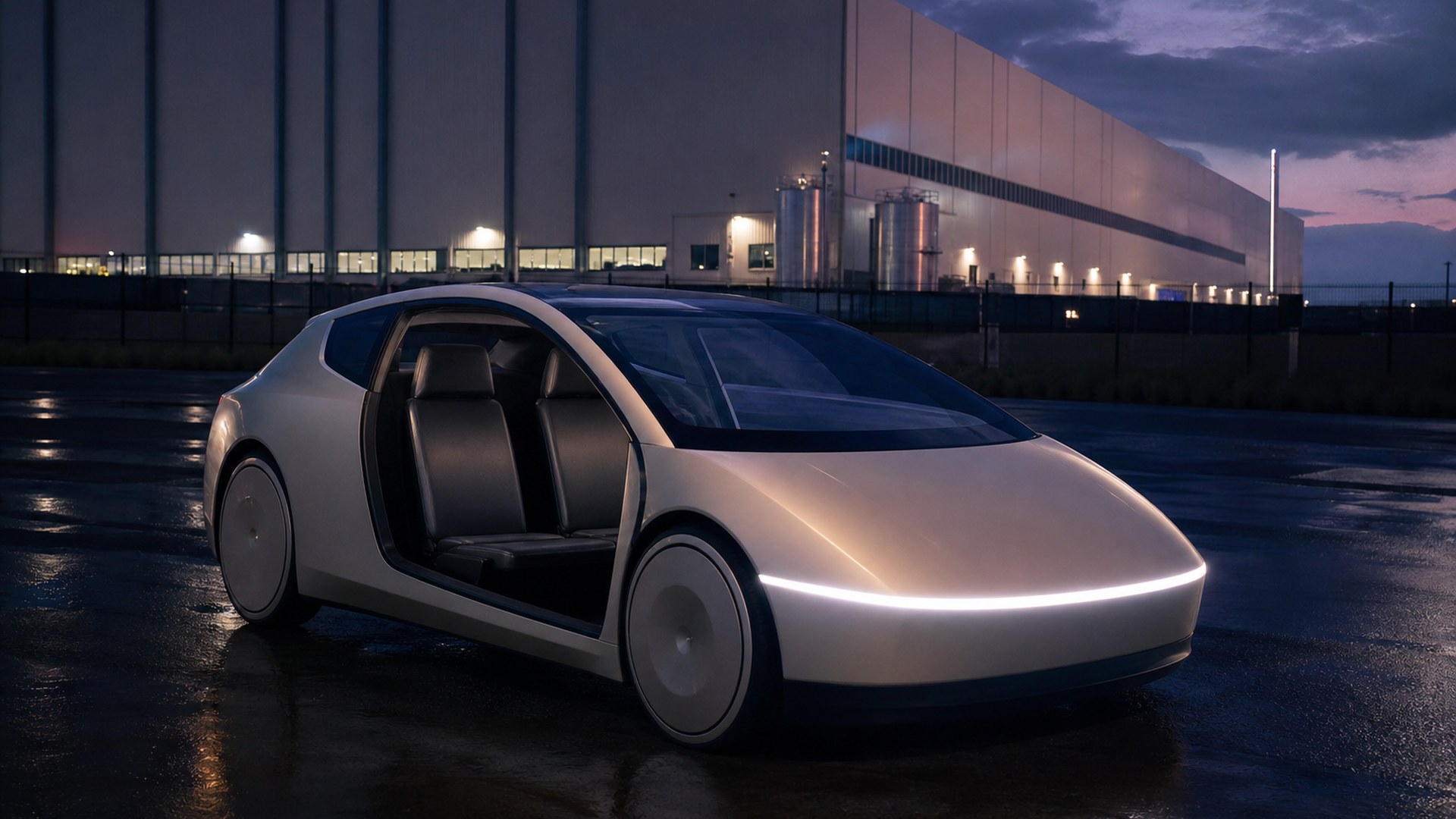
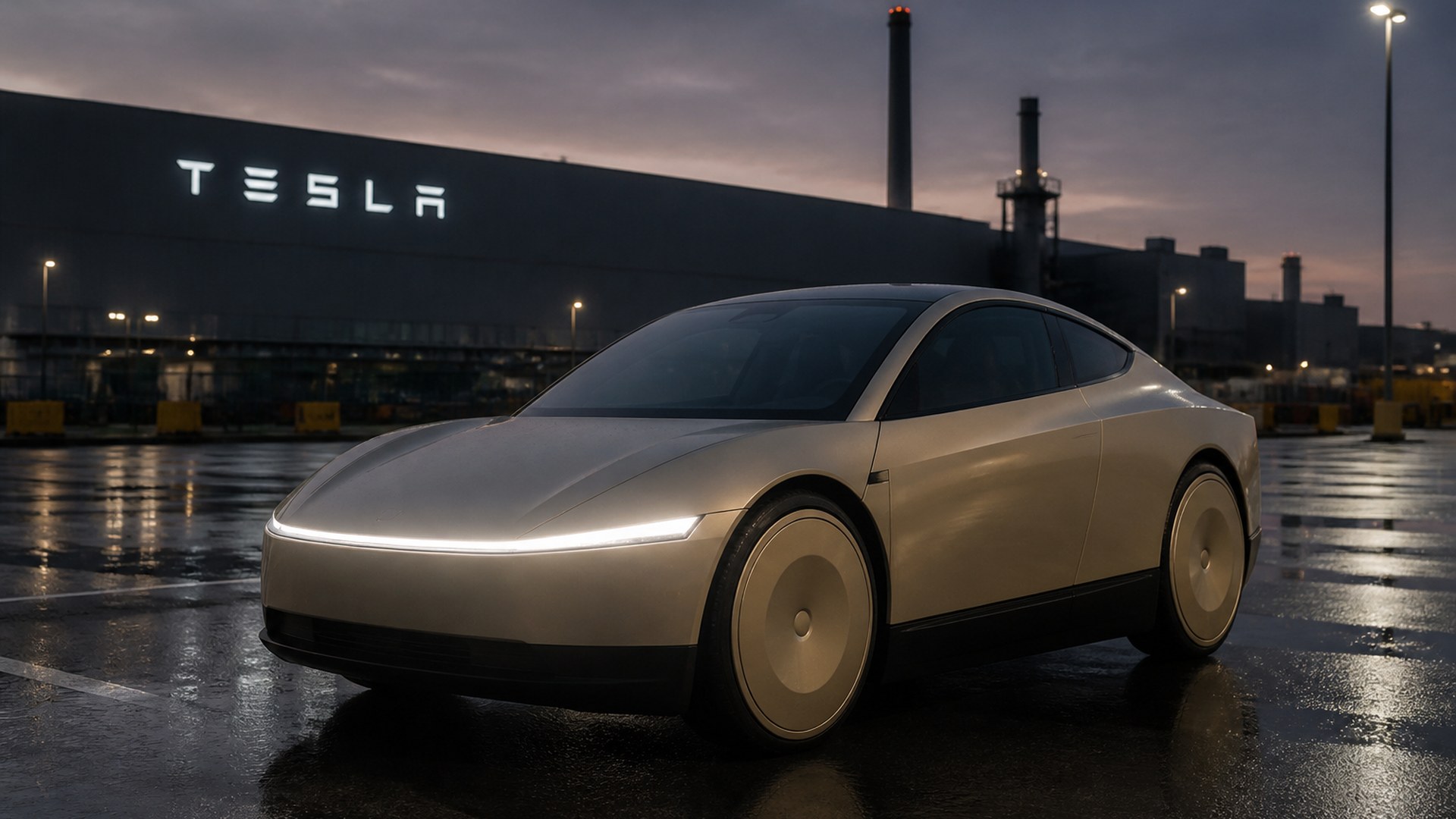
The first Cybercab left Gigafactory Texas in February. Teslarati, filing the 3 September date, said Tesla had already been giving employees rides in production cars on public and private roads since July. techAU, on 23 August, put installed capacity at the Texas plant above 125,000 of the two-seaters a year. That is nameplate. It is not this year’s run rate. Hundreds of the little wedges have been photographed in Texas, California, and Florida. The hall has been minting them. 3 September is the night Tesla wants guests to sit in one.
The invitations are a real email. Tesla ran a sweepstakes at tesla.com/event/cybercab-event-sweepstakes. Riders who completed Robotaxi trips between 17 and 23 August were entered automatically, more rides improving the odds, plus a free mail-in. The official terms, as techAU printed them, limited the draw to legal residents of the 50 U.S. states and D.C. who had reached the age of majority, and said a selected winner could not bring a guest unless that person had also been selected. Exactly five winners were to be notified on 25 August. Separate “Exclusive Access” invitations then went out with a different guest rule, a 21-and-older door, and the 30 August RSVP. Not a Tesla App had the sweepstakes originally saying 18 to enter and the event itself raising the bar to 21. Both ages are on the page, labelled. The draw is not the factory. The factory is in Texas.
3 September is a launch event. It is not, on the paper Tesla printed, a promise that the public can hail a Cybercab from the Robotaxi app that same evening. Tesstudio, reading the official post and the invitation, said neither document established that general public Cybercab service begins that day. techAU said Tesla has talked about employee rides on public roads before folding the cars into the existing network. Electrek’s narrower sentence is the one kept in the lead: the Cybercab becomes available to hail through Tesla’s existing Robotaxi app in Austin, alongside or in place of the Model Ys already doing the driving. That is Electrek’s read of the event copy, not a Tesla timetable independently timed here. The livestream is how everyone else watches the hall.
The Robotaxi network the two-seater is joining already has hours and cities. Tesla’s Robotaxi account said this week that rides now run from 6 a.m. to 10 p.m., seven days a week, across the operating footprint, that the unsupervised fleet is “a lot bigger,” and that upgraded intelligence in vehicle distribution and routing is what is supposed to cut wait times. Not a Tesla App filed that post on 26 August. Teslarati had the same hours and the same “a lot bigger” line, and noted that Austin had previously run as late as 2 a.m. as of last September. Wednesday’s post did not specify whether that overnight window still applies in Austin or whether 6 a.m. to 10 p.m. is now the standard in every market. There is no overnight on the record. It will print 6 a.m. to 10 p.m., seven days, Tesla’s words, 26 August.
Tesla does not publish a robotaxi headcount. Community trackers disagree, and they should be labelled as community. Electrek this week still put the active unsupervised fleet at roughly 20 to 30 vehicles across all markets. Not a Tesla App, the same week, cited community tracking of about 85 active commercial robotaxis across live markets and said the figure is not official. File both. File neither as a Tesla number. Tesla’s useful sentence is “a lot bigger,” not a spreadsheet.
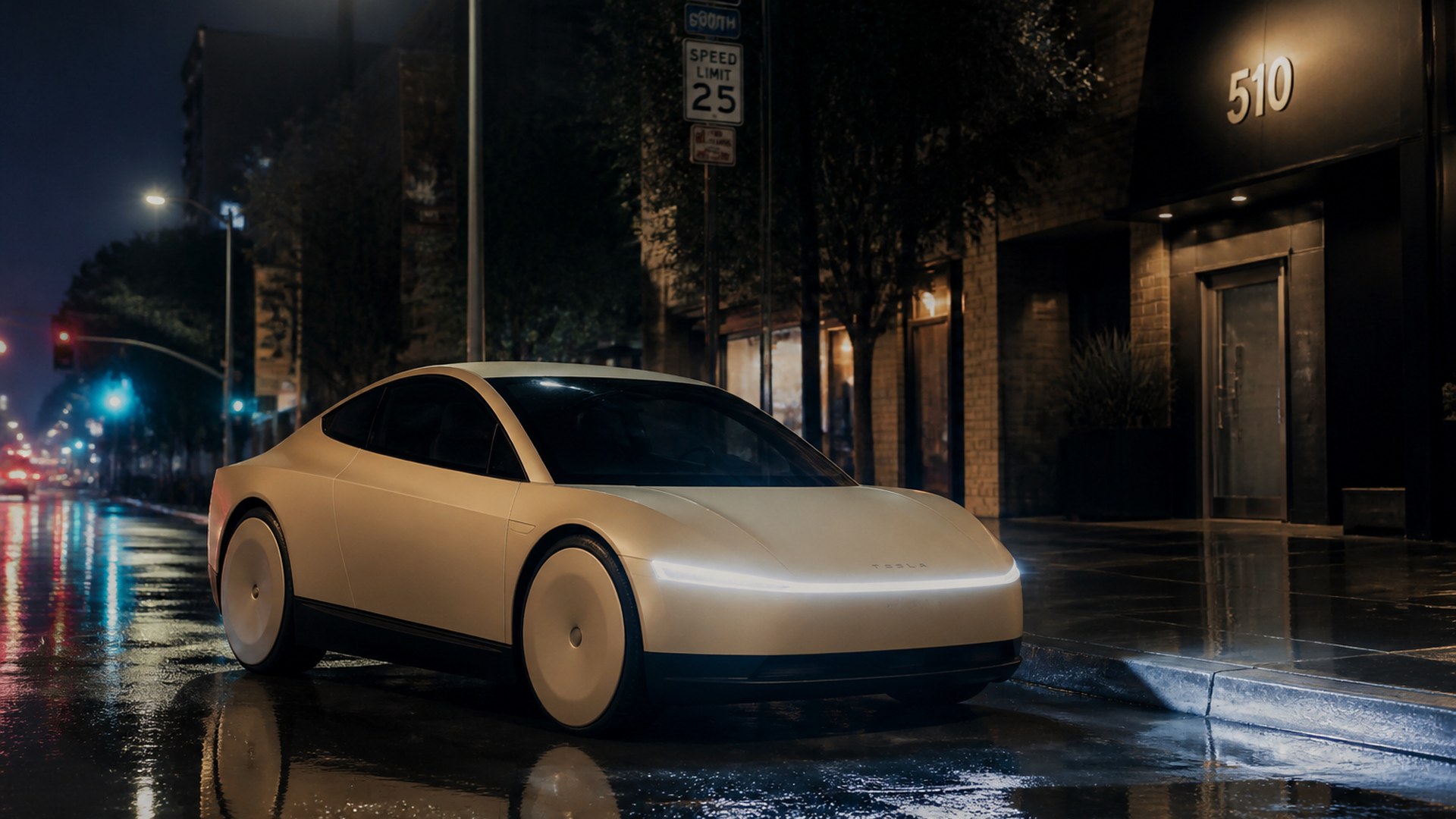
The empty car on an Austin street is the other photograph from this week. CryptoBriefing, on 28 August, said a steering-wheel-free two-seat pod had been spotted on a public Austin road with nobody aboard. Early production units had temporary controls for testing. The empty cabin is the next phase of the same object. A street sighting is not treated as a commercial launch. It is treating it as a factory car on a public road in the city that is hosting Thursday’s event. Roaming — the behaviour Not a Tesla App tied to Cybercab this week — is Tesla’s word for a car that moves toward demand instead of sitting on a pad. Shorter waits is the claim Tesla put on the 26 August hours post. The empty car is how a two-seater waits.
Nevada is the civic half of the same week. The Nevada Transportation Authority, on 20 August, approved Tesla Robotaxi LLC for up to 5,000 fully autonomous vehicles in Clark County during the first 12 months after the permit is issued. The Autowire dated that filing 24 August. The Motley Fool carried it on 27 August. Tesla’s June 5 application, Docket 26-05015, had asked for no more than 5,000. Waymo and Uber’s autonomous subsidiary Aviari Services each received a ceiling of 1,000. Tesla engineer Eric Early told the authority the company would be “extremely happy” to reach about 2,500 over the next year and described 5,000 as a ceiling rather than an expected fleet. Tesla must begin operations within 120 days after the permit is issued. Harry Reid International Airport and Henderson Executive Airport are named in the application. Las Vegas is not Austin. A 5,000-vehicle cap is not 5,000 cars on the Strip this month. It is a regulator saying the door is that wide. The next number is a Las Vegas ride when Tesla starts one.
The existing Robotaxi service, still mostly Model Y, already runs unsupervised in Austin, Dallas, Houston, Miami, Orlando, and Tampa, with a supervised presence in the San Francisco Bay Area, as techAU tabulated it in late August. Phoenix is in preparation. That is the network the two-seater is supposed to join, not a new country. Tesla launched the Austin service on 22 June 2025 with roughly 20 Model Ys and a safety monitor in the front passenger seat, Not a Tesla App recapped this week. Unsupervised tests in Austin began in December 2025. Some public rides without a monitor followed a month later. Dallas and Houston came this April. Miami, Orlando, and Tampa came last month. The Cybercab is a new body on that map.
Efficiency is the manufacturing argument for replacing a Model Y on a two-person trip. 103 watt-hours per kilometre against 155 to 174 is Electrek’s comparison, using Tesla’s Cybercab figure and the Model Y’s usual band. A 48 kilowatt-hour pack in a 1,412 kg two-seater is a smaller store in a smaller object. For a company running its own fleet, watt-hours per kilometre is a line-item. It is not a passenger count. Anyone travelling with more than one other person, or with luggage, still wants the Model Y. Tesla has not said the five-seat robotaxi is leaving Austin. The two-seater is the dedicated machine. JPMorgan was told earlier in August that Tesla is holding Model Y units back from the robotaxi mix because it wants the purpose-built car in the centre. That is a factory posture. 3 September is the night the factory car gets a poster.
Customer sales are a later sentence. Elon Musk has said Tesla intends to sell the Cybercab to individuals and fleets, with a target under US$30,000 and some references closer to US$25,000. In February, when the first production unit left the Texas line, Musk said on X that customer deliveries at that price would occur before 2027. techAU, filing this week’s event, noted that consumer ordering has not opened. The near-term use is Tesla’s own fleet. The next number is a window sticker when Tesla prints one. 30 August is an RSVP night, not an order night.
We, Robot, in October 2024 at Warner Bros. Studios in Burbank, was a closed-circuit ride in a prototype. 3 September 2026 is a production car in the city that builds it. Those are different rooms. The Burbank loop proved people would sit in a car with no wheel. The Austin night is supposed to put that car on the same app that already dispatches Model Ys. Electrek is right that the software stack is the Full Self-Driving stack the Model Y robotaxi already uses. This is not a software-version story tonight. It is a factory desk. The two-seater exists. The hall has a date. The livestream is Thursday.
What 3 September is: Exclusive Access, Austin, invite-only, 21 and older, IDs at the door, RSVPs closed 30 August at 11:59 p.m. Pacific, one approved guest who is not a content creator, food, a livestream, a two-seat car with no wheel and no pedals, 103 watt-hours per kilometre, 48 kilowatt-hours, 1,412 kg, a Texas line that has been minting the object since February. Named date. Named city. Named car. The Model Y keeps the five-seat work. The two-seater gets its night. The night is the news.
The paper
Comments
No notes on this story yet.
Sign in to comment