
Nepal’s National Disaster Risk Reduction and Management Authority had 788 dead on Sunday, 30 August, with 1,473 injured and about 2,500 missing. Chinese authorities reported 16 dead and 546 missing in Tibet. Combined, that is more than 800 dead and more than 3,000 missing. The flood started on Wednesday, 26 August, when a glacier on Langtang Lirung came down and the Trishuli carried the water.
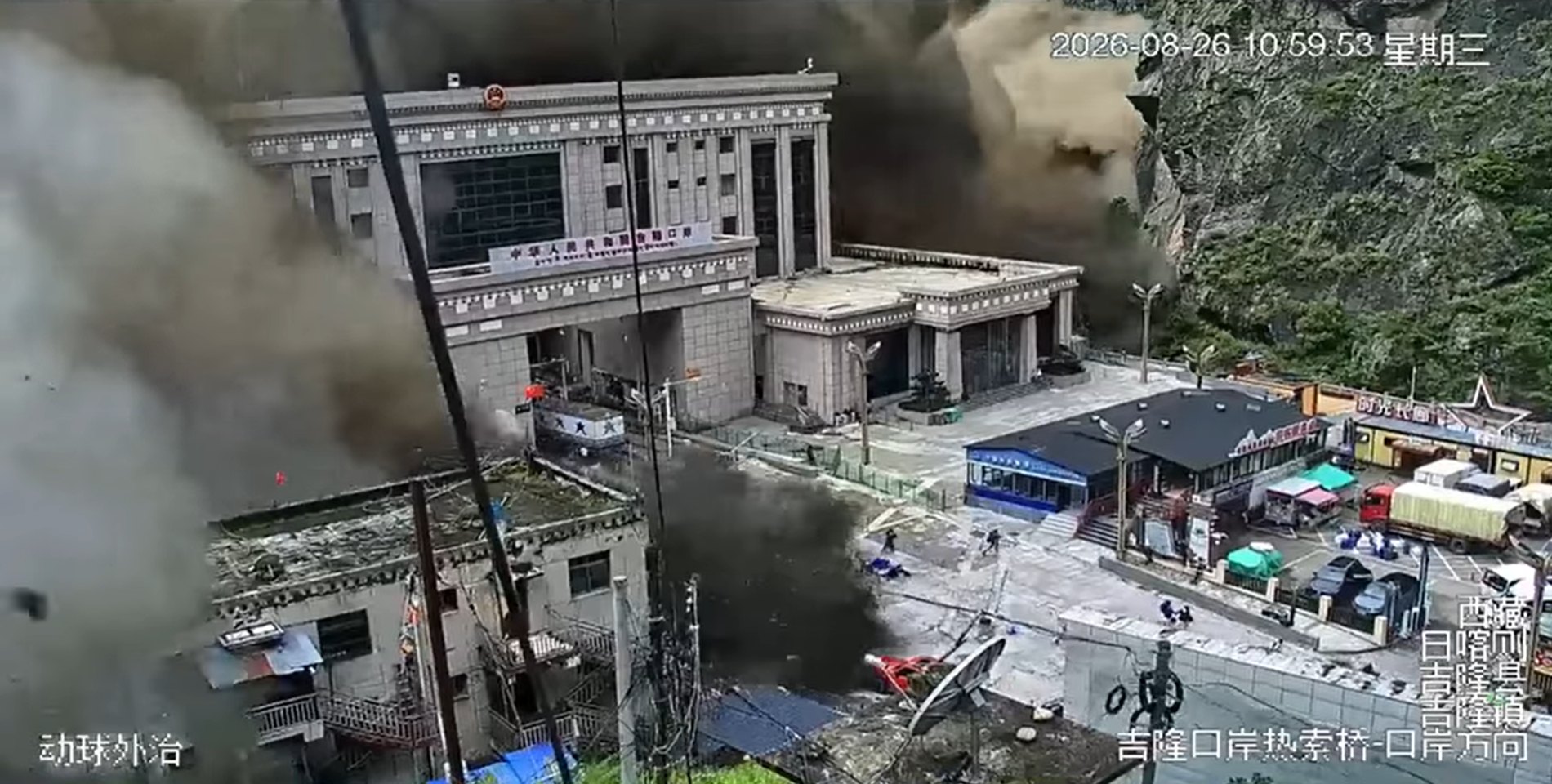
The United States Geological Survey logged an M 5.2 landslide at 02:52 UTC that morning — 08:37 Nepal time, 10:52 in China. The signal was the collapse, not a tectonic quake that came first. Seven minutes later a camera at Gyirong Port, the China–Nepal crossing, recorded the flood hitting the checkpoint. The port building is in the still. The time on the frame is 10:59.
The Independent Power Producers’ Association, Nepal, said about 933 people were missing or unaccounted for at 11 hydropower sites and tunnels in Rasuwa and Nuwakot as of Sunday morning. Foreign Secretary Amrit Bahadur Rai said 19,000 security personnel and 16 helicopters were on the search. On Saturday night the prime minister’s office put 82 people on a tunnel mouth: 62 from the army, 20 from the Armed Police Force and Nepal Police.
The river is the file. The Trishuli, also called Bhotekoshi on its upper stretch, took a 72-kilometre bite. Bodies have been recovered 240 kilometres downstream, as far as Nawalparasi in Nepal and Kushinagar and Maharajganj in Uttar Pradesh. Sunday is day five. The count is still moving.
This desk is using the Sunday NDRRMA table as Wikipedia and the Guardian live blog had it on 30 August, the USGS landslide page, the Nepal Electricity Authority’s damage list, and Al Jazeera’s Sunday toll file. Where those sources disagree by a few bodies, the agency number is the one in the lead. Al Jazeera’s Sunday morning pass had 781 dead in Nepal and 2,498 missing. The Guardian’s afternoon live blog had 788 and an overall dead count of 804 once Tibet’s 16 were added.
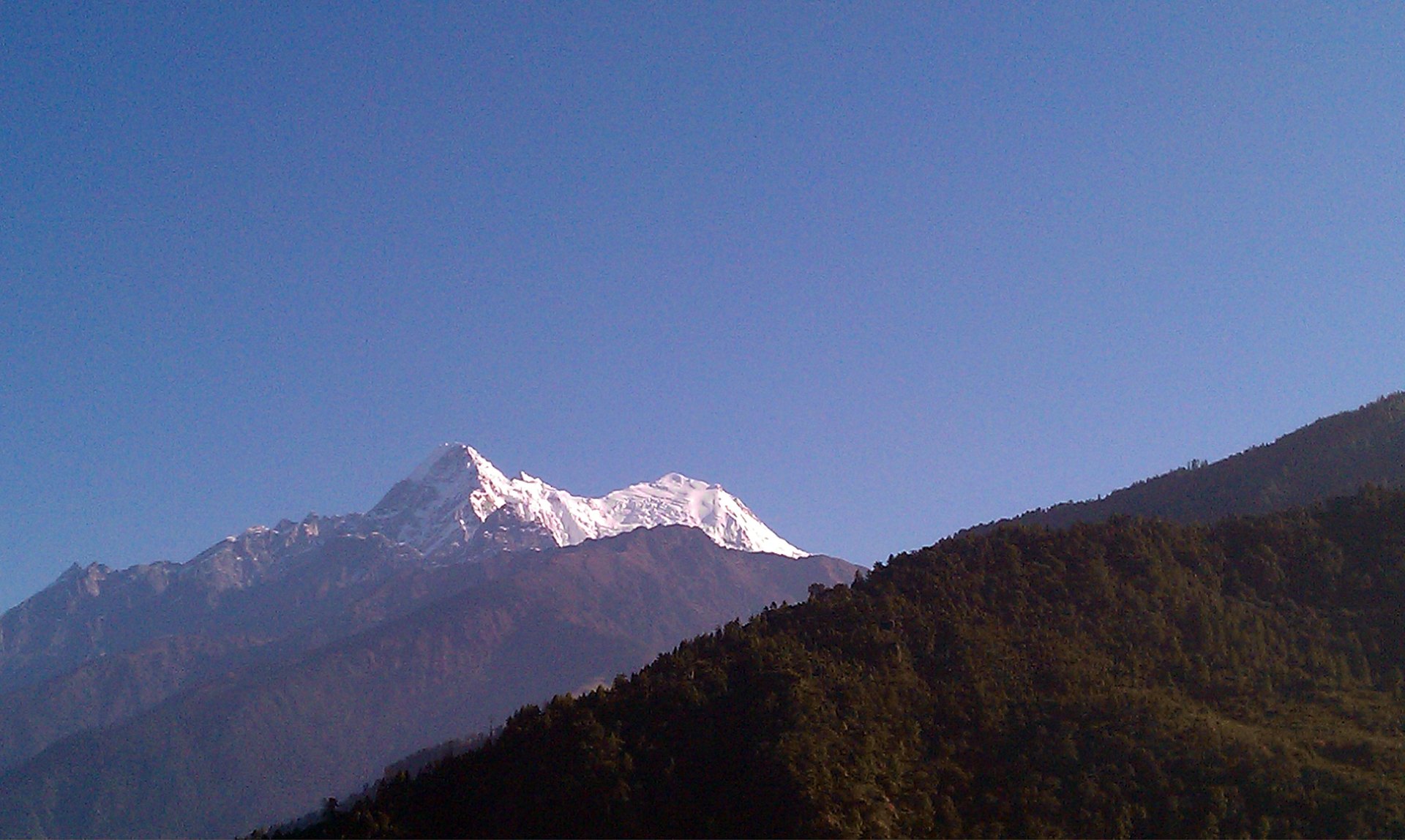
Daniel Shugar, a geologist at the University of Calgary, read the first satellite frames as a clean break: about 0.2 square kilometres of ice dropping a vertical kilometre, from roughly 5,200 metres to the valley floor. Other early reads put the fallen mass at 100 to 200 million cubic metres. The USGS long-period waves matched a glacier collapse, not an earthquake. GFZ in Potsdam logged a related M 5.7 landslide at the same timestamp. A second, smaller slide, M 4.2, came about three hours later.
Two barrier lakes formed after the collapse. On 27 August Chinese authorities warned that one, about 2 million cubic metres near the Chhochen Khola and Purepu Tsangpo confluence, could take another 3 million cubic metres of inflow through 30 August. It overflowed slightly on 28 August. Rescue work paused. By Sunday the lake was largely empty. A second lake sits higher, nearer the break. Fresh flood notices went out on 30 August after Chinese monitors reported more water upstream. The Bhotekoshi rose again on Sunday. NDRRMA told people to stay alert.
The Nepal Electricity Authority said six major hydropower and transmission sites were hit: Rasuwagadhi, Chilime, Trishuli 3A, the Trishuli 3B Hub 220 kV substation, Trishuli Hydropower Station, and Devighat. About 431 megawatts came off the grid. Projects under construction totalling 470 megawatts were damaged. At Upper Trishuli-1, 216 megawatts, the army said it had pulled 254 workers out. At Chilime, 22 megawatts, executive director Baburaj Maharjan told the Kathmandu Post the tunnel was full of mud and a rock-climbing team was being mobilised. Those are his sentences.
Roads: the Roads Department’s Bijaya Jaishi put a first estimate at 15 billion rupees, 41 bridges, 42 kilometres of road. The government-wide first damage figure was 200 billion rupees, about $1.3 billion, as of 27 August. Finance minister Swarnim Wagle later told Al Jazeera the loss was more than $4 billion. This page prints both numbers and the dates they were spoken. Twenty schools in Rasuwa, Nuwakot, and Dhading were damaged. The Rasuwagadhi customs house went. More than 300 vehicles queued at the crossing were swept away. About 5 kilometres of road from Kyirong to Rasuwagadhi went with them.
The missing book is international. NDRRMA’s Sunday table included 589 foreign nationals among the missing in Nepal, plus 127 Nepali travellers with them, 45 army, 27 police, and 13 armed police. Earlier country splits, dated 26 August and not a Sunday recount, included 288 Indians, 90 Americans, 35 Australians, and 33 British nationals. Prime Minister Anthony Albanese said at least 34 of the Australian missing were pilgrims. China’s foreign ministry reported nearly 100 Chinese citizens missing in Nepal. Tibet’s Sunday list of 261 missing foreigners from 23 countries included 104 Nepalis, 49 Indians, and 18 Americans. Those lists overlap. They are not added together here.
Nepal deployed more than 10,000 security on the first pass: 4,200 army, 4,200 armed police, 4,800 police. By 29 August NDRRMA said more than 18,700 rescuers were on the search. The cabinet declared a three-month disaster zone under the 2017 Act. The Prime Minister’s Natural Disaster Relief Fund passed 5.44 billion rupees by 29 August. Prime Minister Balen Shah went to Nuwakot on 27 August. India had sent 62 tonnes in three airlifts by 29 August. Australia announced A$5 million. The United States added $3.6 million on top of an earlier $500,000. The IFRC put $1 million on the table and opened a $31 million appeal.
China sent 2,100 rescue workers and at least 220 million yuan, about $32.7 million, according to CCTV. Premier Li Qiang was in Gyirong on 26 August. Access from the Tibetan side was blocked by about 3 kilometres of debris. State media said 499 residents and 555 tourists were evacuated in Tibet. Foreign journalists have not been allowed in. This paper is not going to invent a scene it cannot see.
The early-warning system on that border was built for monsoon water, not for a glacier that falls a kilometre in minutes. Upstream gauges in Nepal were gone before they could talk. Sunday’s work is still a pipe into a tunnel, a lake that emptied, a river that rose again, and a count that has not closed. Eight hundred is the dead number on the Sunday table. The missing number is larger. The river is still the one doing the counting.
The paper
Comments
No notes on this story yet.
Sign in to comment