
Pauline Hanson addressed the National Press Club in Barton on 17 June 2026 and put One Nation’s energy plank on a national lectern: keep dispatchable plant, treat Australian gas as a strategic asset, stop treating a new gas appliance as a moral problem.
In the days around that speech, YouGov for Sky News surveyed 1,492 voters between 9 and 16 June and gave One Nation 28 percent of the primary vote, Labor 26, the Coalition 21. Newspoll, in the field 22 to 25 June with 1,235 voters, still had One Nation at 29 percent.
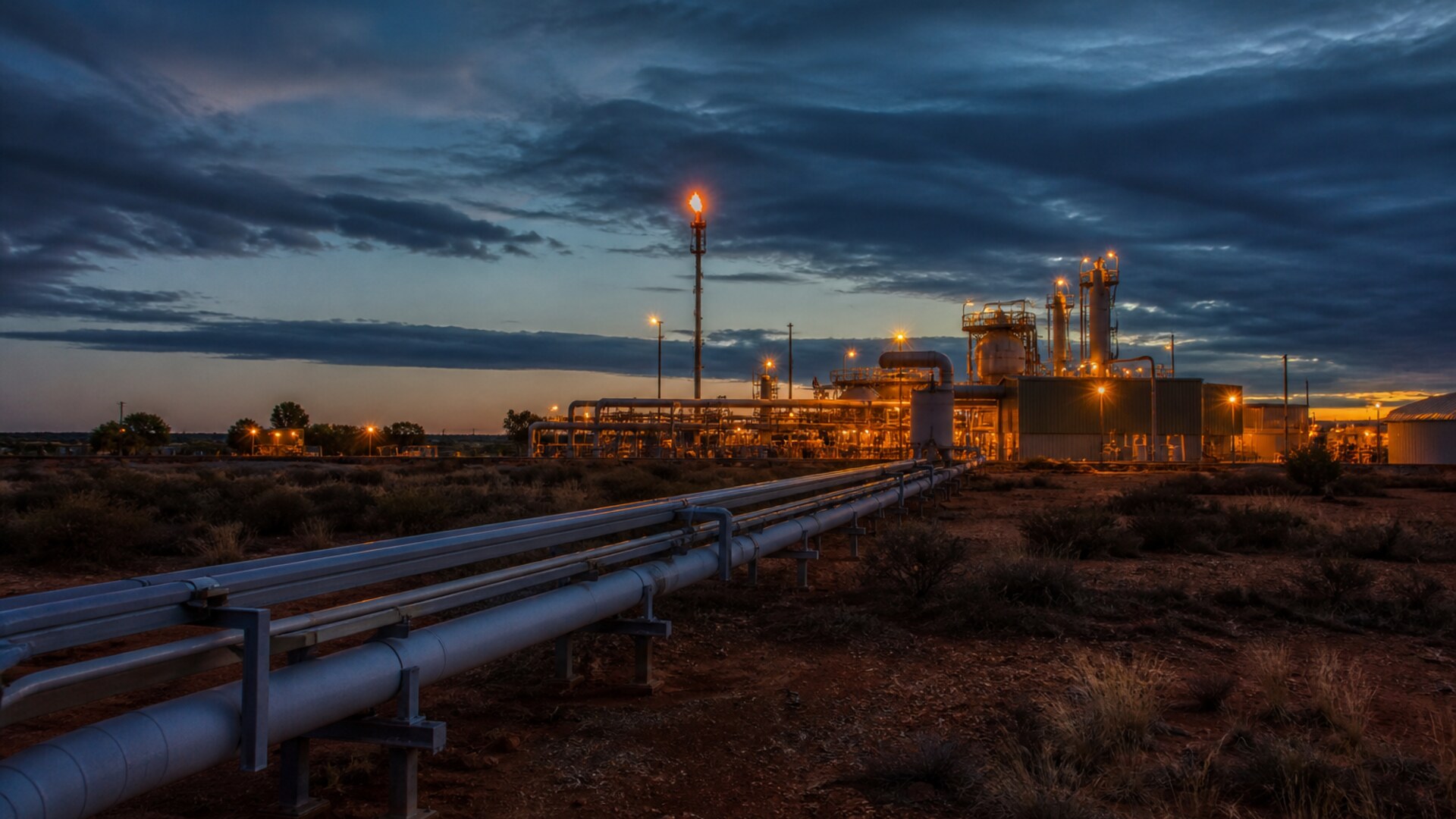
The package she named is blunt enough to photograph. Repeal legislated net-zero targets. Build more coal and gas. Put a domestic reservation on east-coast molecules so they are not only an export schedule. You can argue with the mix. You cannot argue with 6.30pm on a still night.
The speech was her first National Press Club appearance in thirty years of national politics. Energy was not a colour piece. She called the cost of energy Australia’s “central source of national poverty,” and said the country would never be able to do without coal and gas. “Basic environmental standards must be met, but they can’t be allowed to throttle our economy,” she told the room. On oil and the refinery map she reached for a line that has travelled: “Poor management has got us in this situation when it comes to the refineries, when it comes to actually oil, and I’m saying, ‘dig baby dig’.”
She was not pretending rooftop solar was a crime. “Put it up on your roofs, I don’t care,” she said. “Coal-fired power stations — yes. We need to have that. One in South Australia, one in Queensland, to deliver the power that we need.” Then the reservation sentence, which is the one on the record: “I am not opposed to renewable energy, but if it’s the saviour of the energy crisis, and if it’s profitable, why would government have to prop it up? One Nation is saying, put everything into the energy mix.” The source of much of the country’s wealth, she said, is under our feet “and should not be only for export.”
That last clause is the policy, not the slogan. Western Australia has run a domestic gas reservation since 2006. LNG exporters there are required to reserve the equivalent of 15 percent of production for the home market. It is a boring, administrative fact that has kept west-coast molecules attached to west-coast kilns and households while the east coast spent a decade discovering what an LNG netback feels like. Gladstone’s trains started loading in the middle of the 2010s. From that point the east-coast price stopped being a local conversation and started being a shipping schedule. Manufacturers in Victoria and New South Wales have been living inside that sentence ever since.
One Nation’s east-coast version is a reservation so that a molecule under the seabed, or in the Bowen, or in the Beetaloo, or at Narrabri, is not only a cargo for someone else’s grid. You can dislike the party and still hear the physics. A smelter does not run on an export licence. A hospital does not. A household with a gas cooker does not. The cheap seats have been selling that for years. On 17 June it was on the lectern in Barton, with cameras.
The plant that makes the sentence concrete sits on the western shore of Lake Macquarie, about 120 kilometres north of Sydney and 40 kilometres south of Newcastle. Eraring is four 720-megawatt black-coal units and a 42-megawatt diesel set, 2,922 megawatts in all, Australia’s largest station, roughly a quarter of New South Wales on a working day. It came fully online in 1984. Origin had been aiming at August 2027. In January 2026 the company told the Australian Energy Market Operator that all four units would run through 30 April 2029. The extension, Origin said, was consistent with the agreement it reached with the New South Wales government in May 2024. The company also said it does not intend to invest in further major maintenance overhauls before that April date. A large battery is going in next door — Origin has talked about 700 megawatts — which is a useful machine at noon and in the evening ramp. It is not a coal station.
AEMO’s 2026 Electricity Statement of Opportunities is the other half of the same paragraph. Under the operator’s Committed and Anticipated Developments assessment, New South Wales breaches its reliability benchmark from 2030-31. Victoria is on the same year. If anticipated projects are taken out of the picture entirely, AEMO said it would have needed to ask the Australian Energy Regulator to consider reliability instruments in Queensland and New South Wales for 2029-30, the year Gladstone and Eraring are scheduled to leave. Data-centre load across the national market is forecast to rise from about 5 terawatt hours now to 34 terawatt hours by 2035-36. Business electricity demand is forecast to rise 60 percent, from 143.3 terawatt hours to 221.5. Eleven data-centre projects, 5.4 gigawatts, are already in the connection queue. AEMO lifted its 2035-36 household consumption forecast by 19 percent in a single year.
Family First’s Lyle Shelton, filing in August, put those two clocks in one sentence. “NSW switches off its biggest power station in April 2029, and AEMO has just told us the state runs short of reliable supply just over a year after that,” he said. He also named the other New South Wales coal that still turns: keep Eraring, Bayswater and Vales Point running for as long as they can generate safely, unlock state gas for the east-coast market, and stop pretending a reliability gap is a communications problem. Those are his words on the record. They rhyme with the Press Club package even if the letterhead is different.
The National Electricity Market is a long, skinny machine with a lot of desert in the middle and a lot of air-conditioners at both ends. Wind and solar have poured onto that machine with real success at noon. The problem was never noon. The problem is 6.30pm in July, a still evening, a heatwave, a coal unit that retired on a press release. Reliability is not a vibe. It is megawatts that exist when the forecast is wrong. Gas is how a lot of the developed world fills that hour. Australia has the gas. The argument is whether the east coast is allowed to keep some of it.
Hanson’s mix on 17 June was coal, gas, a reactor conversation, and an end to what she called “renewable energy bribery” — grants, tax incentives, concessional finance, underwriting. She said One Nation would cancel Snowy Hydro 2.0. She did not cost a new coal station from the lectern. She did not legislate a reservation from the lectern. A Press Club speech is not a bill. It is a permission structure. The permission she was seeking is the ordinary one: that a country which sells LNG to half of Asia is allowed to talk about a domestic reservation without being treated as a relic.
What happens next is not mysterious. Origin’s date is 30 April 2029. AEMO’s first named reliability year for New South Wales, on the conservative assessment, is 2030-31. The New South Wales election is 27 March 2027. Victoria goes on 28 November this year. A federal cycle sits behind both. Any party that wants to keep Eraring past the present agreement, or put a reservation on east-coast gas, will have to do it in those rooms, with numbers, not with a lectern. Western Australia already has the template. The east coast has the shortage.
This desk is not a pamphlet. It is a reservation desk. Hanson named the package on 17 June. The poll is the number. Eraring 2029 is the plant. Gas that stays home is the policy the cheap seats have been selling, and on a Wednesday in Barton it was finally said in the room that still pretends the lights are a mood.
The paper
Comments
No notes on this story yet.
Sign in to comment