Team Ico’s first castle shipped in North America on 24 September 2001, in Japan on 6 December 2001, and in PAL territories in 2002, with the British street date 22 March. The machine is PlayStation 2. The director is Fumito Ueda, on his first directed game. The room is Team Ico inside SCE Japan Studio. Sony Computer Entertainment published. The objects are a horned boy named Ico, a taller girl named Yorda, a Queen who keeps a fortress, and a castle that is not a hub around a world. The castle is the world. One analogue stick walks you through it. R1 holds a hand.
This is a review of how that cart still plays.
The verb is the grip. Ico is twelve, or near it, with horns the village decided were a curse. Elders lock him in a stone sarcophagus and leave him in a fortress that looks emptied. An earthquake cracks the vessel. He climbs out into a place that has already decided what a boy is for. Then he finds a cage, and in the cage a girl taller than he is, pale, and speaking a language the North American disc will not translate. You press R1. He takes her hand. The rest of the game is the work of not letting go.
On the original North American disc, a tap of R1 latches the hold; another tap, or a break, lets go. On the Japanese disc, the PAL disc, and later the PlayStation 3 remaster, the default is to keep the button down, with a menu option if you want the latch. Either way the design is the same sentence: you are not a lone climber who happens to have a companion. You are a climber whose companion cannot make the same jumps, cannot hang from the same chains, cannot open the same ordinary doors, and can open the glowing idol gates that you cannot. The puzzles are architecture. A chain. A trolley. A windmill. A drawbridge. A block you push so she can walk a ledge you already jumped. You call her. She comes, or she does not, depending on whether the path you built is a path a taller, slower person can actually take. The analogue stick is the whole locomotion. There is almost no interface to argue with. No minimap. No compass rose. No health bar. The HUD is the room.
Shadows are the Queen’s errand. They rise from black vortexes and they are not interested in killing the boy. They want the girl. Leave Yorda alone for a stretch, or walk her into a hall the castle has already marked, and hands come out of the floor. Ico’s first weapon is a stick. Later a sword. He can scatter the shadows and he can pull Yorda out of a vortex if he reaches her in time. If the vortex finishes the job, the game is over and you sit down again at the last stone bench. The shadows cannot harm him. Falling a long way can. The save point is a bench in the stone, and the two of them sit. That is the checkpoint. Not a menu glowing in the corner. A piece of furniture the castle already had.
Yorda’s language is the other mechanic people pretend is flavour. It is not flavour. She speaks, and on a first North American playthrough you do not get subtitles that pretend her words are English. The Japanese and PAL discs, after a clear, unlock a translation, and they unlock a second pad: player two can steer Yorda under the same limits the computer had. The PlayStation 3 remaster, which Bluepoint Games built with Japan Studio and Team Ico, is based on that European disc. North America got the collection on 27 September 2011, on the same Blu-ray as Shadow of the Colossus. Japan had put the two games out separately on 22 September 2011. PAL followed on 28 and 29 September. Stereoscopic 3D, trophies, the two-player mode, the translated Yorda line: those are the extras. The grip is the same.
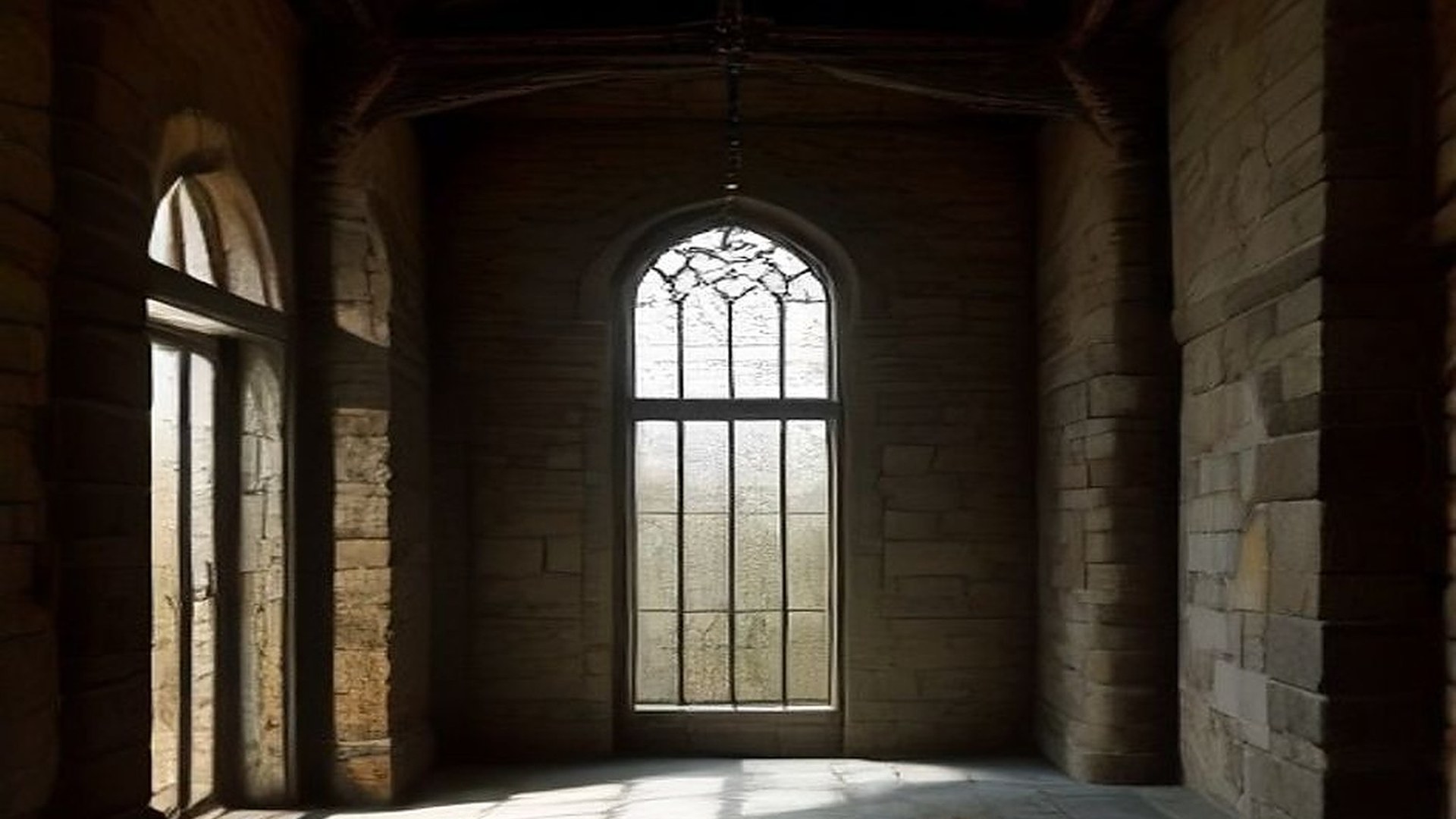
The castle as map is the design people still steal and still fail to copy. There is no overworld. There is no village to return to. There is a fortress stacked on a coast, with a windmill, a water tower, a bridge that will not stay, and interiors that are also exteriors because the roof is gone in places and the light is doing the art direction. Ueda’s first directed game is an argument that a PlayStation 2 analogue stick, a jump, a pull, and a companion who is not you are enough verbs if the rooms are honest. Kenji Kaido produced. Michiru Oshima wrote the main theme, “ICO -You were there-,” which Japan used in the winter commercials around 6 December. Pentagon worked the rest of the score. The sound is quiet on purpose. When a shadow comes, you hear it. When you call Yorda, you hear that too. The game does not narrate the feeling. It gives you a button.
Combat is small and should stay small. The stick is found, not purchased. The sword is later. You swing. Shadows scatter. The fight is never the point; the point is that the fight is happening while Yorda is standing in a doorway you have not yet made safe. A player who treats Ico like a brawler will lose the girl and sit on a bench. A player who treats the girl like a keycard will get the doors open and still miss the game, because the game is the walk between the doors with a hand occupied. The analogue stick while holding R1 is a slower walk. That slowness is the difficulty. The castle was built for two speeds.
The Queen is the fortress thinking. She wants Yorda kept. The shadows are her hands. The late game will tell you why a horned boy was locked in an urn, and it will tell you without a lore menu. The ending is not recapped here. The playable fact is that the antagonist is a palace that uses people. You are trying to leave. Leaving requires the girl who can open the idol gates. The girl requires the boy who can fight the dark and climb the chain. Neither of you is a complete tool. Together you are a route.
Regional accidents are part of the object. North America got the cart first, 24 September 2001, two months before Japan, and the rush shows. The cover is not the de Chirico-facing painting used in Japan and PAL. The two-player mode is missing. The translation of Yorda is missing. The New Game extras the PAL disc later carried — a second weapon on a second walk, a film-grain option, a co-op pad — stayed overseas until the 2011 remaster imported the European build. Sony’s Japan office later pointed at that American sleeve when it talked about why the first run sold thinly in the United States. This is a play review, not a sales report. The PAL and Japanese discs were the more complete object. The HD collection is how a North American living room finally got that object without hunting an import.
Shadow of the Colossus, 2005, is the spiritual sequel, not a chapter select. The Last Guardian is later still. Ico does not need them to finish. A first-time player in 2026, on a PlayStation 3 disc or a backwards-compatible shelf that still holds one, is playing a 2001 castle. The stick still works. The bench still works. R1 still occupies a hand. The language barrier still does the emotional work a cutscene would only cheapen. Minimal HUD is not a retro curiosity. It is the reason the rooms feel like rooms. When a modern game draws a breadcrumb trail across a castle, it is confessing it does not trust stone.
What still plays, specifically: the moment you jump a gap Yorda cannot jump, turn, and hold the stick toward her while the button is down, and she looks at the drop. The moment a shadow takes her because you climbed a chain to pull a lever and stayed too long at the top. The moment a glowing door answers her and not you. The moment you both sit on a bench and the game writes the save into the furniture. Those are systems. They have dates. 24 September 2001. 6 December 2001. March 2002. 27 September 2011. Team Ico. SCE Japan Studio. Fumito Ueda’s first directed game. Yorda. The Queen. One analogue stick.
Ico is still a held hand. Buy the HD collection if you have a PlayStation 3 in the house, or the PAL disc if you keep old trays. Do not buy it expecting a combat loop, a skill tree, or a map you can fast-travel. The castle is the map. The girl is the other half of the control scheme. The boy is a climber with a stick until the castle gives him a blade. Twenty-five years on, the industry still talks about companion AI as if it were a research problem. Ico solved a smaller, better problem: make the companion a person you have to wait for, and make waiting the pleasure. The grip is the review.
The paper
Comments
No notes on this story yet.
Sign in to comment