
Apple spent WWDC on 8 June opening Core AI, the inference stack that already powers on-device Apple Intelligence. Developers load a model from a URL to a .aimodel file. Swift API. No server. No token bill. Ahead-of-time compilation with coreai-build so the first run is not a wait. The framework uses Apple silicon — CPU, GPU, Neural Engine — and ships Python conversion tools beside the runtime.
Session 326 showed the models repository. Qwen, Mistral, SAM 3, converted and palettized for Apple silicon. A talk built a vocabulary-card app that segmented photos with SAM 3 and wrote the cards with Qwen 3 8B, thinking through pinyin on the phone, no network.
InfoQ's write-up of the week called Core AI the successor to Core ML for generative work, still leaving Core ML for classical models and MLX for custom weights. Apple's own sessions said the same stack will take compact vision models and, on a Mac, reasoning models up to the 70-billion-parameter class. That 70B figure is Apple's envelope, not a phone demo.
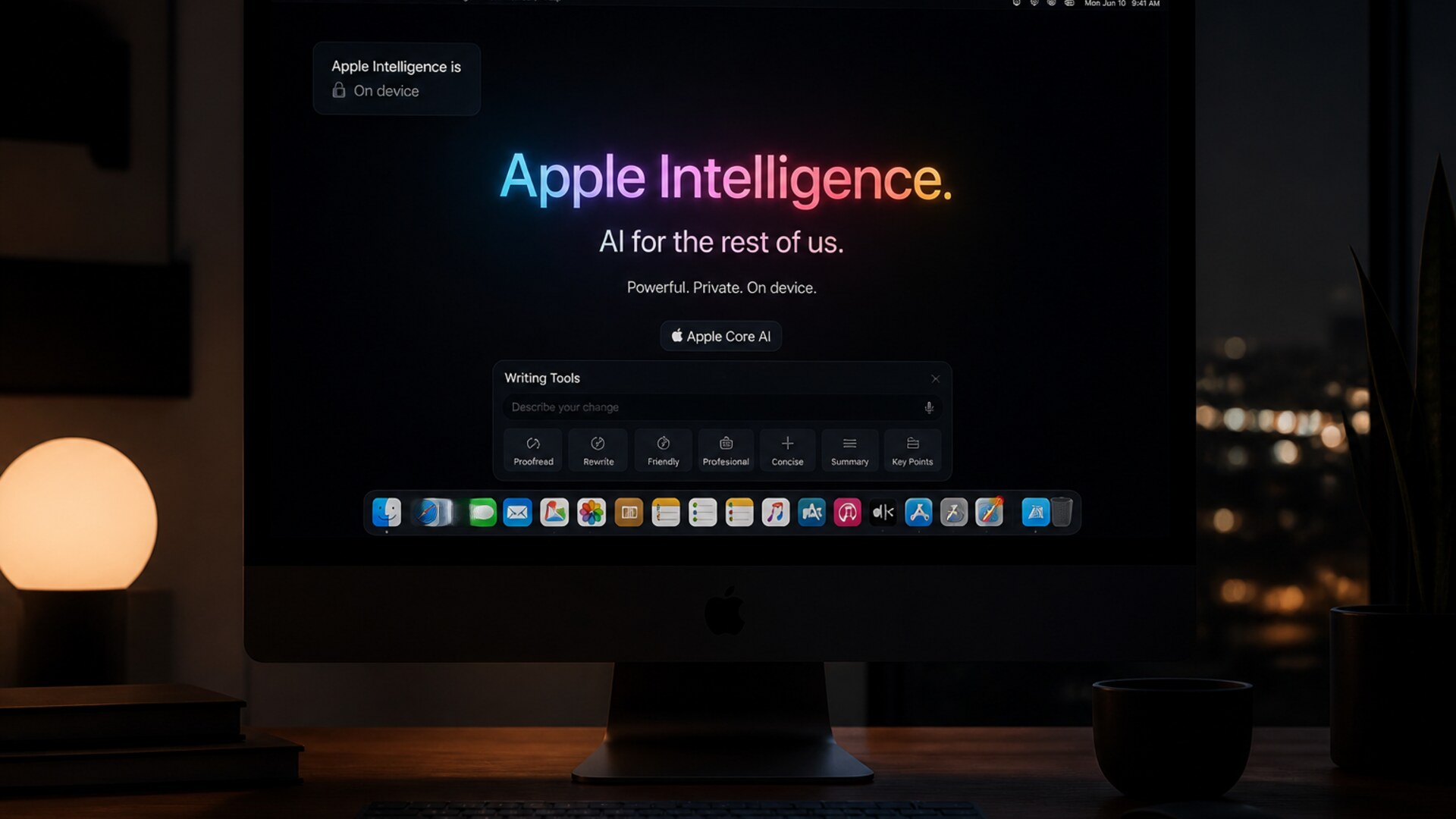
WWDC was 8 June 2026. Core AI is the name Apple put on the inference stack that already powers on-device Apple Intelligence, now opened to developers. The load path is a URL to a .aimodel file. The language is Swift. There is no server in that path. There is no token bill. Ahead-of-time compilation is coreai-build, so the first run is not a wait. The framework uses Apple silicon — CPU, GPU, and Neural Engine — and ships Python conversion tools beside the runtime. Those are the opening facts. They did not grow a second API name in the sessions this piece is working from.
Session 326 is where the models repository was shown. Qwen. Mistral. SAM 3. Converted and palettized for Apple silicon, sitting as .aimodel files. The talk built a vocabulary-card app on a phone: SAM 3 segmented the photos, Qwen 3 8B wrote the cards and thought through pinyin, and the radio stayed off. That is a phone demo of two named models from the repository, not the 70-billion-parameter Mac envelope. Compact vision on the device is SAM 3 in that talk. Language on the device is Qwen 3 8B. Mistral is in the same repository. The conversion path into .aimodel is the Python tools that ship with the runtime. Palettized is the word Apple used for how those weights sit on Apple silicon.
InfoQ's line is the map of the three stacks. Core AI takes the generative work. Core ML stays for classical models. MLX stays for custom weights. Successor, in that write-up, does not mean Core ML is retired. It means the new generative path is Core AI: Swift API, .aimodel, coreai-build, CPU and GPU and Neural Engine, no server. A developer who still has a classical Core ML model keeps Core ML. A developer who wants to train or run custom weights in MLX keeps MLX. The 8 June opening is Core AI sitting beside those two, not a wipe of the older names.
Xcode integration includes Instruments for first-load specialisation. You can compile for a device before the user opens the app. That is the AOT sentence in the IDE: coreai-build done ahead of the first launch, Instruments watching the specialisation, the .aimodel already resident. Tool calling and guided generation plug into Foundation Models, so a third-party .aimodel uses the same LanguageModelSession API as Apple's system model. Those are the API names already on the record. A fourth is not invented here. Load the file. Run it with the radio off. If it answers, the model never left the phone.
The 70-billion-parameter figure needs the Mac label every time it is printed. Apple's sessions put compact vision models on the stack, and put reasoning models up to the 70-billion-parameter class on a Mac. The phone demo in Session 326 was Qwen 3 8B and SAM 3. Eight billion is not seventy billion. A vocabulary-card app that segments a photo and writes pinyin is not a 70B reasoning run. The envelope Apple named for the larger class is a Mac with Apple silicon — CPU, GPU, Neural Engine — and a .aimodel loaded from a URL, compiled with coreai-build. The phone that ran Session 326 did that work with the network off. Both are Core AI. They are not the same size of model.
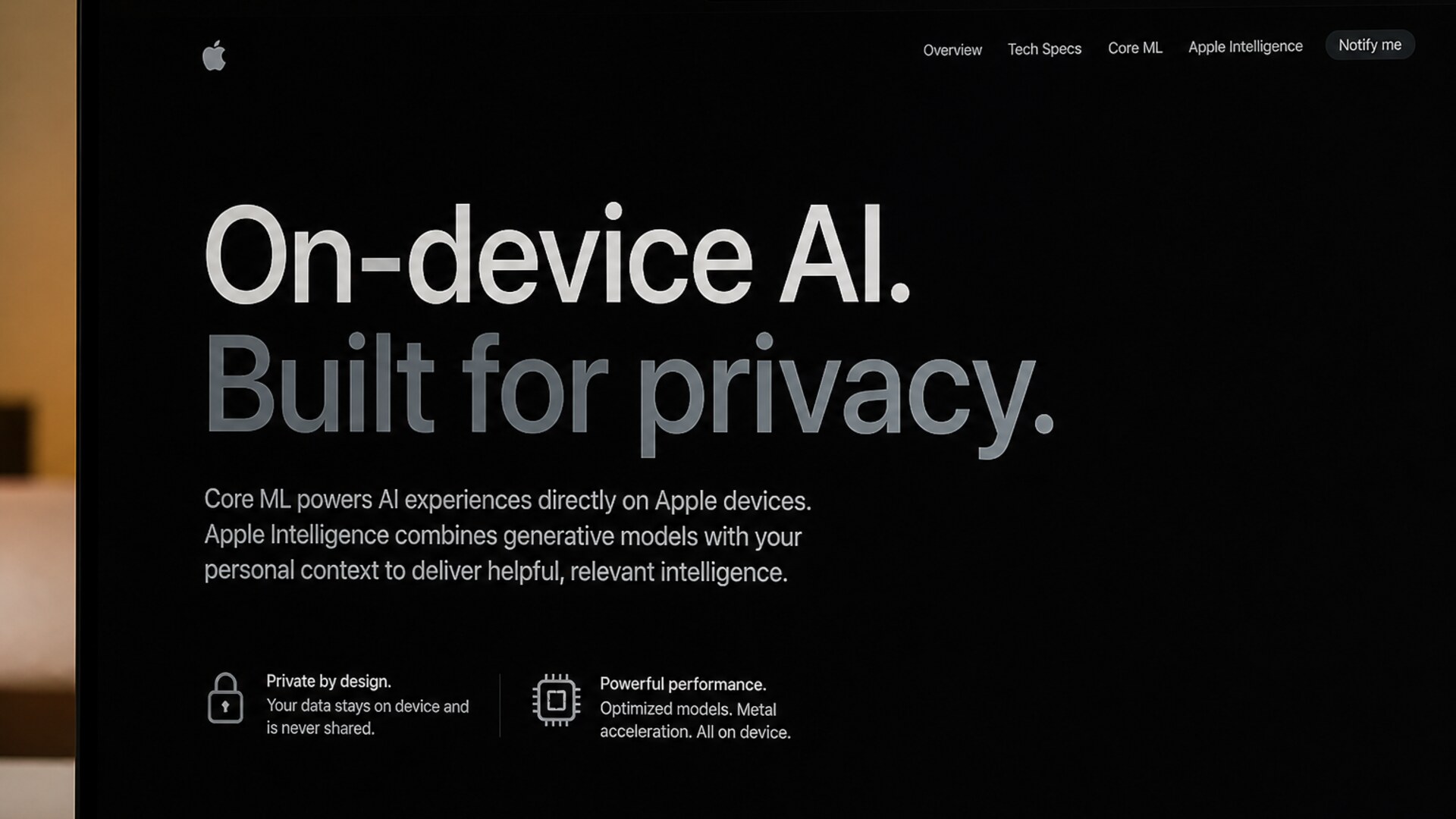
On-device is the privacy sentence on the marketing page in the photograph: on-device AI, built for privacy, Core ML for on-device experiences, Apple Intelligence combining generative models with personal context. The 8 June developer move is the same geometry opened as an API. A .aimodel is a file. A font is a file. The headline on this piece is that comparison, and it is Apple's own load path: point the Swift API at a URL, take the .aimodel, compile it ahead of time, run it on Apple silicon. No server. No token bill. The system model and a third-party model share LanguageModelSession. Tool calling and guided generation are the Foundation Models plugs that make that session more than a paragraph generator. Session 326's vocabulary cards are what that looks like with SAM 3 and Qwen 3 8B on a phone.
The repository is not a rumour list. Qwen, Mistral, and SAM 3 were on the Session 326 slides, converted and palettized for Apple silicon. Python conversion tools sit beside the runtime for weights that are not already in that repository. coreai-build is the AOT step after conversion. Instruments is the Xcode view of first-load specialisation. Compile for the device before the user opens the app and the wait moves to the developer's machine. That is the whole of the first-run promise Apple made on 8 June. This piece does not have a list of every converted checkpoint beyond Qwen, Mistral, and SAM 3. The rest of the repository is unlisted. The named three are enough to run the demo Apple ran: segment with SAM 3, write with Qwen 3 8B, keep Mistral in the same folder of .aimodel files.
Core ML does not leave. InfoQ said so. Apple's sessions said the same split: Core AI for generative, Core ML for classical, MLX for custom weights. A classical classifier in Core ML is still a Core ML model after 8 June. A custom-weight experiment in MLX is still MLX. What opened is the generative inference stack that already powered Apple Intelligence — the stack that now takes a .aimodel from a URL in Swift, compiles it with coreai-build, and runs it on the CPU, GPU, and Neural Engine of Apple silicon. The successor language is about generative work. It is not a tombstone for Core ML.
The Mac envelope and the phone demo should not be collapsed. Up to 70 billion parameters for reasoning models on a Mac is Apple's number. Qwen 3 8B on a phone with SAM 3 is Session 326's number. Compact vision models are in the same stack. Palettized weights are how the repository ships. The Swift API is how an app loads them. LanguageModelSession is how a third-party .aimodel talks the same way the system model talks, including tool calling and guided generation through Foundation Models. Instruments is how you watch first-load specialisation in Xcode. coreai-build is how you do that specialisation before the user is in the app. Python conversion tools are how a weight that is not yet a .aimodel becomes one.
Turn the radio off and the Session 326 demo still runs. That is the test Apple put on stage: a vocabulary-card app, SAM 3 on the photos, Qwen 3 8B on the cards and the pinyin, no network. If the cards appear, the model never left the phone. The same test, on a Mac, is the one Apple framed with the 70-billion-parameter reasoning envelope. A 70B Mac run will be printed when a session shows one. Until then the number is Apple's envelope, printed with the Mac attached.
The 8 June news is the opening. Core AI. Swift. .aimodel. coreai-build. Apple silicon. Python conversion tools. A repository with Qwen, Mistral, and SAM 3. InfoQ's three-stack map. A phone that wrote flashcards with the radio off. WWDC, 8 June 2026. Load a .aimodel from a URL. No server. No token bill. Ahead-of-time compilation with coreai-build. CPU, GPU, Neural Engine. Session 326's vocabulary-card app, SAM 3 plus Qwen 3 8B, pinyin on the phone, no network. Core AI as successor to Core ML for generative work; Core ML stays classical; MLX stays custom weights. Compact vision models on the stack; on a Mac, reasoning models up to the 70-billion-parameter class — Apple's envelope, not a phone demo. Xcode Instruments for first-load specialisation. Compile for a device before the user opens the app. Tool calling and guided generation through Foundation Models. Third-party .aimodel on the same LanguageModelSession API as the system model. Load the file. Run it with the radio off.
The paper
Comments
No notes on this story yet.
Sign in to comment