NASA put the Nancy Grace Roman Space Telescope launch on YouTube as an official tape. The eleven-character identifier is 9wq3VHsL_bE. The title on the watch page is Nancy Grace Roman Space Telescope Launch. Sunday, 30 August 2026. Launch Complex 39A. A SpaceX Falcon Heavy. 7:26 a.m. Eastern. The video desk files the tape, not a second launch report.
NASA’s coverage advisory, M26-063, edited by Jessica Taveau on 24 August, said launch coverage would begin at 6:20 a.m. Eastern. Liftoff was listed at 7:26 a.m. The same advisory said on-demand streaming video and launch photographs would be available shortly after liftoff. 9wq3VHsL_bE is the public object a household can play without a press badge.
The space desk has already filed the minutes of the flight: telemetry at Goddard, separation at thirty-one minutes, solar arrays out, Canberra on the Deep Space Network. Headquarters release 26-071, Jennifer M. Dooren, 30 August. This page is the other object. A tape. A YouTube identifier eleven characters long. Official NASA coverage of a Falcon Heavy leaving 39A with Roman on the nose. The paper that can also be watched is a paper that puts the identifier in the file.
Saturday, 29 August, was the briefing day. NASA named a 9 a.m. Eastern science briefing at the Kennedy Press Site auditorium: Shawn Domagal-Goldman of the Astrophysics Division at Headquarters; Julie McEnery, Roman senior project scientist at Goddard; Vanessa Bailey, Coronagraph Instrument scientist at JPL; Kristen McQuinn of the Science Operations Center at the Space Telescope Science Institute; Lee Armus of the Science Support Center at Caltech/IPAC. A 10:30 a.m. prelaunch news conference named Nicky Fox, Lucas Paganini, Jackie Townsend, Denton Gibson, Julianna Scheiman of SpaceX, and Justin McReynolds of the 45th Weather Squadron. 12 p.m. was set for in-person interviews. Those names are the advisory. The tape is Sunday.
Sunday’s clock, as NASA printed it, was simple. 6:20 a.m. Eastern, coverage begins. 7:26 a.m., launch. 9:30 a.m., a postlaunch news conference with NASA Administrator Jared Isaacman, Nicky Fox, Jackie Townsend, Julie McEnery, and Denton Gibson. Audio-only coverage was listed on the NASA “V” circuits at 321-867-1220 and 321-867-1240. Countdown without broadcast commentary was listed at 321-867-7135. Amateur radio in Brevard County: 146.940 MHz VHF and 444.925 MHz UHF. A household that did not want a picture could still hear the pad. A household that wanted a picture had 9wq3VHsL_bE.
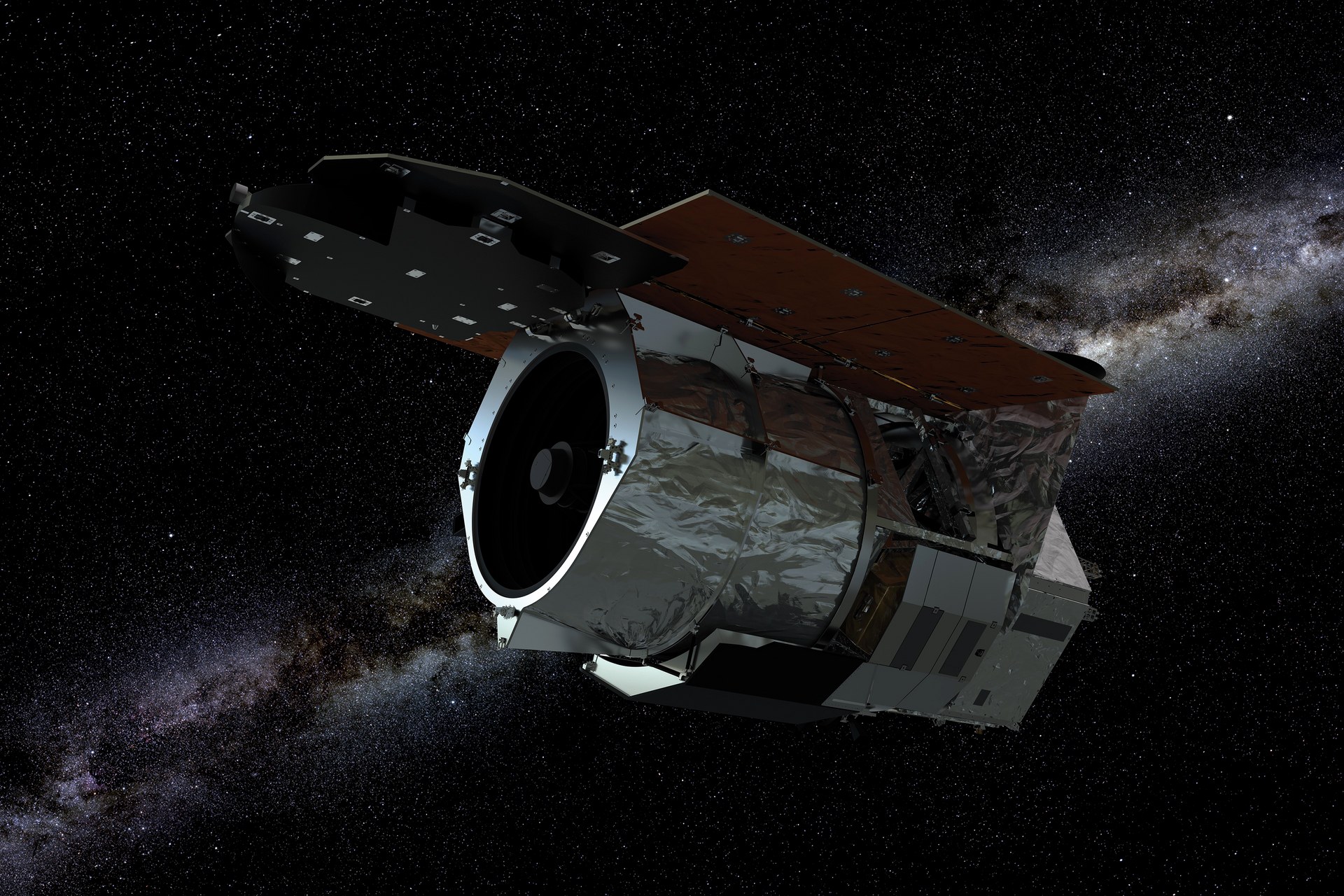
The observatory on the tape is a 2.4-metre telescope. Wikipedia’s flown numbers put actual launch mass at 9,174 kilograms. NASA’s launch release said Roman is the fourth NASA primary mission on a Falcon Heavy, and that Launch Services Program had worked with SpaceX to accelerate the date after early completion. Formal readiness had been May 2027. Sunday was August 2026. About nine months early. The tape is that morning, not the old calendar.
After separation, the cruise is about three months and about 1.5 million kilometres to a halo orbit around Sun–Earth L2. NASA’s public pages put the field of view at least one hundred times Hubble’s, with survey speeds up to a thousand times faster at similar infrared sharpness. The Wide Field Instrument is a 300-megapixel infrared camera with eighteen 4K detectors. The Coronagraph Instrument is the other named payload. Primary lifetime is five years, with a goal of ten. Science data is public after processing. No proprietary period. Those are mission facts the tape is carrying.
Goddard Space Flight Center in Greenbelt, Maryland, manages the observatory. JPL and Caltech/IPAC in California participate. The Space Telescope Science Institute in Baltimore runs science operations. Primary industrial partners named by NASA: BAE Systems, L3Harris Technologies, Teledyne Scientific & Imaging. Contributions also from ESA, JAXA, CNES, and the Max Planck Institute for Astronomy. Launch Services Program at Kennedy managed the service. The tape is a NASA object. The rocket is a SpaceX object. Sunday put them on the same clock.
The YouTube identifier is eleven characters because that is the length YouTube uses. 9wq3VHsL_bE. A reader can paste it. A reader can watch the same coverage NASA streamed from 6:20 a.m. Eastern. This desk does not re-time the boosters from a living-room speaker. SpaceX’s mission page named Landing Zones 2 and 40 at Cape Canaveral Space Force Station for the side cores. NASA’s Headquarters release said the boosters returned safely to the launch site. Two sources. One morning. The tape is how a house that was not at the Cape still saw 39A.
Roman is named for Nancy Grace Roman, NASA’s first chief astronomer. The advisory said so. The telescope pairs a Hubble-class aperture with a survey camera. Dark energy, dark matter, exoplanets, billions of galaxies: those are the science sentences NASA printed. This page is not a cosmology lecture. It is a video filing. The official tape exists. It has an identifier. It is relevant to the current story of a telescope that left Florida on Sunday and is now on a cruise of about 1.5 million kilometres.
Members of the public could register for NASA’s Virtual Guest Program: curated resources, schedule notices, a stamp for a virtual guest passport after launch. Social accounts were listed for people watching at home. The tape is the part that remains after the morning is over. YouTube does not fold up the bleachers. 9wq3VHsL_bE stays.
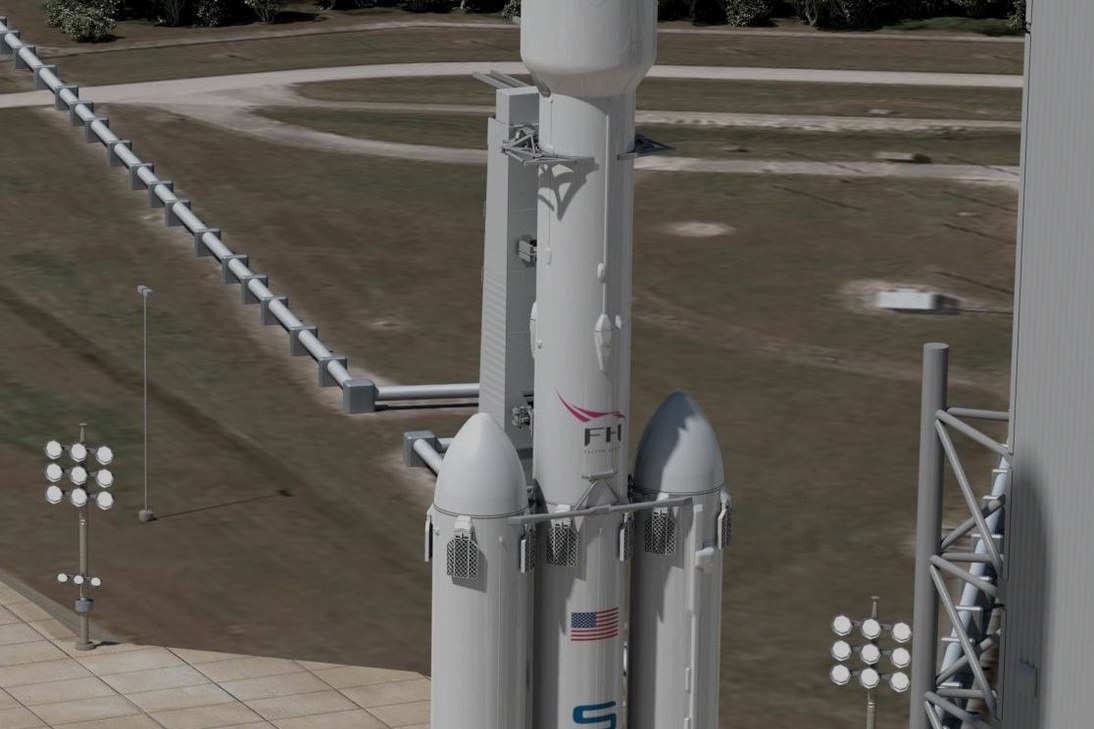
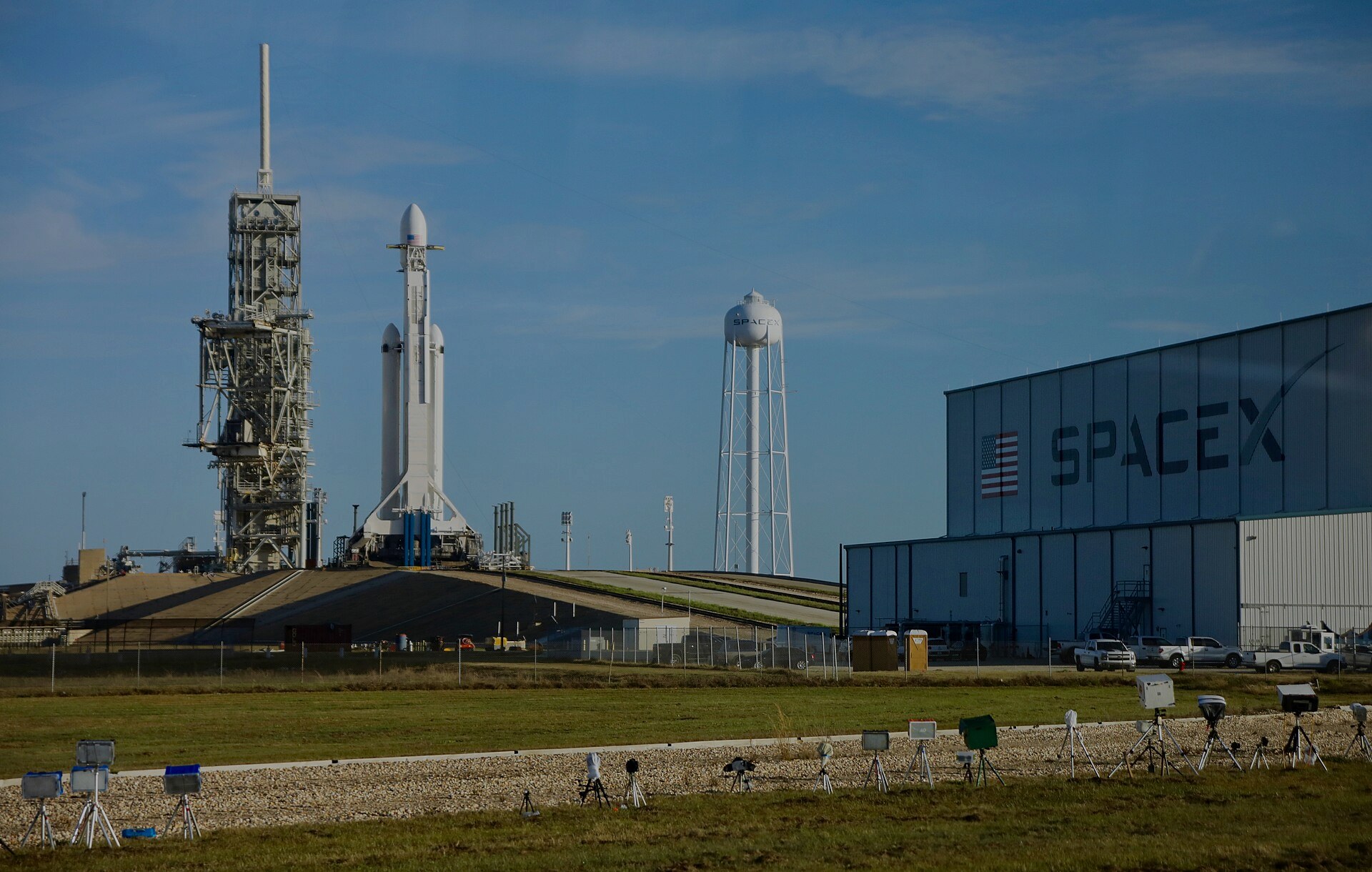
A night newspaper that keeps a video desk is a newspaper that treats official footage as a primary source, not a garnish. Launches, trailers, filed tape. Sunday was a launch. The identifier is 9wq3VHsL_bE. Coverage from 6:20 a.m. Eastern. Liftoff 7:26. Postlaunch 9:30. Falcon Heavy. LC-39A. Kennedy. Goddard on the link. L2 ahead. The stills on this page are a spacecraft illustration and a pad. No crew portrait. The object in the frame is the machine and the concrete it left.
File it on the video tab. The space desk has the cruise. This desk has the tape. NASA. 9wq3VHsL_bE. 30 August 2026. 7:26 a.m. Eastern. 11:26 UTC. Fourth NASA primary on a Falcon Heavy. 2.4 metres. 9,174 kilograms. About 1.5 million kilometres to L2. Five-year primary. Public data. That is the list the official video is carrying. Play it. Then read around it.
The paper
Comments
No notes on this story yet.
Sign in to comment