
The Commonwealth on 24 August named six consortiums to help design Australia's first high-speed trains and the first stretch of twin tunnels on the Sydney to Newcastle line.
PS News carried the shortlist that day, in a report by Andrew McLaughlin. The names are for Early Contractor Involvement, not a construction contract. Work on the ground is still listed for 2029.
The project is Phase 1A, Sydney to Newcastle. The development phase around it is $230 million, scheduled to run until early 2028, so the line can be construction-ready in 2029. Phase 1A is projected at about $55 billion, including stations and rolling stock, and could be operating as early as 2038. Those four figures are the public envelope: $230 million to plan, $55 billion to build, 2029 to start construction, 2038 to ride.
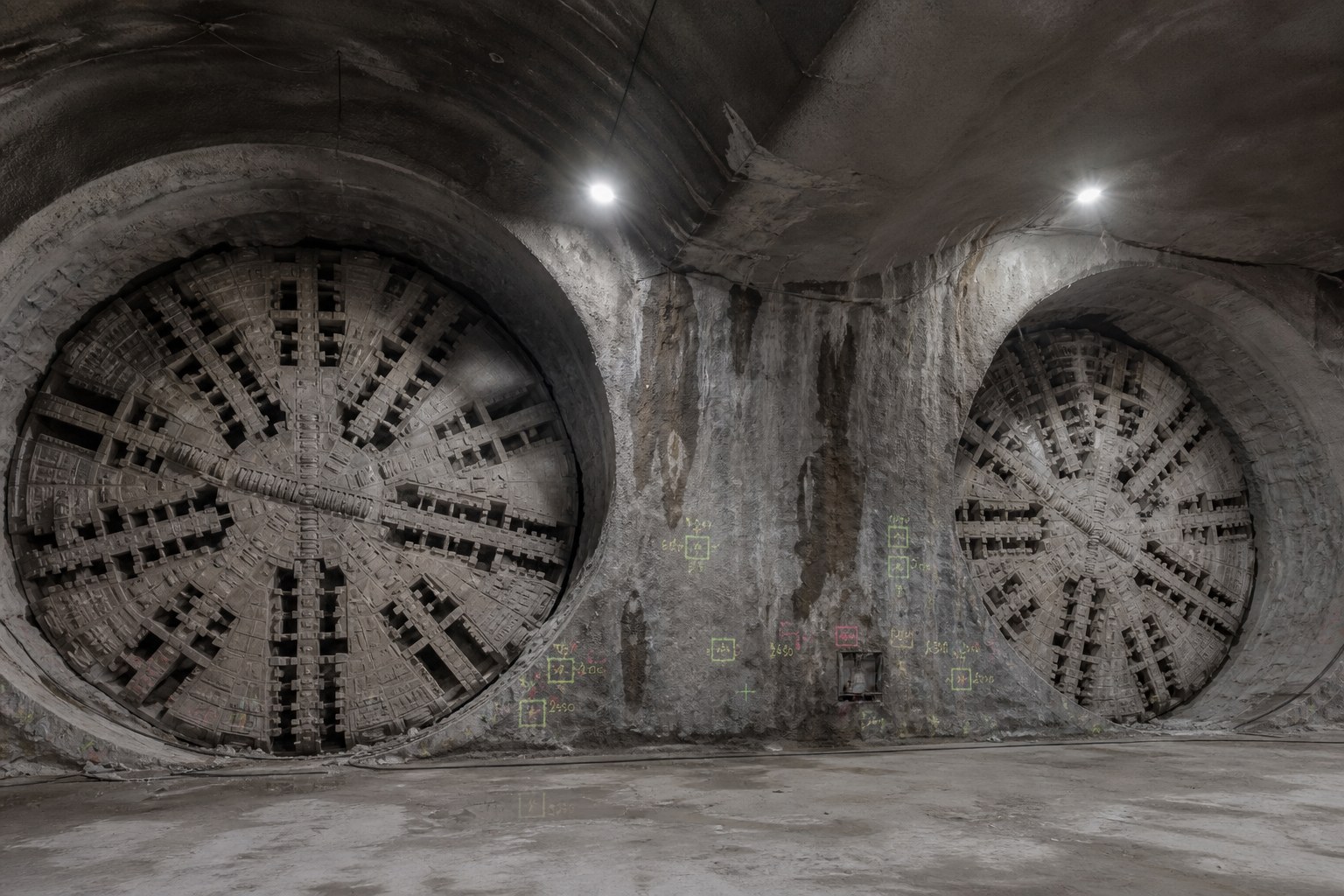
The trains, if they are ever funded, will be capable of 320 km/h. They will likely be restricted on a large part of the first stage because of tunnels south of the Hawkesbury and under Sydney's northern suburbs into Central. PS News's timetable is about one hour Newcastle to Sydney, and about 30 minutes from the Central Coast to either Newcastle or Sydney Central. The tunnels are why 320 km/h does not apply to the whole first stage.
Three consortiums were shortlisted for Early Contractor Involvement on trains and systems: the Alstom/UGL Joint Venture (Alstom Transport Australia and UGL Engineering); the ARC Joint Venture (Siemens Mobility, Siemens Mobility GmbH, and Mott MacDonald Australia); and Hitachi Rail STS Australia. They must base the work on proven trains and systems already operating around the world, adapted to Australian conditions. There is no construction contract until the development phase ends and the government makes an investment decision. Shortlisting is a design milestone, not a funding decision. Felix.net, on 24 August, said the same: early, competitive, no construction award yet.
Three construction consortiums were shortlisted for the earthworks ECI, Area Package 1, Berowra to Ourimbah: Acciona John Holland Joint Venture; Advanced Alliance Joint Venture (Gamuda Engineering, FCC Construction Australia, Samsung C&T Corporation); and GoFar Joint Venture (CPB Contractors, Ferrovial Construction (Australia), VINCI Construction and Grands Projects Australia). That package is about 35 kilometres of twin tunnels with tunnel boring machines, the Central Coast High Speed Rail Station at Gosford, and rail, station systems, and other structural and surface works. Gosford is the named station. Berowra and Ourimbah are the ends of this first packet.
The High Speed Rail Authority's ECI is meant to finalise cost, scope, design and approvals so the line is construction-ready, and so the Australian Government can decide at the end of the development phase. If funding is approved, the trains-and-systems package includes Australia's first high-speed trains, rail systems, a depot, an operations control centre, and integration, testing and commissioning of the Newcastle to Sydney system. Monday's news is the shortlist before that decision. The six names are proponents in a competition, not builders with machines in the ground.
Catherine King, Minister for Infrastructure, Transport, Regional Development and Local Government, said Australia had a proud history of building trains in-country, and she hoped the project would drive a resurgence in local industry. "The three proponents we have shortlisted will take globally proven high-speed rolling stock and systems and adapt them for Australian high-speed rail, Australian conditions and Australian passengers," she said. "Through this process, the proponents will explore where we can use existing Australian rail manufacturing capability and advanced manufacturing facilities to support local jobs, and train the next generation of skilled Australian workers. We know the roads between Newcastle and Sydney are congested, and the existing rail line is reaching capacity. We must invest in new ways to travel between New South Wales' largest cities. That's why this careful planning work is getting underway."
HSRA chief executive Tim Parker said the line was not being invented from scratch. "We're not starting from scratch – Australia's high-speed rail will use tried and tested high-speed trains and systems already operating successfully around the world. Our partners will work with us to adapt proven technology for Australian conditions, Australian safety requirements and the needs of Australian passengers." He added: "High-speed rail is about much more than speed. We want a reliable, accessible, comfortable and digitally-connected service that transforms the way people travel between Newcastle, the Central Coast and Sydney. Bringing the train and systems partners into the project now means we can design the railway around the customer experience from the start."
Felix.net quoted Parker on the questions the earthworks shortlist is being paid to answer inside the $230 million development phase: the diameter of the tunnels for Australia's first high-speed trains, what kind of mega tunnel boring machines, and how to build the first high-speed rail station at Gosford. Those answers are not public yet. They are the work of the development phase. Parker said reliability, access, comfort and a digital connection matter as much as the 320 km/h headline. Gosford is where a passenger will stand.
The east-coast corridor was announced in February. 24 August is the shortlist inside that announcement. None of the dates moved because six names went on a list. The list is the news: Alstom/UGL, ARC and Hitachi on trains and systems; Acciona John Holland, Advanced Alliance and GoFar on the first tunnels; Gosford as the named first high-speed station.
The public figures have not changed. Construction is still listed for 2029. The earliest operating date is still 2038. Phase 1A is still about $55 billion, including stations and rolling stock. The trains are still 320 km/h on paper, about an hour Newcastle to Sydney on paper, and about 30 minutes for the Central Coast on paper. Thirty-five kilometres of twin tunnel have not been bored. Monday made the drawing a competition among six consortiums.
The paper
Comments
No notes on this story yet.
Sign in to comment