
NASA and SpaceX are go for the Nancy Grace Roman Space Telescope on Sunday 30 August. Liftoff is targeted for 7:26 a.m. Eastern on a Falcon Heavy from Launch Complex 39A at Kennedy Space Center. A backup window sits on Monday 31 August at 7:22 a.m. ET.
Saturday’s prelaunch briefing, 29 August, confirmed the go. Space Force weather officer Justin McReynolds of the 45th Weather Squadron put Sunday’s odds at 50 percent. The news is the attempt. It is not a landing.
The clock is public. SpaceX’s Roman mission page names Sunday 30 August and 7:26 a.m. ET. It names Monday 31 August at 7:22 a.m. ET as the backup. NASA’s 24 August coverage release put the same Sunday no-earlier-than on 39A and said launch coverage begins at 6:20 a.m. Eastern. A SpaceX webcast begins about one hour before liftoff, on the company page and on X @SpaceX. Those are the channels. Those are the minutes.
This filing is 30 August in Adelaide, evening. Eastern time on the Cape is still Sunday morning. Coverage at 6:20 a.m. Eastern has not been replaced by a hold or a success statement on the pages this desk is holding. The target remains 7:26 a.m. The backup remains Monday. The target stays. A plume that has not been posted does not.
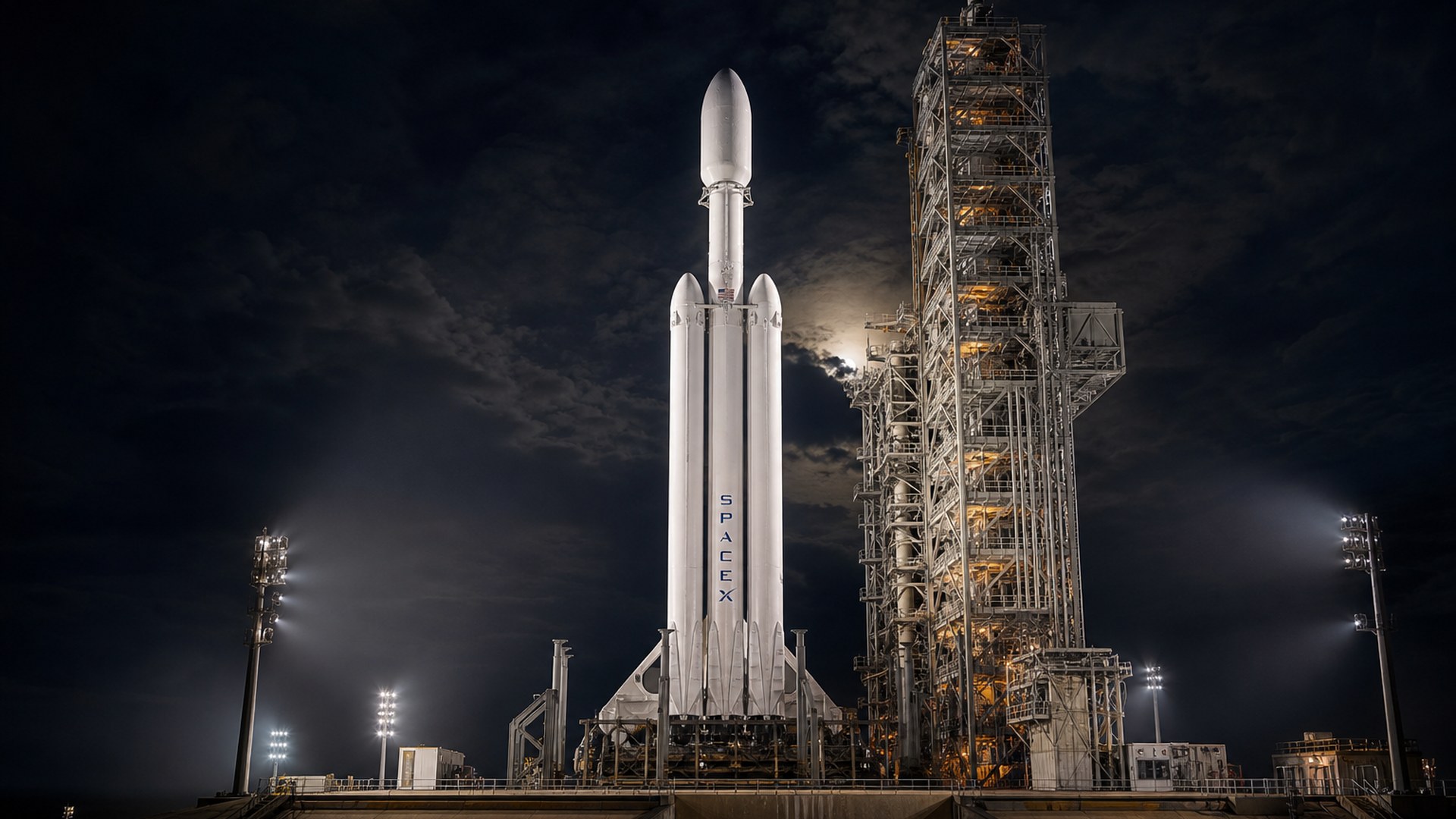
Side boosters: SpaceX says this is the first and third flight for the two first-stage side boosters on the mission. They previously launched GOES-U and Viasat-3 F3. After stage separation they are to land at Landing Zones 2 and 40 at Cape Canaveral Space Force Station. LZ-2 and LZ-40. Named pads. Named prior missions. Reuse is on the record. The landing zones are the plan, not a photograph of a landing that has not happened on this page.
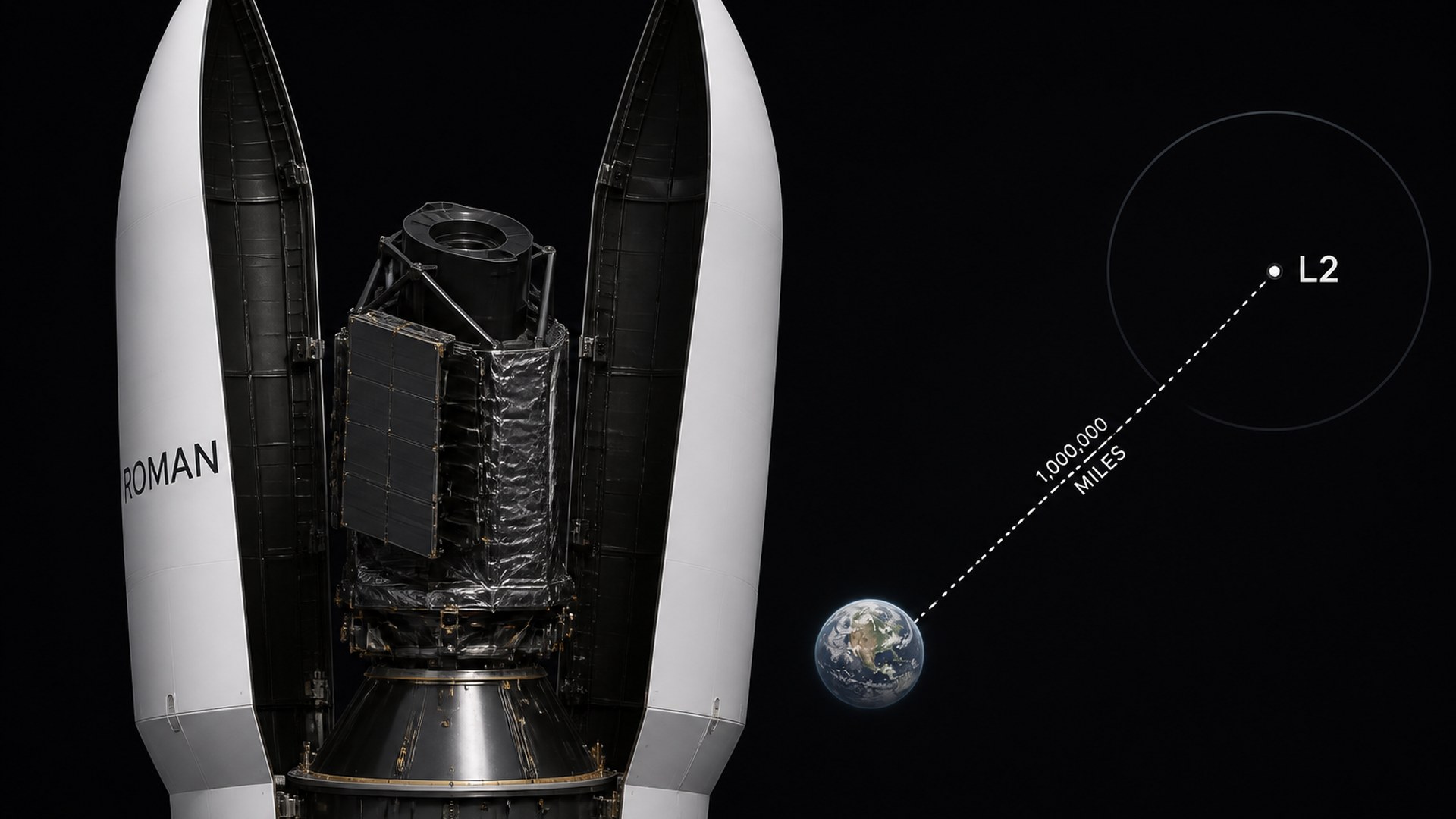
Roman is a NASA flagship observatory. SpaceX’s page: dark energy and dark matter; Sun-Earth Lagrange Point 2; a field of view at least 100 times larger than Hubble; map billions of galaxies; exoplanets; black holes. Space.com from the Cape on 29 August: L2 about 1.6 million kilometres; roughly three months of deployments, calibrations and checkout on the way; first science images expected early 2027. France 24, 30 August: the observatory stands over 12 metres; about 100 days to the vantage NASA is using; field of view more than 100 times Hubble’s. Jared Isaacman’s line, from April, on that France 24 piece: “Roman will give the Earth a new atlas of the universe.” The atlas is his sentence. Early 2027 is Space.com’s science-images line. 12 metres is France 24’s height.
Saturday 29 August was a working day on the air. Space.com: a science briefing, then a prelaunch press conference at 10:30 a.m. EDT. NASA Administrator Jared Isaacman was expected to fly past the stacked telescope and the Falcon Heavy in his jet, subject to weather and operations, on the same stream. NASA wrote that in a 24 August media advisory. A post-launch briefing is on the Sunday sheet at 9:30 a.m. EDT. Isaacman, Fox, Townsend, McEnery, Gibson are the names Space.com put on that briefing. The names are the advertised panel. This page does not guess what they will say.
Weather is half. McReynolds, 45th Weather Squadron, 50 percent for Sunday, per Space.com’s Cape file on 29 August. Offshore cumulus and showers or thunderstorms were the watch items in that report. Fifty percent is not a scrub. Fifty percent is not a guarantee. The figure is 50 percent because the weather officer put 50 percent on the record the day before the window.
Countdown objects, from SpaceX’s public table, as a timetable not a manual: T-00:53 Launch Director verifies go for propellant load. T-00:50 first-stage RP-1. T-00:45 first-stage LOX. T-00:35 second-stage RP-1. T-00:18:30 second-stage LOX. T-00:07 engine chill. T-00:00:59 final pre-launch checks. T-00:00:45 Launch Director go for launch. T-00:00:20 tanks pressurize. T-00:00:06 ignition sequence. T-00:00:00 Falcon Heavy liftoff. After that, SpaceX’s approximate table runs through Max Q, side-booster cutoff and landing, fairing separation, and Roman deploy at about T+00:31:31. The table is SpaceX’s. Deploy at 31 minutes 31 seconds is SpaceX’s approximate line.
What this page will not do is declare the telescope on its way. It will not declare the side boosters on LZ-2 and LZ-40. It will not declare the weather a go in real time. It will say NASA and SpaceX are go for 7:26 a.m. Eastern on 30 August from 39A, that Monday 7:22 a.m. ET is the backup, that Saturday’s briefing confirmed go, that weather was called at 50 percent, that coverage starts at 6:20 a.m. Eastern, that the webcast is an hour out, that the boosters have GOES-U and Viasat-3 F3 on their cards, that Roman is a flagship for L2 with a field at least a hundred Hubbles wide. The attempt is the news. The landing is a later file.
39A is the pad that flew Apollo 11 and the first shuttle. That fact is in the weekend explainers. It is colour, not a claim that this stack is a Saturn. Falcon Heavy is the rocket. Roman is the payload. Kennedy is the center. Sunday morning Eastern is the window. This newspaper in Adelaide is filing while that morning is still ahead of the Cape clock. If the window holds, the next file is a launch. If it slips, the next file is Monday 7:22 a.m. ET. Tonight the facts are go, 7:26, 50 percent, 39A, Falcon Heavy, Roman.
The breaking page takes the clock. 24 August NASA named the coverage. 29 August the Cape said go and 50 percent. 30 August SpaceX still names 7:26 a.m. ET and a Monday backup. France 24 still has the stack on the pad in a 29 August Reuters picture credit. The pages have not been replaced by a success blog. The go, the minutes, and the backup are the news. The sky is not, yet.
Sunday 30 August, 7:26 a.m. Eastern, Launch Complex 39A, Falcon Heavy, Nancy Grace Roman Space Telescope. Monday 31 August, 7:22 a.m. ET if the first window does not go. NASA coverage 6:20 a.m. Eastern. Weather 50 percent on Saturday's sheet. LZ-2 and LZ-40 for the side boosters. L2 for the telescope. Early 2027 for first science images, on Space.com's line. The attempt is the file.
The paper
Comments
No notes on this story yet.
Sign in to comment