
Apple spent 3 March putting M5 Pro and M5 Max in the 14- and 40.6 cm MacBook Pro. Pre-order opened 4 March. Machines started landing 11 March. The Max is an 18-core CPU — six super cores, twelve performance cores — with a 40-core GPU and a 16-core Neural Engine. Unified memory on the Max goes to 128 GB, at 614 GB/s. The Pro tops out at 64 GB and 307 GB/s.
The 35.6 cm Pro starts at US$2,199 with 1 TB. The 40.6 cm Pro is US$2,699. Max starts at US$3,599 for the 35.6 cm and US$3,899 for the 16, both with 2 TB. Space black and silver.
Cupertino dated the newsroom page 3 March 2026. Pre-order opened the next morning on apple.com/store and the Apple Store app in 33 countries and regions. Machines reached Apple Stores and authorised resellers on Wednesday 11 March. The published numbers have not moved as of 30 August. The 35.6 cm Max still opens at US$3,599. Unified memory on that chip still tops out at 128 GB. The 40-core GPU still lists 614 GB/s.
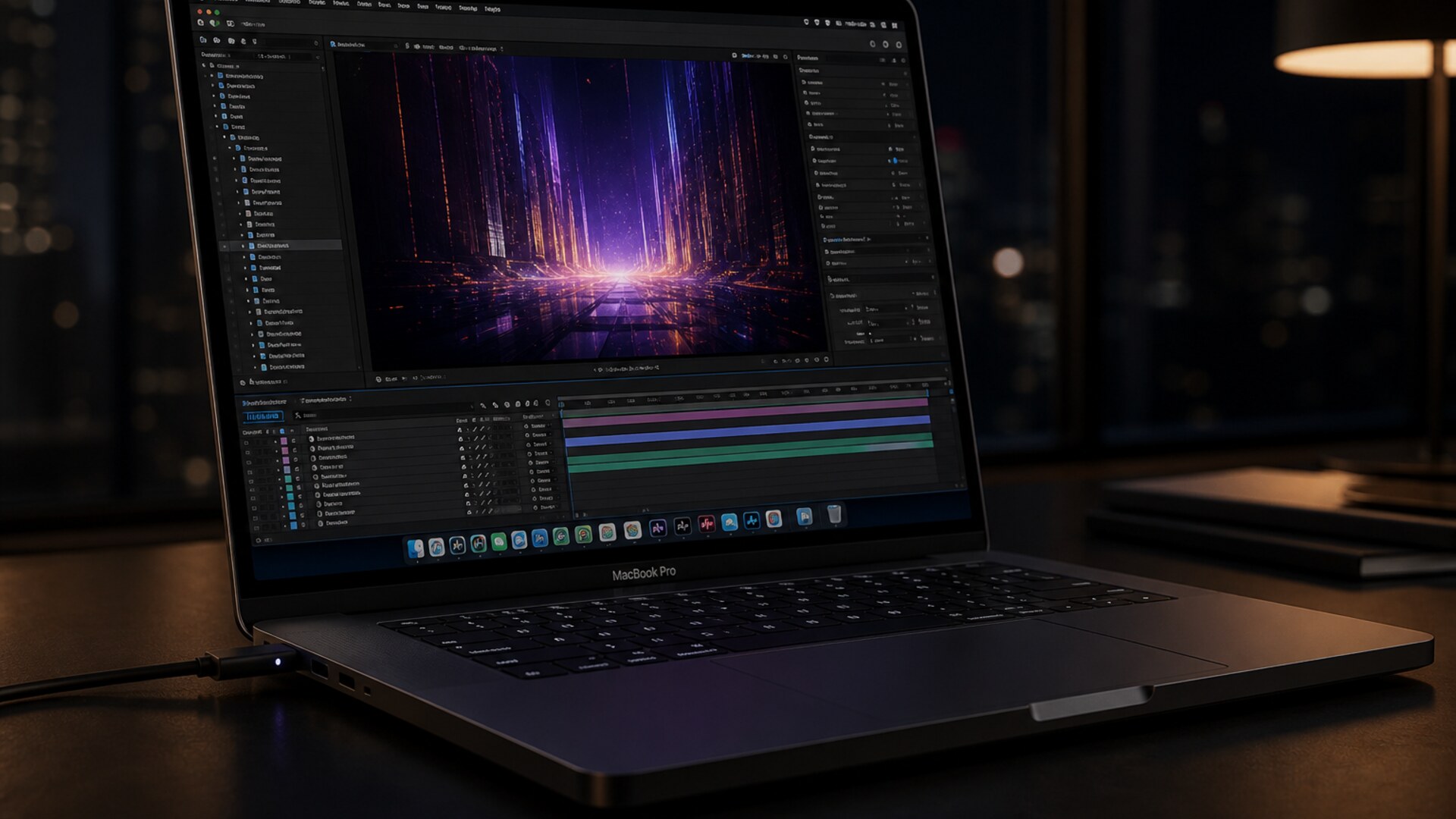
John Ternus, Apple's senior vice president of Hardware Engineering, put the claim in one sentence on that page. "With Neural Accelerators in the GPU, the new MacBook Pro enables professionals to run advanced LLMs on device and unlock capabilities that no other laptop can do — all while maintaining exceptional battery life." He also said the machine was "now up to 4x faster than the previous generation." Apple's January and February tests are the source of the multiplier. Keep the label on. Independent token rates are not in this file.
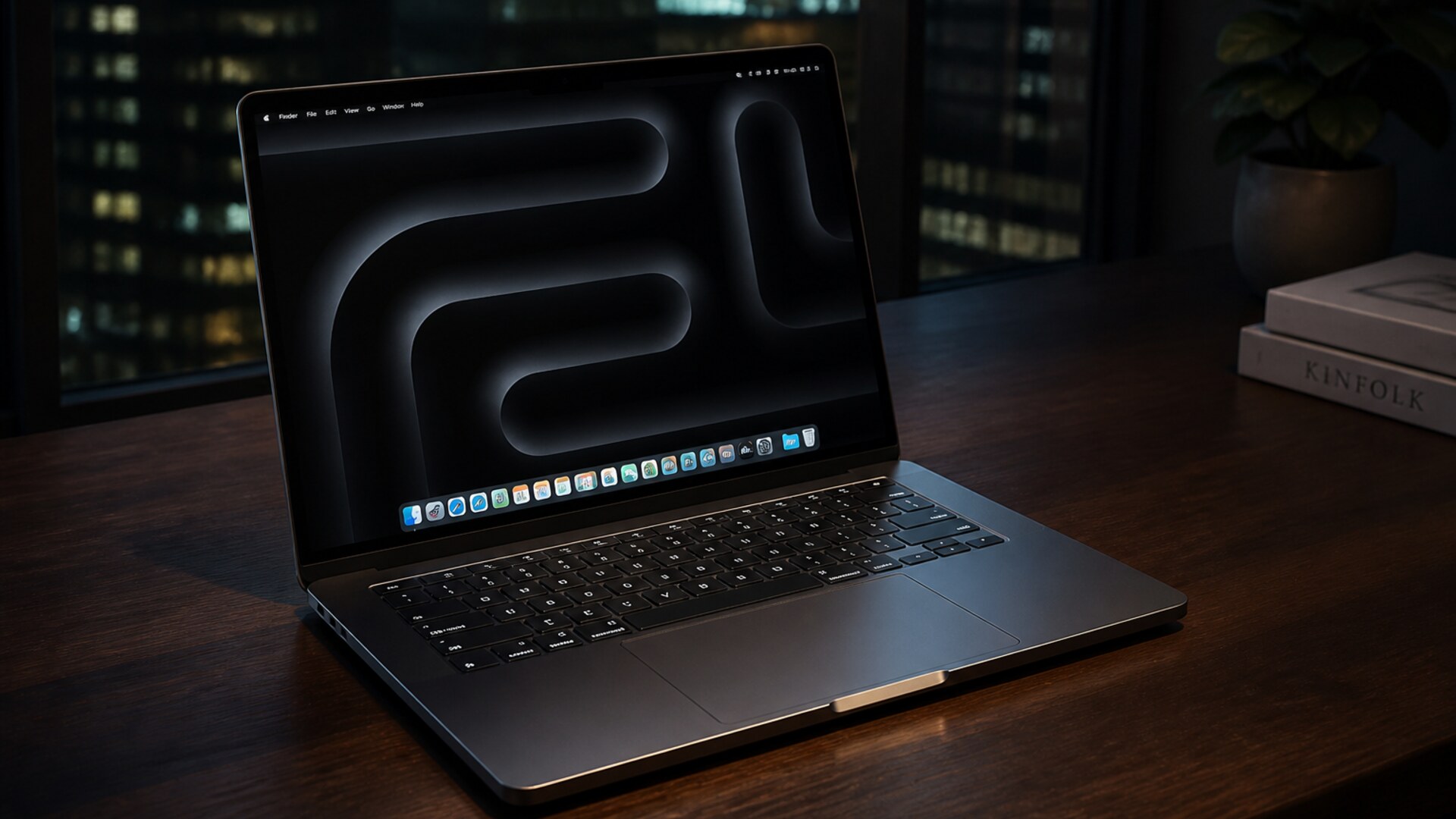
Each GPU core carries a Neural Accelerator. Apple calls the package Fusion Architecture: two dies bonded into one system-on-a-chip. Macworld's March guide filed the same architecture as two 3-nanometre dies in one chip. M5 Max ships as an 18-core CPU with either a 32-core GPU at 460 GB/s or a 40-core GPU at 614 GB/s. Unified memory on the 40-core Max is 48 GB, 64 GB, or 128 GB. The 32-core Max takes 36 GB. M5 Pro, on the same 14- and 40.6 cm shells, tops out at 64 GB and 307 GB/s, with a 15-core or 18-core CPU and a 16-core or 20-core GPU. Apple Support's 35.6 cm and 40.6 cm spec sheets, both dated 2026, list those combinations. The night-desk photograph is a Space Black 35.6 cm: notch, dock, a window of city lights, Kinfolk on the stack, a small plant.
Apple's February table for the Max is a list, not a review. LLM prompt processing: up to 4× the M4 Max, up to 6.7× an M1 Max. AI image generation: up to 3.8× the last generation, up to 8× an M1 Max. Video effects in Blackmagic DaVinci Resolve Studio: up to 5.4× an M1 Max and up to 3× an M4 Max. Topaz Video AI enhance: up to 3.5× an M4 Max. Graphics: up to 50 percent over M4 Pro and M4 Max. The Pro sheet runs in parallel. Image generation up to 3.7× an M4 Pro and 7.8× an M1 Pro. Prompt processing up to 3.9× and 6.9×. Maxon Redshift 3D up to 1.4× and 5.2×. Ray tracing in Cyberpunk 2077: Ultimate Edition up to 1.6× an M4 Pro. Apple says the tests ran on preproduction systems in January and February 2026. Footnote 5 on the newsroom page puts the 14.5 GB/s storage number on a 40.6 cm Max with an 18-core CPU, 40-core GPU, 128 GB, and an 8 TB SSD, measured with FIO 3.41. Sequential read/write on the Max is listed at about twice the last generation.
Storage is the floor that moved. M5 Pro now starts at 1 TB. M5 Max now starts at 2 TB. The 35.6 cm M5, the cheaper chip in the same family, also moved to 1 TB and opens at US$1,699, US$1,599 for education. Macworld's pricing explainer in March treated the Pro and Max sticker rise as a storage-tier change, not a new tax. The M4 Pro 35.6 cm had opened at US$1,999 with 512 GB. 1 TB on that machine was US$2,199, which is where the M5 Pro 35.6 cm now starts. The M4 Max 35.6 cm had opened at US$3,199 with 1 TB. 2 TB on that machine was US$3,599, which is where the M5 Max 35.6 cm now starts. The 40.6 cm Pro is US$2,699 with 1 TB. The 40.6 cm Max is US$3,899 with 2 TB. Education is US$3,299 for the 35.6 cm Max and US$3,599 for the 40.6 cm Max. Two colours. Space black and silver. No third.
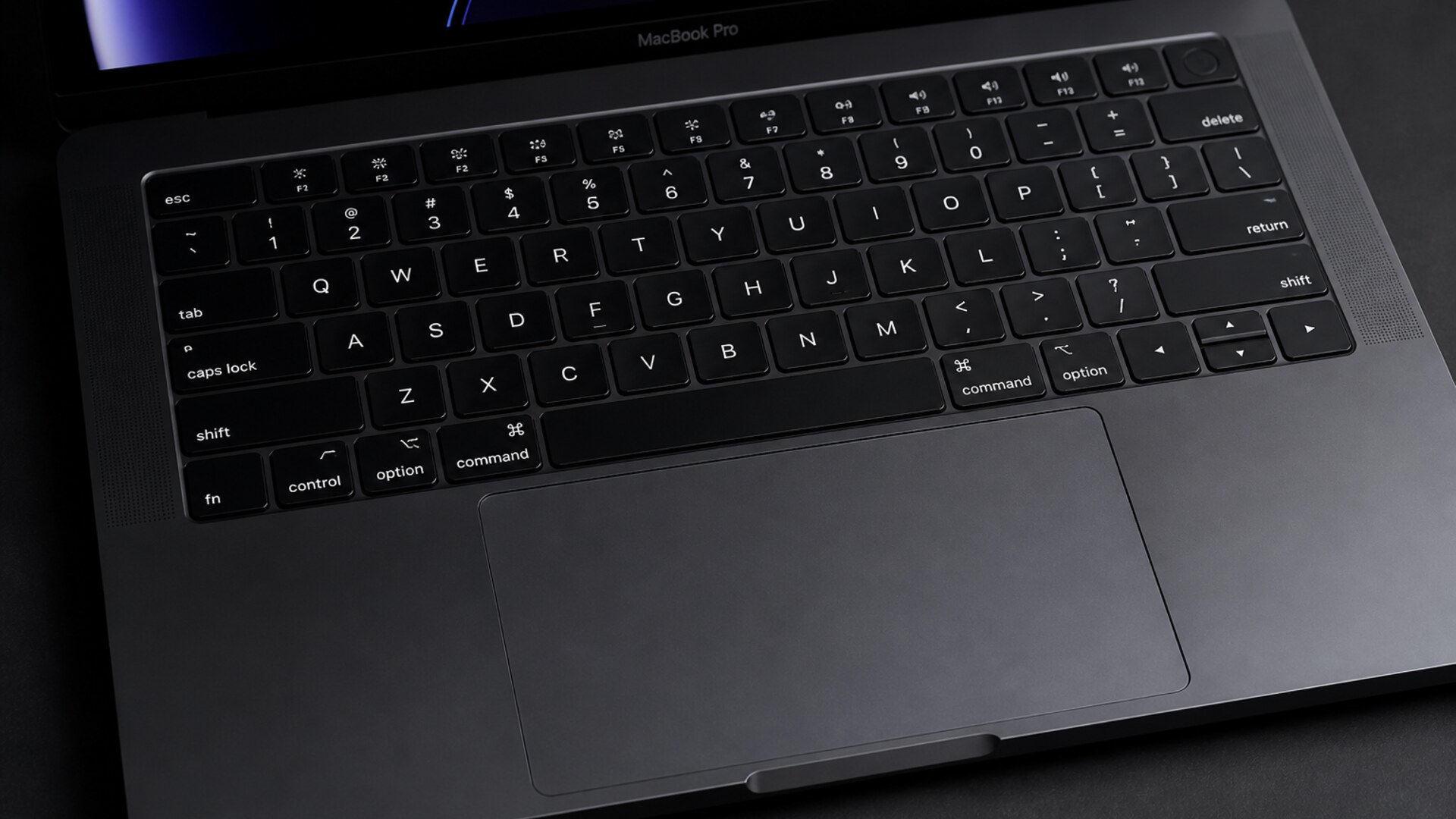
The ports did not shrink. Three Thunderbolt 5 ports, HDMI to 8K, an SDXC slot, MagSafe 3. The Max will drive four external displays. The Pro will drive two. Fast charge is 50 percent in 30 minutes on a 96 W or larger USB-C brick. Battery is listed at up to 24 hours. Apple says Intel-based upgraders pick up to 13 extra hours and M1 upgraders up to three. The N1 wireless chip is Wi-Fi 7 and Bluetooth 6. The camera is 12-megapixel Center Stage with Desk View. Six speakers, Spatial Audio, studio-quality mics. Liquid Retina XDR is 1,600 nits peak HDR and up to 1,000 nits SDR, with a nano-texture option. The keyboard-deck photograph is the same chassis language as 2021: full-height function keys, Touch ID in the top-right corner, a wide glass trackpad, speaker grilles left and right, MacBook Pro on the bottom bezel.
macOS Tahoe ships on the machine. Apple lists Spotlight actions, Apple Intelligence in beta across a named set of languages, Live Translation in Messages, FaceTime and Phone, Continuity for the iPhone's Phone app and Live Activities, and Liquid Glass in the chrome. Those are software sentences on a hardware page. Recycled content is listed at 45 percent of the device by mass, with 100 percent recycled aluminium in the enclosure and 100 percent recycled cobalt in the battery, and 50 percent renewable electricity in the supply chain. Apple Trade In, AppleCare+, and Apple Card Monthly Installments sit on the same pricing block. This is not a finance column.
Ternus tied the Neural Accelerators to professionals running advanced LLMs on the device. Apple's newsroom named LM Studio for local models, QuPath for image analysis, NukeX, Avid Pro Tools, Vectorworks, and Capture One as the workflow pictures. Those are vendor demonstrations, not a token-per-second table from an independent lab. File them as demonstrations. The number that does not need a demonstration is the memory: 128 GB unified, 614 GB/s, in a 35.6 cm that still starts at US$3,599. A 70-billion-parameter model that would fall off a 32 GB discrete card onto the paging file can live in that pool without a discrete GPU. That is Apple's pitch. It is why 3 March was a laptop day and not a studio-tower day.
Five months on, the published numbers have not moved. Eighteen cores. 40 GPU cores. 128 GB. 614 GB/s. 14.5 GB/s of storage on Apple's FIO test. 24 hours on Apple's battery table. US$3,599 on the 35.6 cm Max. Pre-order was 4 March. Shops were 11 March. The 35.6 cm Max in Space Black is the machine in both photographs. The first independent token rates will be the news when they exist. Until then the news is the silicon Apple put in a laptop on 3 March: 18-core CPU, 40-core GPU, 128 GB, 614 GB/s.
The 40.6 cm Max is the machine in Apple's FIO footnote: 18-core CPU, 40-core GPU, 128 GB, 8 TB SSD, 14.5 GB/s. The 35.6 cm Max in both photographs is the same chip in the smaller shell, Space Black, US$3,599 with 2 TB. Apple Support lists both sizes with the same Max combinations. This desk is not collapsing them into one SKU. It is filing the same silicon in two chassis, with the storage number attached to the 40.6 cm test and the night-desk pictures attached to the 35.6 cm.
The paper
Comments
No notes on this story yet.
Sign in to comment