
The reactors the Army named on Wednesday will not go to the Nuclear Regulatory Commission for a license. They will go to an Army office, currently run by a lieutenant colonel, because they sit inside a fence and they serve a defense post.
Jeff Waksman, principal deputy assistant secretary of the Army for installations, energy and environment, said the law is already written that way. Grid-facing plants that sell to commercial customers are NRC. Department of Energy plants are DOE. Defense plants are defense. Janus is the third pile.
That office has a name. POWER recorded it as the Army Reactor Regulatory Office, ARRO, under the Army Reactor Program in Army Regulation 50-7. Waksman told DefenseScoop the Army team will be "very much involved" and will not operate the plants. Commercial vendors will operate the plants. The Army writes the safety case and signs it. Alan J. Kuperman at the University of Texas at Austin called that "a dangerous scam on many levels." Waksman's answer was smaller machines, inherent shutdown, no highly enriched uranium, and a straight line toward an NRC license later so a company is not stuck with a one-off Army stamp. "It's not saying that the NRC automatically approves whatever the Army approves. That is not how that works," he said. "The NRC has its own authority to do its own approvals, but we would like it to be a clear, straight line so that there are no curveballs."
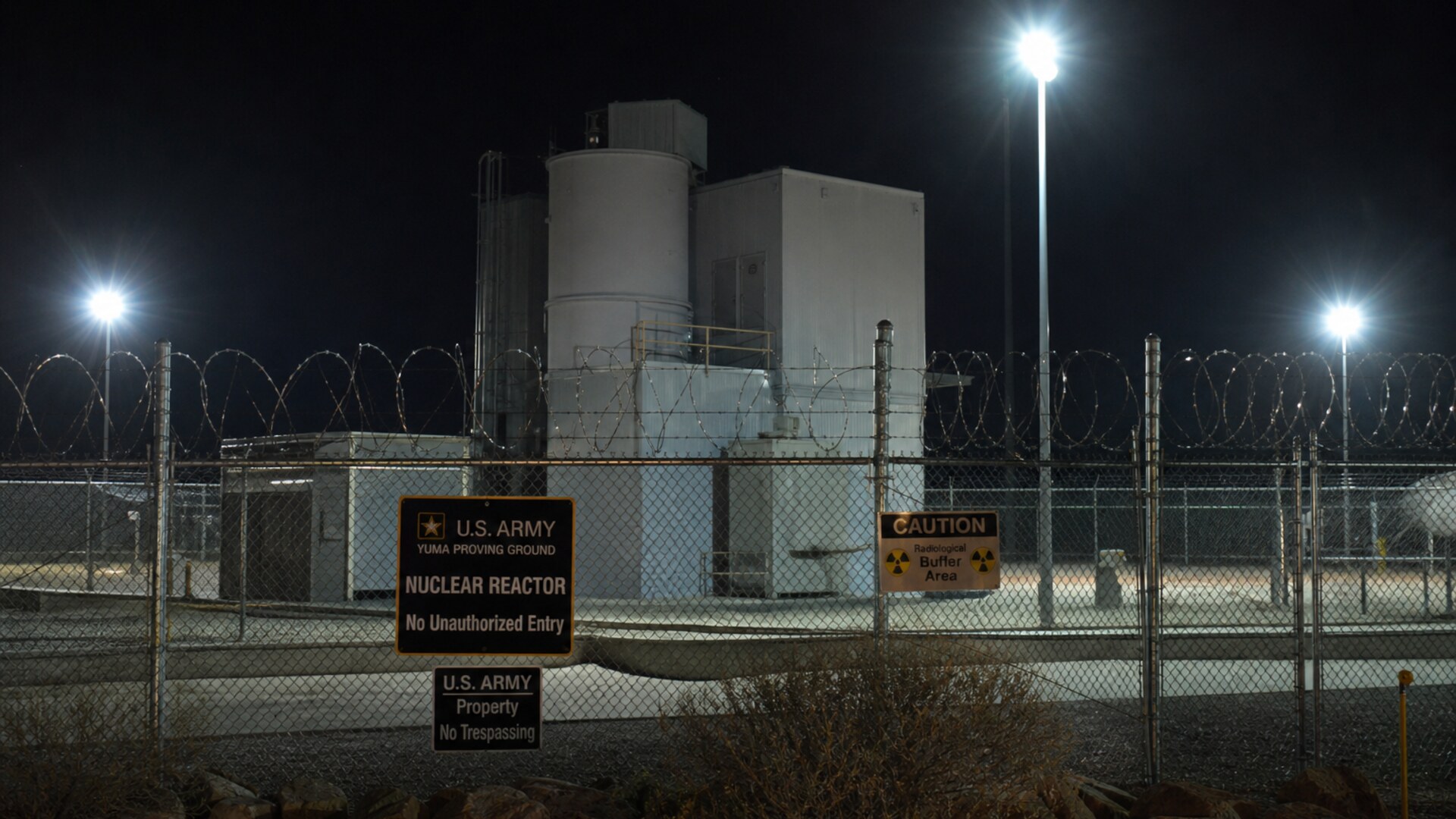
The Atomic Energy Act is the old statute doing new work. Installations still face NEPA and the Clean Air Act. Waksman said recent NEPA reforms should shorten the paper relative to a gigawatt plant. The point of Wednesday was not to dodge a review. It was to stop treating a 1-megawatt box on a power-projection post as if it were a coastal station selling into PJM.
Project Pele, the transportable microreactor prototype under construction at Idaho National Laboratory, was authorized by DOE as a research and demonstration article, not by the Army and not by the NRC. DOE's pilot process, trimmed after President Donald Trump's May 2025 executive orders, cut prior guidance from 17 steps to 11 and dropped more than 900 pages. Five advanced reactors reached criticality this summer under that pilot: Antares' Mark-0, Valar Atomics' Ward 250, Deployable Energy's Unity, Aalo Atomics' test reactor, and Oklo's Groves. Antares' Mark-0 went critical at INL's Materials and Fuels Complex, on the site of the Army's Cold War Mobile Low Power-1 reactor, as the first fueled criticality test DOE authorized under the pilot. The Army timed fuel fabrication and lent safety-review people. Those files, Waksman said, feed ARRO's Janus framework.
A technical bench from Pele, Project Draco, the DOE criticality experiments, and Project Marvel is now sitting behind the lieutenant colonel. Their job is a common safety-case package vendors can use for design, fuel, materials, and passive shutdown, while commercial crews run the plant. Align ARRO with DOE and NRC enough that the same package can walk into an NRC docket without a rewrite. That is the industrial policy hiding in a regulation: first power on a post, then a product you can sell outside the fence.
Fuel rules are part of the license, not a brochure line. None of the five Janus machines use highly enriched, weapons-grade uranium. Waksman said that means the Army does not have to treat them like a naval reactor or a warhead. Physical security still sits on the installation's existing fence and the extra rules the Army already writes for important infrastructure. All five companies are on encapsulated fuel. Four are on TRISO because TRISO is qualified and already in commercial production, including fuel made for Pele. General Atomics is the public exception, on encapsulated uranium-zirconium hydride from its TRIGA line. Unqualified advanced fuel variants were thrown out. "If some company came to us wanting to do some advanced fuel variant that is not qualified, that was thrown out. We were not interested in that," Waksman said.
Inherent safety is a license condition. Generation IV cores, he said, shut themselves down on physics. They do not need offsite power or a diesel to stay out of trouble. Natural air circulation is enough. That is the difference he kept drawing with old light-water plants. If the commercial grid fails, the box on the post is supposed to trip clean, not call a convoy.
Waste is on a clock. Within two years of shutdown, all nuclear waste leaves the installation. The Army will not stand up an Army-licensed dump. It is negotiating a single deal with the Energy Department: waste goes to a DOE site, money changes hands, DOE takes title. Waksman said that deal is not fully signed. The intent is public. Brandon Cockrell told reporters the Army has been meeting communities and elected officials on safety. Soldiers are not expected to run an emergency response for the plant. Presence should not, in Waksman's phrase, cause "significant change" to how people live and work on post.
The money sits under that license. Up to $2.2 billion in milestone Other Transaction Authority agreements, fiscal 2027 through 2031, negotiated with the Defense Innovation Unit. Payments on hardware, not just paper, a lesson Waksman took from NASA's Commercial Orbital Transportation Services program. Future milestones are not obligated. No termination fees. If a vendor misses, dollars can move to another of the five or to a new entrant. DIU covers construction, first-of-a-kind build, and the first year of operation. After that, an Army power purchase agreement. Waksman expects the majority of total capital to be private. "We're simply recognizing that no one is going to be able to sell their first reactor or the second reactor and be able to afford it on private dollars alone."
The 30 September 2028 date is in Executive Order 14299. At least one Army-regulated reactor has to be sending useful electricity to a domestic installation. A criticality experiment does not count. Waksman said so. Not all five companies will make that date. The portfolio exists so one of them does. Army Secretary Dan Driscoll's Wednesday statement put the license in combat language: safe, reliable baseload, combat power without a vulnerable external grid.
Kuperman still gets a sentence. He thinks the Army's deep pockets are a hidden subsidy for designs that cannot find a civilian customer, and he thinks Army licensing is the scam. The Army's bet is the opposite: license the first ones where the fence already exists, publish a safety case the NRC can read, and let the second and third units be products. The regulator in this story wears Army rank. The plants are commercial. The clock is two years from now, not a decade of docket.
The paper
Comments
No notes on this story yet.
Sign in to comment