
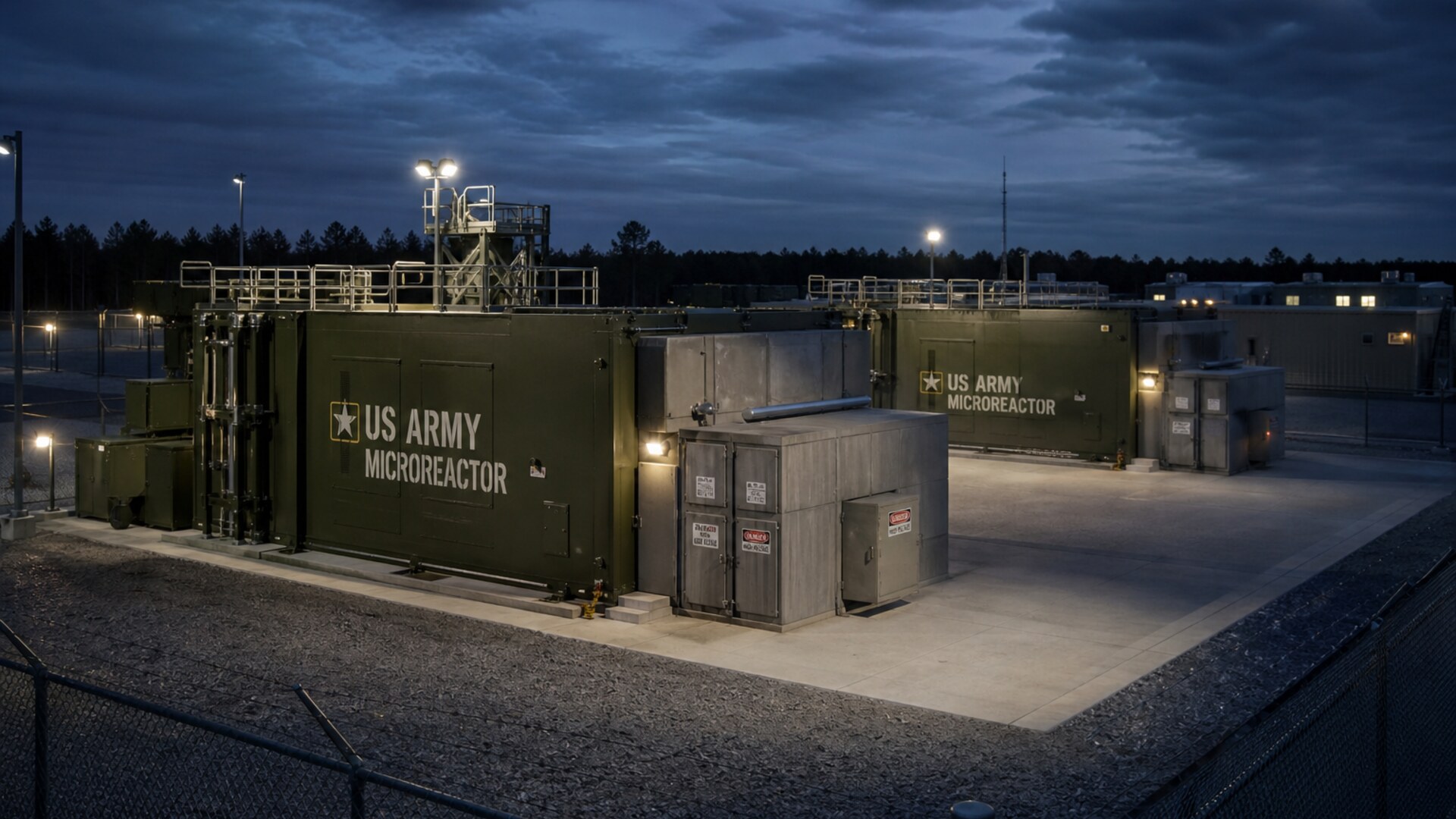
On Wednesday, 26 August, the U.S. Army put a number on Janus. Up to $2.2 billion over five years, fiscal 2027 through 2031, goes to five companies to own, build and operate more than twenty commercial microreactors at military bases. POWER, Breaking Defense, and Defense One all reported the awards that day.
The first Army-regulated reactor is supposed to be running by 30 September 2028, the date in a May 2025 executive order. Jeff Waksman, the Army’s principal deputy for installations, energy and environment, called Janus the “spear tip” — from prototypes to machines that run for years. Army Secretary Dan Driscoll said the awards are meant to put baseload on the post so combat power does not depend on a vulnerable civilian line.
The money moves under fixed-price, milestone-based Other Transaction Authority agreements through the Defense Innovation Unit. Companies get paid when hardware and design milestones land, including a first year of useful power. The installations stay on the commercial grid. The new machines are the backup.
A high-watt army is the product. $2.2 billion is the pot. 30 September 2028 is the clock. Five vendors, five posts: that pairing is the next chapter.
Wednesday is 26 August. The Army is the buyer. Janus is the program. Up to $2.2 billion is the figure. Five years is the span, fiscal 2027 through fiscal 2031. Five companies is the vendor count. More than twenty commercial microreactors is the machine count. Military bases are the sites. Own, build and operate is the job the companies are being paid to do. POWER, Breaking Defense, and Defense One all carried the awards on the day they were named. Three outlets, one afternoon, one number. That is how a defence desk knows the figure is the news rather than a leak.
More than twenty is not a poster’s “dozens.” It is a floor with a word attached. Five companies will own, build and operate that many commercial microreactors at military bases. Commercial is the adjective. The Army is not, in this sentence, becoming a reactor vendor. It is becoming a customer with a fence. The vendors still hold the machines. The bases still hold the load. More than twenty machines across five companies is a small fleet, not a single demonstration in a parking lot.
The clock is older than Wednesday. A May 2025 executive order put 30 September 2028 on the first Army-regulated reactor. Running, by that date, is the verb. Army-regulated is the adjective that tells you this is not an NRC story in this slug. May 2025 to 26 August 2026 is the span from order to awards. 26 August 2026 to 30 September 2028 is the span from awards to the first machine that is supposed to run. The money window, fiscal 2027 through 2031, overlaps the running date and continues past it. A first reactor in 2028 and a draw that lasts until 2031 are compatible sentences. They are not the same sentence.
Jeff Waksman is the Army’s principal deputy for installations, energy and environment. His word for Janus, already on the tape, is “spear tip.” The rest of the clause is the gloss that came with it: from prototypes to machines that run for years. Prototype is the thing a laboratory loves. A machine that runs for years is the thing a post can plan a shift around. Spear tip is a metaphor. The useful half is the second half. This page keeps the quote because it was given. It will not invent a second one.
Army Secretary Dan Driscoll’s sentence is the operational claim. The awards are meant to put baseload on the post so combat power does not depend on a vulnerable civilian line. Baseload. On the post. Combat power. Civilian line, vulnerable. Those are his words as the file has them. A high-watt army, in that telling, is not a climate pamphlet. It is a combat-power argument that happens to be an electricity argument. The civilian grid stays in the picture. The installations stay on it. The new machines are the backup. Driscoll’s point is what happens when the civilian line is the weak one.
Other Transaction Authority is how the dollars move. The Defense Innovation Unit runs the agreements. They are fixed-price. They are milestone-based. A company is paid when hardware and design milestones land. A first year of useful power is one of those milestones. That is a commercial discipline attached to a defence customer. It is also why Wednesday is not a grant announcement. Up to $2.2 billion is a ceiling on a set of agreements that pay for objects, not for adjectives. Until hardware appears, the ceiling is a ceiling.
The installations stay on the commercial grid. Repeat it, because backup is easy to over-claim. Janus, as this file has it, does not unplug five posts from the country. It puts commercial microreactors on the post as the thing you start when the civilian line fails, or as the baseload Driscoll named so combat power is not a function of someone else’s substation. Diesel is the old backup in every army story of this kind. The new backup is supposed to be a reactor the vendor owns and operates. The grid remains. The convoy is the thing the Army is trying not to need.
Five vendors, five posts: the pairing is the next chapter and is not this one. This slug has the money, the machine count, the clock, the quotes, and the contract shape. It does not reprint a post-by-post table. More than twenty microreactors. Five companies. Up to $2.2 billion. Fiscal 2027 through 2031. First Army-regulated machine supposed to run by 30 September 2028. Waksman: spear tip, prototypes to machines that run for years. Driscoll: baseload on the post, combat power not hanging off a vulnerable civilian line. POWER, Breaking Defense, Defense One, 26 August.
What Wednesday is not: a claim that more than twenty machines are already pouring electrons. A claim that 30 September 2028 has been met. A megawatt rating. A named post in this slug. A new quotation. A living face in the art. The art is a fenced military installation at dusk, no faces. A post that wants its own watts.
What Wednesday is: 26 August, U.S. Army, Janus, up to $2.2 billion, five years, fiscal 2027 through 2031, five companies, own, build and operate, more than twenty commercial microreactors, military bases, Other Transaction Authority, Defense Innovation Unit, fixed-price, milestone-based, first year of useful power in the deal, installations still on the commercial grid, new machines the backup, May 2025 order, 30 September 2028 first running date, Waksman’s spear tip, Driscoll’s baseload sentence.
A post that makes its own watts is the news. Keep the quotes that were given. $2.2 billion is the pot. Five years is the window. More than twenty machines is the fleet size. Five companies is the vendor count. 26 August is the award day. 30 September 2028 is the clock. The Army will make the watts, or it will have spent a ceiling on a poster. The awards are how you tell the difference later. The number is how you tell it now.
The paper
Comments
No notes on this story yet.
Sign in to comment