
Nvidia started shipping DGX Spark in October 2025: a 150 by 150 by 50.5 mm desktop box with 128 GB of coherent unified LPDDR5X, a GB10 Grace Blackwell superchip, and up to 1 petaflop of FP4. The Founders Edition launched at US$3,999. On 23 February Nvidia moved that MSRP to US$4,699, citing the memory shortage. The hardware did not change.
The chip is a 20-core Arm package — ten Cortex-X925, ten Cortex-A725 — next to a Blackwell GPU with fifth-generation Tensor cores. Memory bandwidth is 273 GB/s on a 256-bit bus. Storage is a 4 TB NVMe. The brick is 240 watts. GB10 TDP is 140 watts. The box weighs 1.2 kilograms.
Nvidia's own line is that Spark will run agents and large models locally, reducing the need for cloud token generation. The company has said models in the 200-billion-parameter class can sit in that 128 GB pool at NVFP4. Those are Nvidia's claims. Keep the label on.
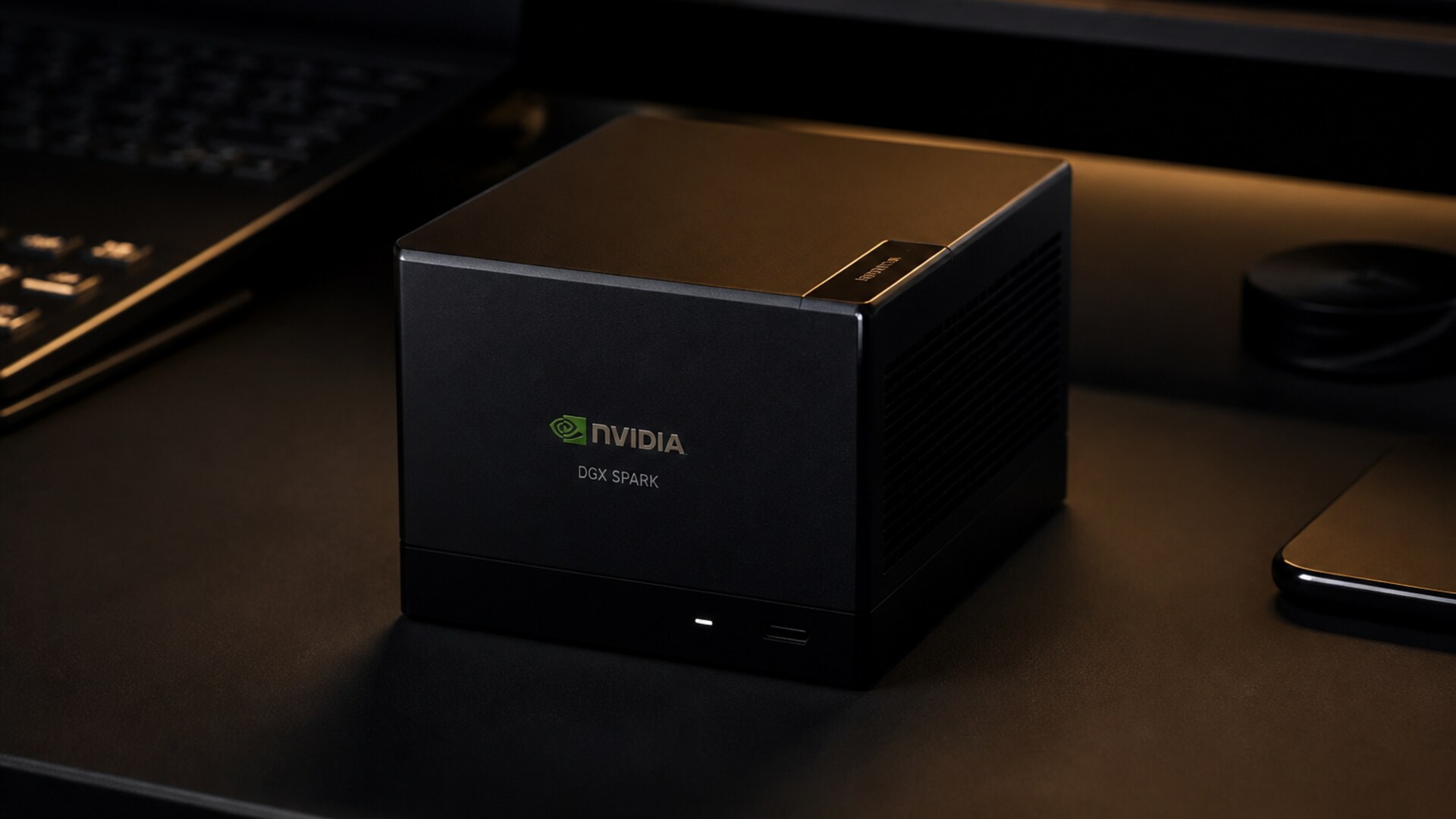
The chassis is the first fact you can hold. One hundred and fifty millimetres on a side. Fifty-point-five millimetres tall. One-point-two kilograms. A 240-watt brick on the floor. A GB10 Grace Blackwell superchip inside at 140 watts TDP. That is a desk envelope, not a rack. Nvidia started shipping the Founders Edition in October 2025. The gold box is the Nvidia SKU. ASUS, Dell, HP, Lenovo, MSI, Acer, and GIGABYTE sell GB10 cousins if you do not want that gold chassis. The superchip in the cousins is the same story Nvidia put on Spark: twenty Arm cores, ten Cortex-X925 and ten Cortex-A725, next to a Blackwell GPU with fifth-generation Tensor cores. Unified memory is 128 GB of coherent LPDDR5X. Bandwidth is 273 GB/s on a 256-bit bus. Storage is a 4 TB NVMe. Peak on Nvidia's sheet is 1 petaflop of FP4. None of those numbers moved on 23 February.
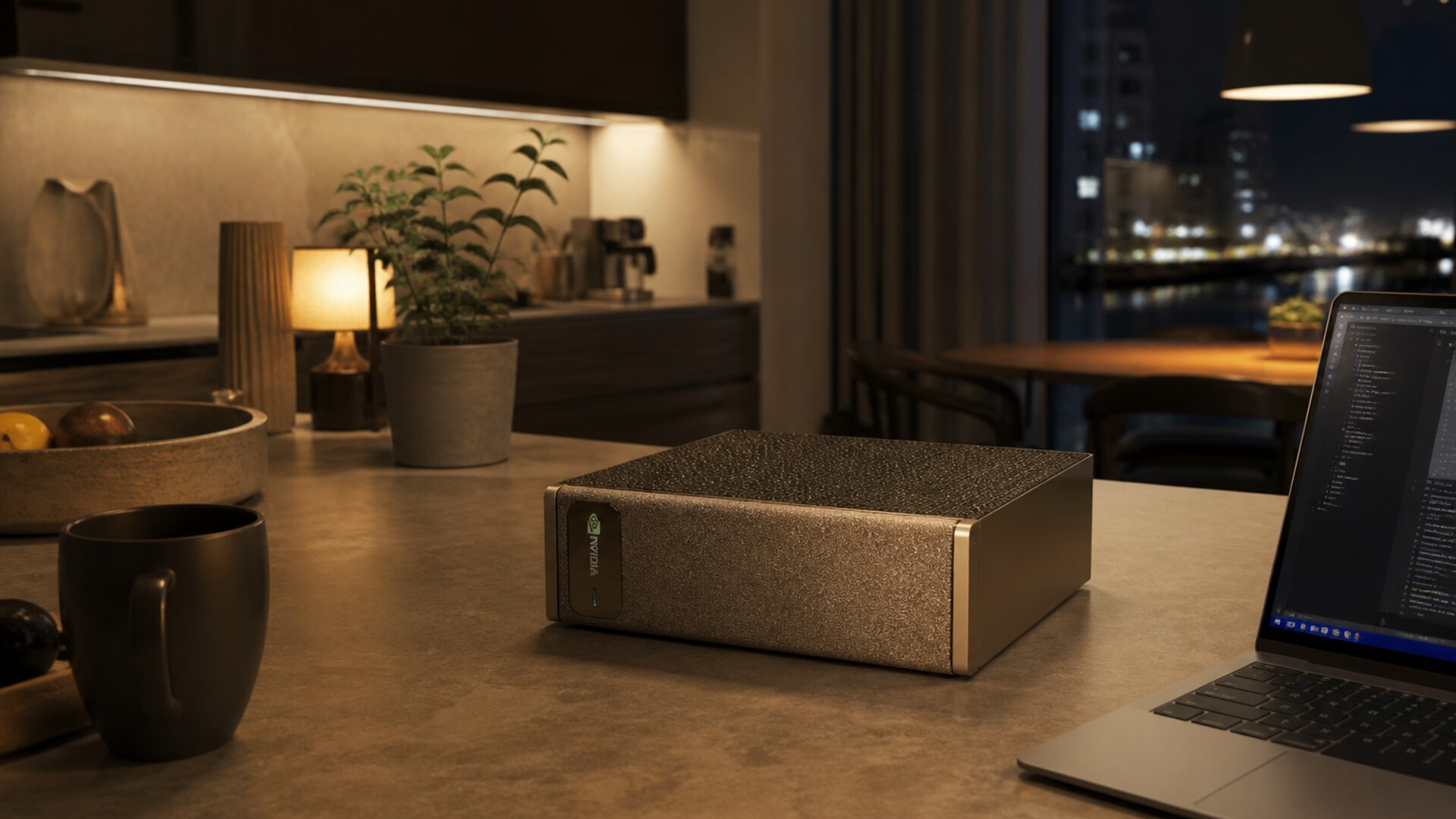
What moved on 23 February 2026 was the price. The Founders Edition launched at US$3,999. Nvidia put the MSRP at US$4,699 that day and named the memory shortage as the reason. The hardware did not change. Same 150 by 150 by 50.5 mm box. Same 128 GB of coherent unified LPDDR5X. Same GB10. Same 1 petaflop of FP4 on the slide. Same 1.2 kilograms. Same 240-watt brick. Same 140-watt TDP. Buyers who paid US$3,999 in the October window bought the same silicon that now lists at US$4,699. The seven OEM names remain the other door into a GB10 desk. Nvidia has not published a second Founders SKU. This desk will not invent one.
The argument Spark is making is a location argument. Cloud token generation is a meter in another building. Nvidia's pitch is that a 200-billion-parameter-class model at NVFP4 can live in the 128 GB of coherent unified LPDDR5X on this desk, and that agents can run against that pool without a round trip. The company has not put a tokens-per-second number on that claim in the material this piece is working from. The missing bench stays missing. What is on the spec sheet is the pool: 128 GB, coherent, unified, LPDDR5X, 273 GB/s, 256-bit. What is on the GPU is Blackwell with fifth-generation Tensor cores. What is on the CPU is twenty Arm cores, ten of them Cortex-X925, ten of them Cortex-A725. What is on the storage side is 4 TB of NVMe. DGX OS is the install. The machine stays on the desk. It does not phone a data centre unless you point it there.
Ports are how the box talks without leaving the house. Four USB-C. HDMI 2.1a. 10 GbE. ConnectX-7 at 200 Gbps. Wi-Fi 7. Two Sparks can link. The ConnectX-7 number is the one that makes a pair of 150 mm boxes look like a small fabric rather than two toys. Linking two does not add a new SKU. It is two of the same 128 GB, two of the same GB10, two of the same 1.2 kilogram chassis, tied at 200 Gbps. Nvidia's local-agents line still sits on each box. The 200-billion-parameter-class claim is still a claim about what fits in 128 GB at NVFP4, not a claim about a cluster product Nvidia has named.
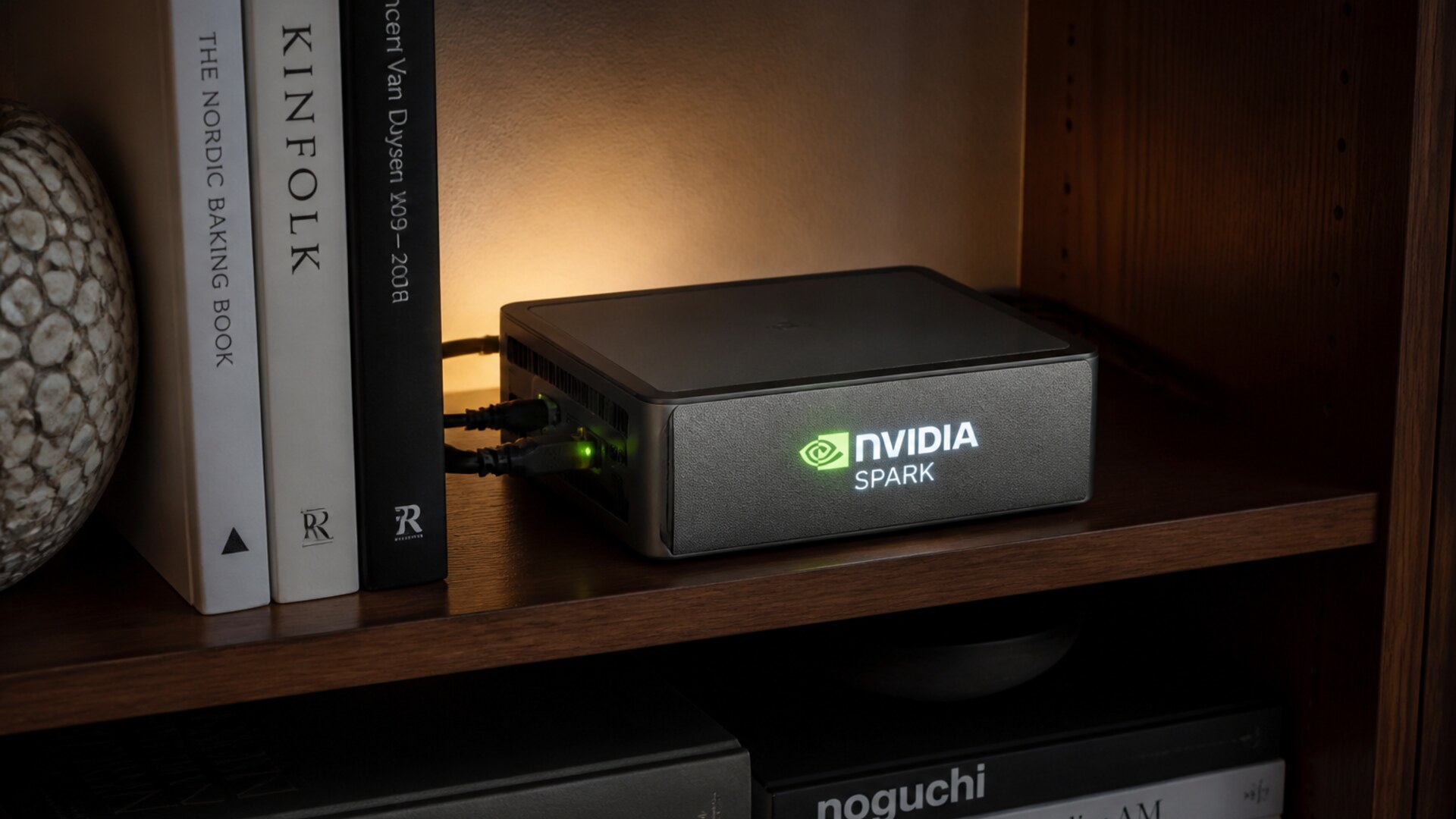
The February price is the memory sentence in dollars. LPDDR5X in a 128 GB coherent pool is the part of the bill of materials Nvidia pointed at. Launch was US$3,999. Current Founders Edition MSRP is US$4,699. Four months of shipping, October 2025 to 23 February 2026, at the first price. Then the sticker. The gold box in the kitchen photograph is that Founders Edition: NVIDIA in the vertical recess, a blue LED, the 150 mm square footprint next to a laptop. The dark box on the shelf is the same product in a quieter finish, NVIDIA SPARK lit on the front, two cables in the side, a green status LED. Both photographs are the 1.2 kilogram argument. Neither is a data-centre rack.
Desktop versus cloud is the rest of the copy. A cloud run bills tokens and leaves the weights in someone else's hall. Spark's 128 GB is in the house. Nvidia says that is enough, at NVFP4, for a 200-billion-parameter-class model, and that agents can run there. Keep the label on: Nvidia's claims, not a third-party bench. The FP4 peak is 1 petaflop. The GPU that makes that number is Blackwell with fifth-generation Tensor cores. The CPU that sits beside it is the 20-core Arm split, ten X925, ten A725. Memory bandwidth is still 273 GB/s. The bus is still 256-bit. The NVMe is still 4 TB. The brick is still 240 watts. GB10 TDP is still 140 watts. Those watts are a desk conversation. They are not a row in a hall.
OEM cousins matter because the gold Founders box is not the only GB10 in the room. ASUS, Dell, HP, Lenovo, MSI, Acer, and GIGABYTE have been named as sellers of GB10 machines. This piece does not have their SKU strings, their list prices, or their chassis sizes. File those as unlisted. What they share, on Nvidia's telling, is the superchip: GB10 Grace Blackwell, 128 GB of coherent unified LPDDR5X, the 20-core Arm package, the Blackwell GPU, up to 1 petaflop of FP4. The Founders Edition is the Nvidia-branded 150 by 150 by 50.5 mm, 1.2 kilogram, US$4,699 (was US$3,999) version of that story. DGX OS is the install on the Nvidia box. Two of those boxes can link on ConnectX-7 at 200 Gbps. Four USB-C, HDMI 2.1a, 10 GbE, and Wi-Fi 7 are the other doors.
What you buy, if you buy the Founders Edition after 23 February 2026, is the October hardware at the February price. Shipping started in October 2025. The memory shortage is Nvidia's stated reason for the US$700 lift from US$3,999 to US$4,699. The 128 GB pool did not shrink. The 273 GB/s did not rise. The GB10 did not get a second stepping in the copy Nvidia put on the 23 February move. Hardware unchanged is the whole of that sentence. Anyone shopping a local 200-billion-parameter-class run at NVFP4 is shopping that unchanged 128 GB, not a new card. Anyone shopping a cloud meter is shopping a different building.
The 150 mm square is the physical joke against a rack. Fifty-point-five millimetres tall. One-point-two kilograms. A 240-watt brick on the floor, a 140-watt TDP in the chassis. HDMI 2.1a if you want a display. Four USB-C if you want disks and a keyboard. 10 GbE and Wi-Fi 7 if you want the house network. ConnectX-7 at 200 Gbps if you want a second Spark. DGX OS on the NVMe. The model, if Nvidia's NVFP4 claim holds for the 200-billion-parameter class, sits in the 128 GB and does not need to leave. That is the local-agents pitch in one chassis. It is also why the cloud comparison is a location comparison, not a leaderboard this desk has numbers for.
Two Sparks on a desk are still two desks. Each box keeps its own 128 GB of coherent unified LPDDR5X. Each box keeps its own GB10 at 140 watts TDP. Each box keeps its own 4 TB NVMe and its own DGX OS install. The 200 Gbps ConnectX-7 link is a cable, not a new product name. Nvidia's 200-billion-parameter-class line is a line about what fits in one 128 GB pool at NVFP4. Doubling the boxes doubles the pools. It does not rewrite the claim. Keep the label on.
Repeat the sheet so it cannot drift. DGX Spark. Shipping October 2025. Founders Edition US$3,999 at launch, US$4,699 from 23 February 2026, memory shortage, hardware unchanged. 150 by 150 by 50.5 mm. 1.2 kg. 128 GB coherent unified LPDDR5X. 273 GB/s on a 256-bit bus. GB10 Grace Blackwell. 20-core Arm, ten Cortex-X925, ten Cortex-A725. Blackwell GPU, fifth-generation Tensor cores. Up to 1 petaflop of FP4. 4 TB NVMe. Brick 240 W. GB10 TDP 140 W. Four USB-C, HDMI 2.1a, 10 GbE, ConnectX-7 200 Gbps, Wi-Fi 7. Two Sparks can link. DGX OS. ASUS, Dell, HP, Lenovo, MSI, Acer, GIGABYTE on the GB10 cousin list. Nvidia's claim: local agents, local models, 200-billion-parameter class at NVFP4 in 128 GB. Those are Nvidia's claims. Keep the label on. The machine stays on the desk.
The paper
Comments
No notes on this story yet.
Sign in to comment