
Tesla Megapack posted on 6 August that Megapack 3 is “officially rolling off the line” at the new Megafactory in Brookshire, Texas. The plant went from groundbreaking to operation in 16 months. Designed capacity is 50 GWh a year, dedicated to Megapack 3.
A Megapack 3 holds about 5 MWh, up from 3.9 MWh on Megapack 2 XL, in the same footprint. Tesla puts that at roughly 28 percent more energy. Electrek filed the production start the same morning.
The 6 August post is the date on the record. Tesla’s Megapack account said the new pack is officially rolling off the line. Electrek had the same morning. Brookshire, Texas. A new Megafactory. Sixteen months from groundbreaking to operation. Designed capacity 50 gigawatt-hours a year, and that capacity is dedicated to Megapack 3. Those are Tesla’s factory sentences. There is no customer name Tesla did not put on the post. The object is a cabinet leaving a Texas line.
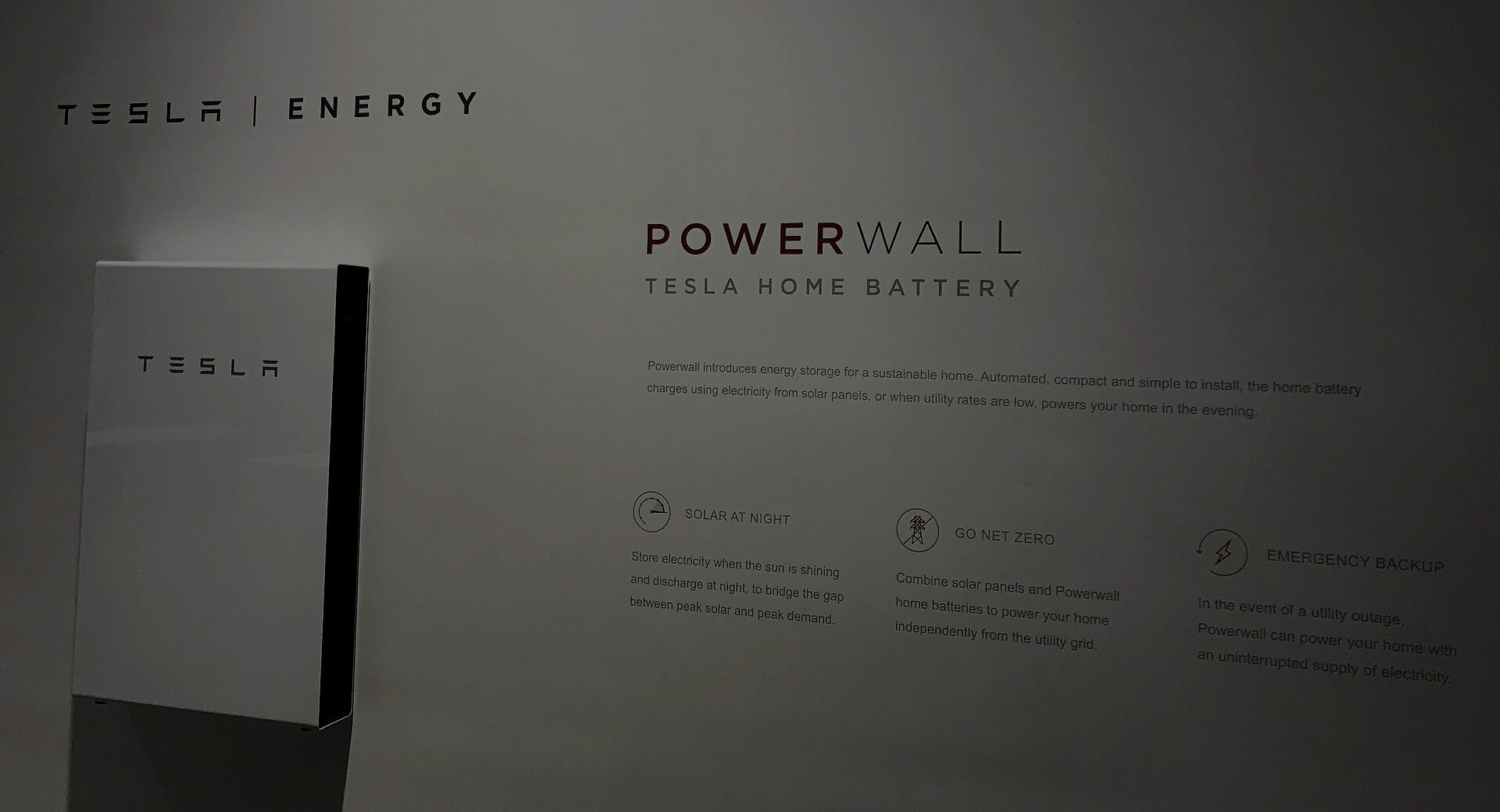
Megapack 3 is the named product. About 5 megawatt-hours in a box the same size as Megapack 2 XL, which held about 3.9 megawatt-hours. Tesla’s own percentage is roughly 28 percent more energy. The arithmetic on those two figures checks: 5 divided by 3.9 is about 1.28. Same footprint, more store. Utility storage is a land and interconnection problem as much as a chemistry problem. A denser cabinet on the same pad is the kind of good news a grid operator can count.
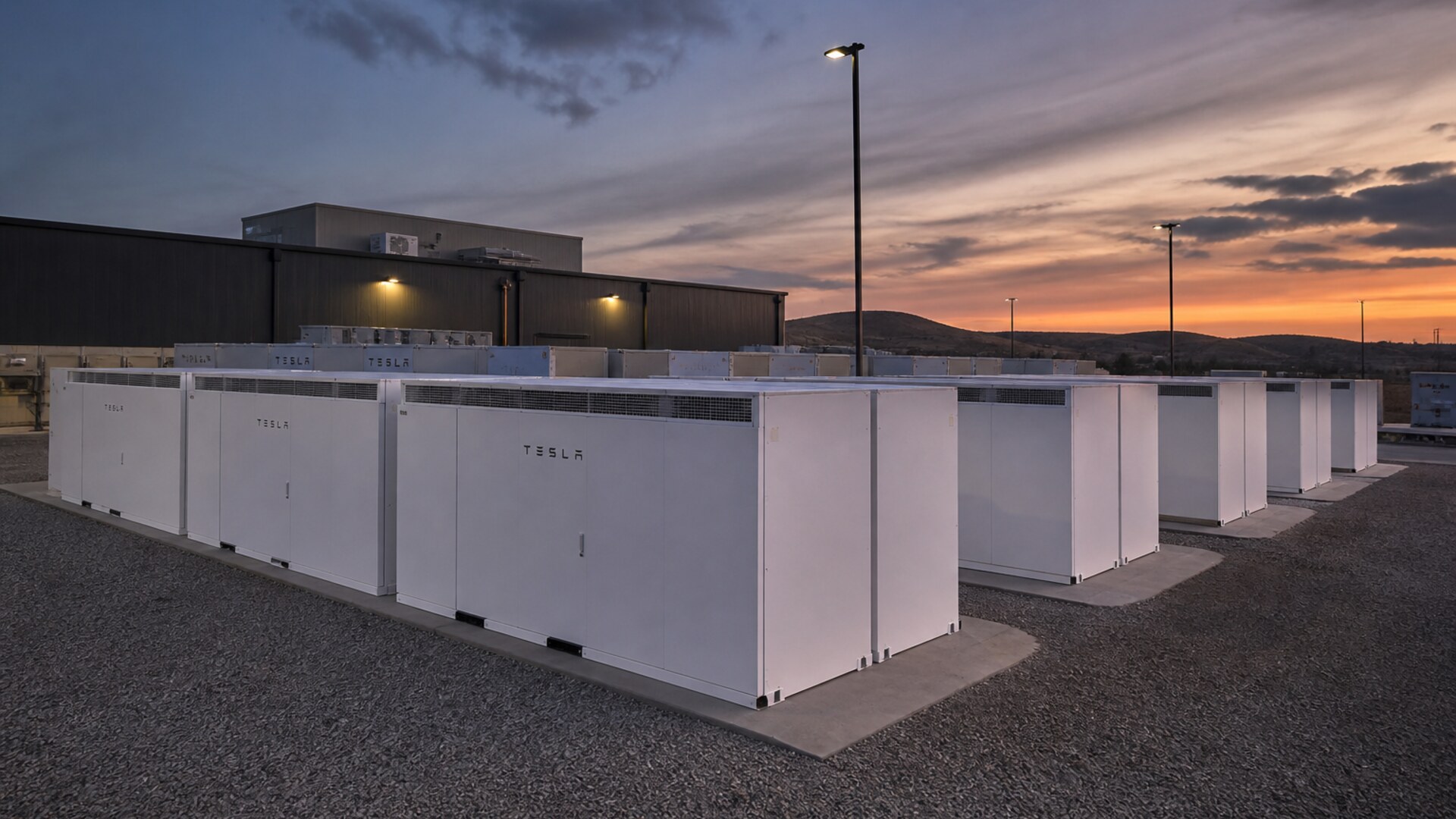
The dusk photograph is what a storage yard looks like when the cabinets are the product. Rows of white Megapacks on gravel, TESLA on the faces, a ventilation grille near the top of each unit, concrete pads, a dark industrial wall at left with two yellow lights, a lit pole in the foreground, hills against a streaked sky. That is a battery in a building’s clothing: outdoor, repeating, quiet. Brookshire is supposed to fill yards like that with the new cabinet. 6 August is the day Tesla said the new cabinet started leaving the Texas line, not the day a particular yard in a photograph was poured.
The jump Tesla describes comes mainly from a larger 2.8-liter cell. That is a cell size, not a chemistry lecture. Megapack 3 uses a bigger cell than the last generation. Tesla also says the thermal-system connection count is down 78 percent from that last generation. Fewer pipes and fittings on a pack that still has to reject heat is a factory and a field claim at once. Tesla’s percentages are on the page. It is not tearing down a pack in Brookshire.
A Megablock is the other named object on the same pitch. Tesla bundles up to four Megapack 3 units, about 20 megawatt-hours, with the transformer and switchgear fitted at the factory. Four times 5 megawatt-hours is 20. The medium-voltage gear travels with the batteries instead of being wired in the field. Tesla’s pitch for that package is 613 megawatt-hours per hectare, 1 gigawatt-hour in 20 business days, and about 23 percent faster installation than doing that medium-voltage work on site. Those are Tesla’s three field numbers. There is no independent timing of a pour.
Arithmetic on the pitch, still on Tesla’s figures: 1 gigawatt-hour is 1,000 megawatt-hours. At 20 megawatt-hours per Megablock, that is 50 Megablocks in 20 business days, or about two and a half of those four-pack blocks per working day. At 5 megawatt-hours per cabinet, 1 gigawatt-hour is 200 Megapack 3 units. 613 megawatt-hours per hectare is about 31 Megablocks on a hectare, or about 123 of the 5-megawatt-hour cabinets. Tesla put the density and the calendar on the product. The divisions just show the scale of the sentence.
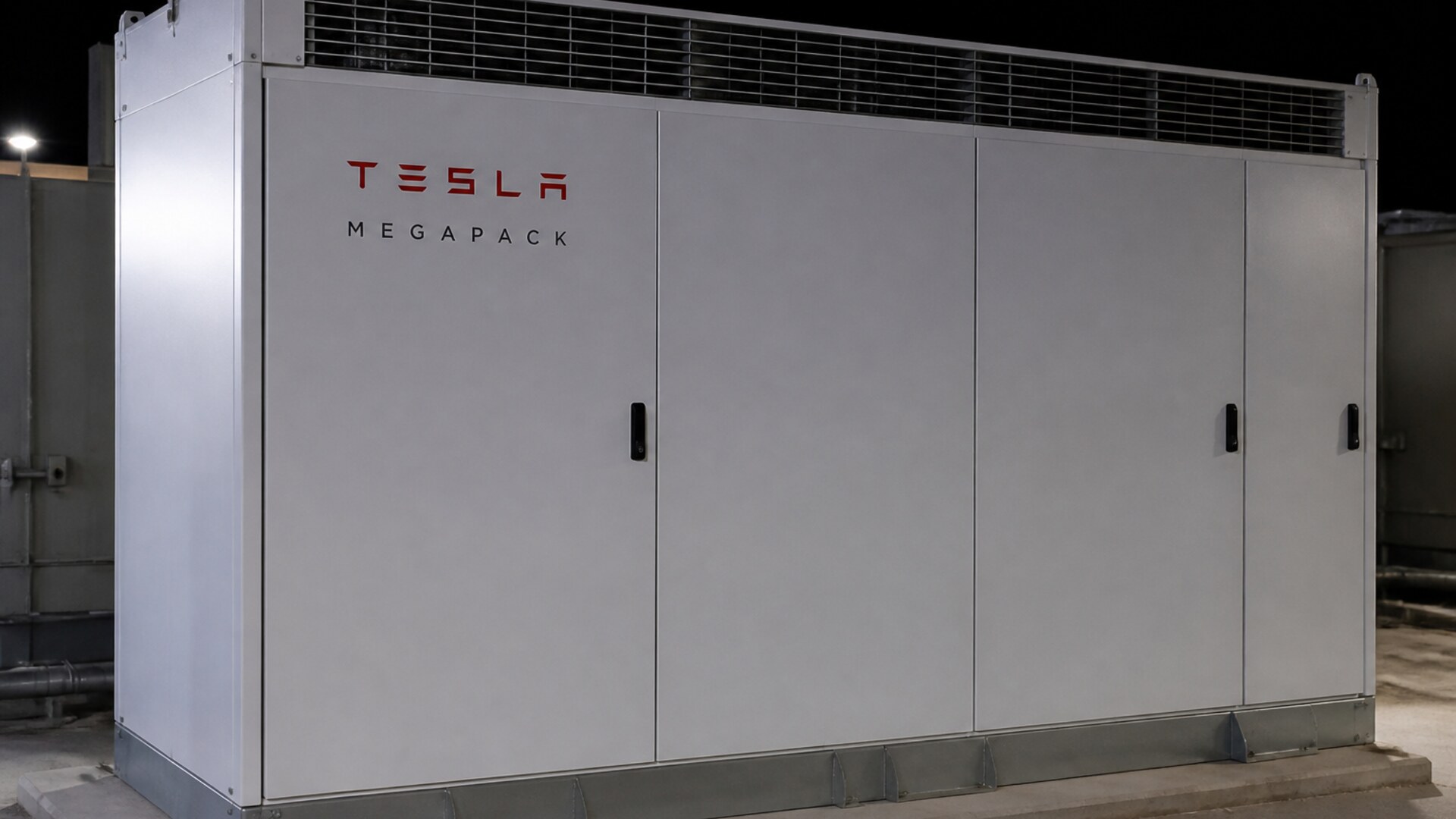
The night photograph is a single cabinet, close. White panels, a red TESLA mark, MEGAPACK lettered underneath in spaced black caps, a long metal grate along the top, black handles on the doors, a galvanized steel base bolted to a concrete pad. That is the object Brookshire is supposed to mint. Megapack 3 is denser inside a box that still looks like this from the yard: a white enclosure with Tesla’s name on it. Specs for this generation were shown in September 2025. 6 August 2026 is the day a unit actually left a Texas line.
Brookshire is the third Megafactory, after Lathrop, California, and Shanghai. Tesla has not, in the materials used here, put a gigawatt-hour nameplate for Lathrop or Shanghai next to the 50. There is none on the record. What Tesla did put on Brookshire is 50 gigawatt-hours a year, dedicated to Megapack 3. At about 5 megawatt-hours per cabinet, that designed capacity is about 10,000 Megapack 3 units a year. That is nameplate arithmetic, not this week’s run rate. Electrek filed a production start, not a year’s output.
Sixteen months from groundbreaking to operation is the build Tesla claimed for the Texas plant. There is no separate groundbreaking clip in this file. It has Tesla’s duration, the 6 August start, and the third-factory ranking. A dedicated Megapack 3 plant in that window is the industrial fact. Cars get the attention. The grid battery is the quieter Tesla product, and Brookshire is sized for it.
Megapack 2 XL remains the last cabinet at 3.9 megawatt-hours. Megapack 3 is the new one at about 5. Same footprint. Larger 2.8-liter cell. Thermal connections down 78 percent, Tesla says. Megablock is the four-pack with the transformer and switchgear already on it. 613 megawatt-hours per hectare. 1 gigawatt-hour in 20 business days. About 23 percent faster to install, on Tesla’s comparison with field-wired medium voltage. September 2025 was the spec show. 6 August 2026 is the Texas line unit.
Sixteen months is a factory clock, not a slogan. Tesla put groundbreaking-to-operation at that duration for Brookshire. 6 August is the operation date Tesla then stamped on the Megapack account. Count sixteen months back from August 2026 and you are in spring 2025. There is no groundbreaking photo on this page. It is filing Tesla’s duration next to Tesla’s start date. Dedicated Megapack 3. 50 gigawatt-hours a year on paper. Third Megafactory after California and Shanghai.
The thermal-system claim sits next to the cell-size claim. Larger 2.8-liter cell for the energy jump. Thermal-system connections down 78 percent, Tesla says, from the last generation. One number is what the cabinet stores. The other is how many fittings the cabinet is supposed to carry. Both came with the Megapack 3 spec, shown in September 2025, and both are still the sentences Tesla is using now that a Texas line is actually emitting the pack. Electrek filed the production start the same morning as the 6 August post. Spec show one year. Line unit the next August.
What 6 August is not: a customer delivery Tesla named. A first-energization of a particular Texas substation. A claim that Lathrop and Shanghai have stopped. The Megapack account said the pack is rolling off the line at Brookshire. Electrek said the same morning. The good news is a factory that exists, a cabinet with a number, and a third site on a 16-month clock.
What 6 August is: Megapack 3, about 5 megawatt-hours, leaving the new Megafactory in Brookshire, Texas, a plant Tesla sized at 50 gigawatt-hours a year and dedicated to that pack. Named product. Named town. Named date. A denser box on the same pad, a four-pack that ships with its switchgear, and a photograph of white cabinets standing in gravel at dusk. The battery is in the building. The building is in Texas. The line is running.
The paper
Comments
No notes on this story yet.
Sign in to comment