
Plaud put a pair of earbuds and a radio on the same product page. The page is Plaud One Limited Explorer Edition. The United States price is US$249.99. The run is 2,000 units worldwide. The charging case is listed with 4G LTE and an eSIM. TechCrunch, Engadget, Android Authority, and SiliconANGLE all filed the announcement on Thursday, 27 August. This desk is filing on Sunday, 30 August, from the specification table that is still up, and from a banner on the same site that said a Plaud NotePin thirty-percent offer ends 30 August.
The case is the news. Plaud’s own FAQ says you do not need a phone. The case includes a built-in eSIM, so it can stay connected without a handset nearby. Recordings, summaries, and outputs sync to the Plaud app when available. The earbuds, the same FAQ says, work on their own for calls, online meetings, music, and agent activation. The case adds in-person capture, 4G LTE, a speaker, and charging. That split is the product. A phone is optional. The radio lives in the box you already carry for charge.
The eight countries on disclaimer 6 are the United States, France, Germany, the United Kingdom, Italy, Spain, Canada, and the Netherlands, while supplies last. Local pricing may vary. The United States store prints US$249.99. The Canadian store prints CA$349.99. The United Kingdom store prints £229.00. The European store prints €249.90. Credits travel with the currency: US$200 on the American page, £150 on the British page, €176 on the European page. Australia is not on the eight-country list. This page will not invent a local SKU, a carrier, or an Australian dollar.
The United States product page, read for this filing, showed Join the Waitlist and Out of Stock on the Explorer Edition at that US$249.99 line. Disclaimer 6 still says 2,000 units worldwide. A 2,000-unit first run is a trial, not a channel fill. What is in the box, on Plaud’s own list, is a charging case, a pair of earbuds, and a quick-start guide. What is included in software, on the same FAQ, is the Plaud Intelligence starter plan and US$200 in Plaud credits, or the local equivalent. The starter plan is printed as 300 transcription minutes. Features, credits, and services may vary by region, device, and software version. Plaud printed that caveat. It stays on.
The specification table is the document this desk will carry. Recording scenarios: in-person and on-the-go conversations, phone calls, and online meetings. Each earbud: three MEMS microphones and one voice-pickup unit. The case: four MEMS microphones with AI beamforming. Pickup range on the table: earbuds up to 6.6 feet, about 2.0 metres; case up to 16.4 feet, about 5.0 metres. Disclaimer 2 says distance and performance vary by environment, noise, speaker volume, and device position. The 2.0-metre and 5.0-metre figures are the table. They are not a lab run on this desk.
Audio, still from Plaud’s table. Adaptive active noise cancellation, hybrid, up to 40 decibels. Transparency mode: supported. Driver: 12 millimetres, dynamic. Frequency response: 20 hertz to 20 kilohertz. Hi-Res audio is listed as LDAC. Codecs: SBC and LDAC. Equaliser presets: Balanced, Bass Boost, Vocal. Engadget noted the codec gap on the other side of that pair: no aptX, and an iPhone falls back to SBC. That is Engadget’s reading of the same SBC/LDAC row. Plaud did not add aptX to the table. This page will not add it either.
Battery numbers are Plaud’s. Earbud playtime: 4.5 hours with noise cancellation on, 6 hours with it off. Earbuds plus case: up to 36 hours. Continuous recording on the earbuds: up to 6 hours. Continuous recording on the case: up to 25 hours. Case battery: 830 milliamp-hours. Standby: up to 21 days. Quick charge: 10 minutes for 2 hours. Charging port: USB-C. Engadget added that a full charge takes about an hour, and that call-heavy use is closer to four hours than six. The four-hour calling line is Engadget’s. The 4.5-hour and 6-hour lines are Plaud’s. Both stay labelled.
Mass, on the table, is in ounces. Each earbud: 0.16 ounces, about 4.5 grams. The charging case: 2.20 ounces, about 62 grams. Fit: half-in-ear. Colour: white. Water and dust: the earbuds are rated IP54; the case is rated IP52. Plaud’s FAQ says those ratings are not permanent and may decrease with normal use. Bluetooth is 5.4, with multipoint for two devices. Apple Find My is listed as supported. Voice control is listed as supported. Disclaimer 8 puts a hold on some of that list: certain features, including Hi-Res, multipoint, Find My, and voice control, will be enabled through a future firmware update, with availability and timing varying by region and device. The table is not a promise that every row is on at unboxing. The table is the row. The firmware note is the date that has not been printed.
Storage is a split in the clips. Engadget printed 16 megabytes in each earbud and 512 megabytes in the case, enough, that page said, for up to 30 hours of audio with the case alone. Plaud’s own specification table does not list those two memory figures. It lists recording hours instead: up to 6 hours continuous on the earbuds, up to 25 hours continuous on the case. Two documents. This filing will not collapse them. 16 MB and 512 MB are Engadget’s. 6 hours and 25 hours are Plaud’s. The case as a recorder, with its own microphones, is both.
Shipping is the other split. Plaud’s FAQ says Explorer Edition is a pre-order, and that estimated shipping timing will be shown at checkout and may vary by order, region, and availability. Android Authority, filing on 27 August, wrote late September. TechCrunch and SiliconANGLE wrote the fourth quarter of 2026. Engadget wrote sometime before the end of the year. This desk will not pick a week Plaud did not print on the product page. Checkout is the clock Plaud named. Late September is Android Authority. Fourth quarter is TechCrunch. Before year-end is Engadget. Four labels. One unshipped object.
The radio’s bill is a third split. Plaud’s FAQ, asked whether 4G LTE costs extra, says availability may vary by region and carrier coverage, that 4G LTE access is included with Plaud One Limited Explorer Edition, and that a future plan will be shared separately. Android Authority wrote that standalone 4G would mean paying for wireless service. The official line for this limited run is included. The future plan is not priced here. This page will not invent a monthly radio fee Plaud has not published for Explorer Edition.

How Plaud One differs from Plaud Note Pro is on the same FAQ. Note Pro is built for professional note-taking. It captures in-person meetings and handheld phone calls, processes audio on the phone, and delivers notes and summaries. Plaud One is a wearable built around the agent. It captures in-person meetings through the case, and phone calls and online meetings through the earbuds, with 4G LTE processing that works without the phone. Beyond notes, Plaud says, the agent is meant to get things done. Connectors named on the page: Gmail, Google Drive, Calendar, Slack, Notion, and MCP-compatible services. Disclaimer 4 says integration availability may vary, and some integrations may arrive in later software. “Hey Plaud,” disclaimer 1, requires Plaud Intelligence beta access and may not be available in all languages, regions, devices, or software versions. The wake word is a beta. The radio is on the hardware list.
TechCrunch, 27 August, Ivan Mehta, put a company size on the launch. Plaud claims more than 2.5 million people using its hardware or software. In June, TechCrunch wrote, the company claimed annual run-rate revenue of US$100 million. Those two figures are TechCrunch’s report of Plaud’s claims. They are not an audited line on this page. Nathan Xu, Plaud’s chief executive, told a briefing, as TechCrunch printed it: “We need to have a wearable and an always-ready interface, one that people love to wear, is socially acceptable, and private by design.” Viaim and Anker already sell note-taking earbuds, that clip said. The form is not a first. The eSIM in the case is the part Plaud is using to stand the object off a phone.
Android Authority dated the same announcement “just ahead of IFA getting started next week.” IFA 2026 opens in Berlin in early September. App 4.0, that page and Engadget both wrote, is due in the fourth quarter of 2026 and is meant to roll out across Plaud’s existing devices, not only Explorer Edition. Agent features, Plaud says, will use a credit system; Explorer buyers get US$200 in credits, or the local equivalent, to spend on eligible Intelligence features. When credits run out, additional credits can be purchased. Pricing for those top-ups is not on the specification table. Engadget printed a free Starter plan at 300 minutes a month and a US$20 Pro plan at 1,200 minutes every 30 days. TechCrunch printed plans starting at US$8.33 a month when paid annually. Plaud’s FAQ prints the 300-minute starter that comes with Explorer Edition. The US$20 and US$8.33 lines are the clips. The 300 minutes are on Plaud’s page.
Privacy is printed as a product claim, not as a sermon from this desk. Disclaimer 5: conversation data is not used to train models unless the user explicitly opts in. Data is encrypted in transit and at rest. Transcription and summaries are listed in more than 112 languages; some Intelligence beta and agent features may be optimised for English first. Before you record, Plaud’s own footer says, let others know and get their okay. That sentence is the company’s. Local law is local law. A case with four microphones and a 5.0-metre pickup is a recorder you put on a table. The table still has other people at it. The still on this page of a boardroom is empty on purpose. No invented living face.
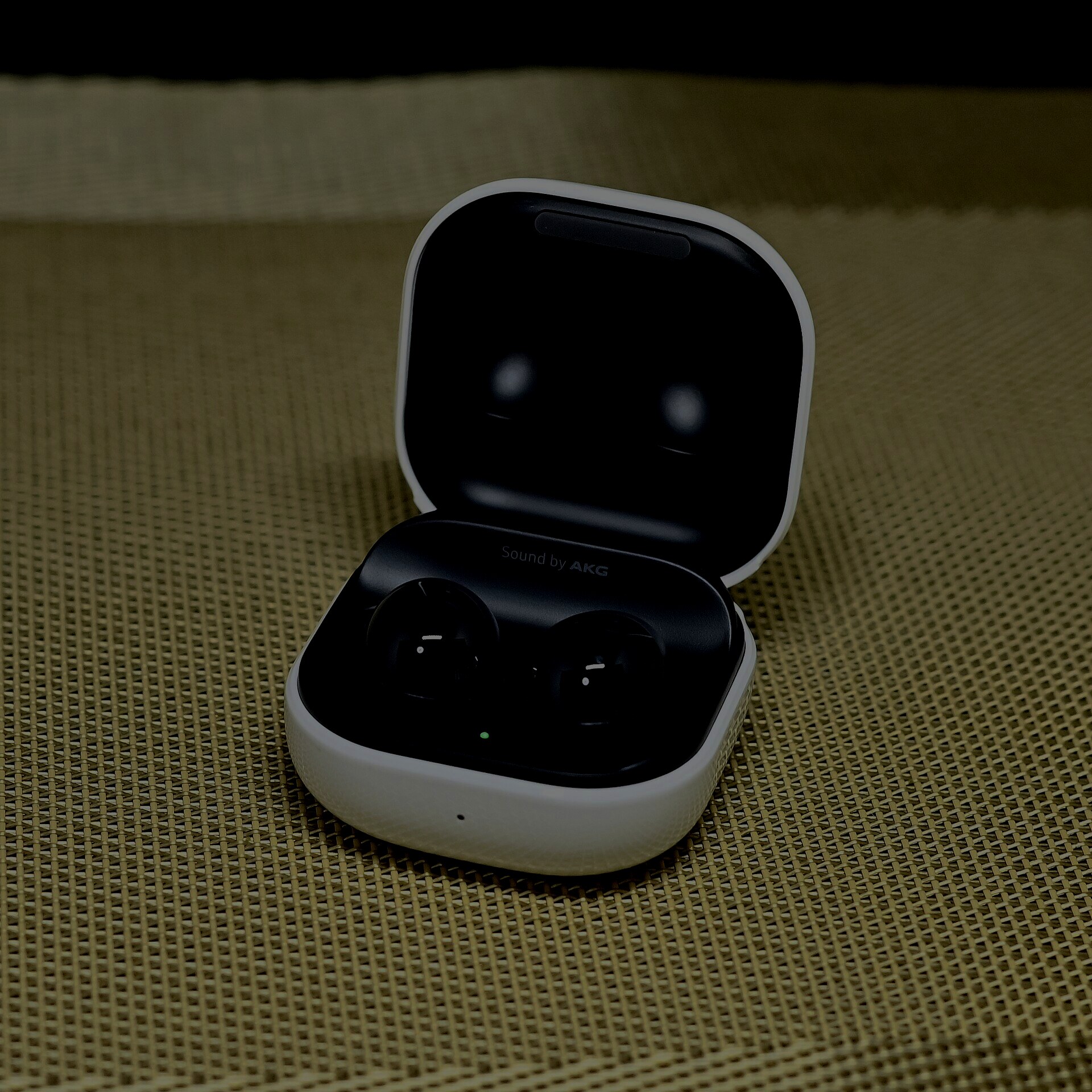
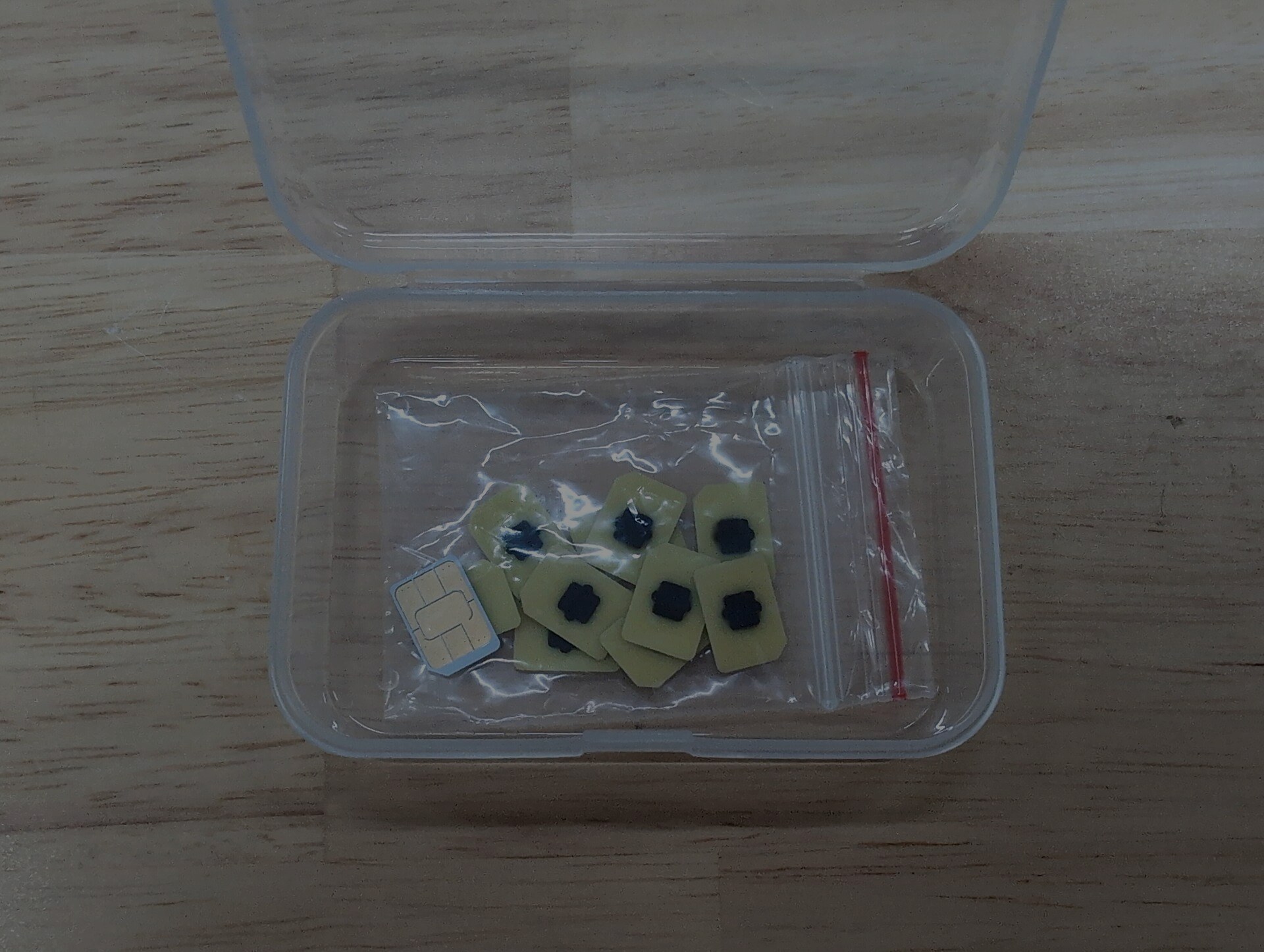
The stills are newspaper objects, not a Plaud lookbook. The white case at the top is a Samsung Galaxy Buds 2, credited, used as a case with buds in the wells. It is not a photograph of Plaud One. Plaud One is listed in white and half-in-ear; the Galaxy still is a white case. The eUICC cards are a 2024 removable eSIM form, gold contacts in a plastic box. They are not Plaud’s embedded radio. The empty boardroom is a table. The case is sold as a thing you set down up to about 5.0 metres from the talk. No person in any frame. Metric on the page. The object is the run: 2,000 units, US$249.99, 4G LTE, eSIM, eight countries, waitlist on the United States page, NotePin thirty percent off ending 30 August.
Sunday, 30 August 2026. Plaud One Limited Explorer Edition. 2,000 units. US$249.99, CA$349.99, £229.00, €249.90. United States, France, Germany, United Kingdom, Italy, Spain, Canada, Netherlands. Not Australia. Case: 4G LTE, eSIM, four MEMS, about 5.0 metres, up to 25 hours of recording, 830 mAh, about 62 grams, IP52. Earbuds: three MEMS and one VPU each, 12-millimetre driver, SBC and LDAC, up to 40 dB of hybrid cancellation, about 4.5 grams each, IP54, 4.5 hours with cancellation on, 6 hours off, 6 hours of recording. Both: Bluetooth 5.4, USB-C, 10 minutes for 2 hours, up to 36 hours with the case, up to 21 days standby, white, half-in-ear. Software: 300 starter minutes, US$200 credits, 112 languages, opt-in training. Announcement 27 August. NotePin offer ends 30 August. The United States page is waitlist. The radio is in the case. That is the metric. The product table is the source.
The paper
Comments
No notes on this story yet.
Sign in to comment