
On Friday at NASA’s Johnson Space Center in Houston, President Trump presented the Congressional Space Medal of Honor to the Artemis II crew.
Commander Reid Wiseman, pilot Victor Glover, mission specialist Christina Koch, and Canadian Space Agency astronaut Jeremy Hansen flew around the Moon from 1 to 10 April. They were the first crew to go there since Apollo 17 in 1972.
Friday is 28 August 2026. Johnson is the Houston center that ran the loop. The medal is the Congressional Space Medal of Honor, authorized by Congress in 1969 for exceptionally meritorious work in the performance of duties. NASA’s image note on the ceremony, credited to John Kraus, lists the four in the same order the agency has used since launch: Glover, Koch, Hansen, Wiseman, with the President. AP filed the presentation the same day. collectSPACE ran the dais. Thirty-four astronauts have now received the medal, NASA said, including this crew, and including, posthumously, the crews of Apollo 1, Challenger, and Columbia. The most recent living honorees before this week, in the collectSPACE tally, were Doug Hurley and Bob Behnken in 2023, the first NASA astronauts to launch on a commercial spacecraft. Friday’s four are the first Moon crew on the list since the Apollo names.
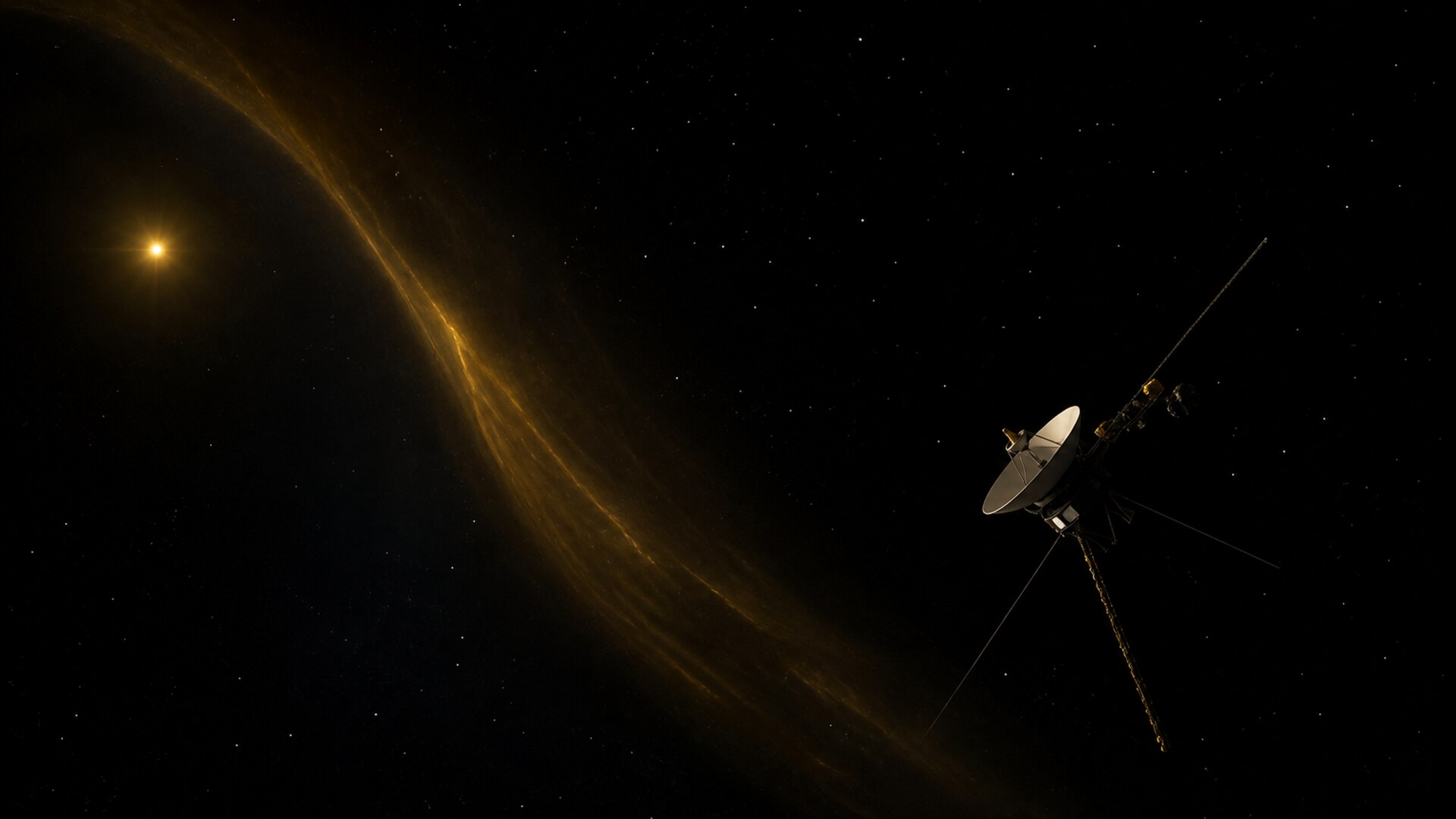
NASA’s official tally put them 406,771 kilometres from Earth at the far side (252,756 miles) — farther than anyone has traveled. That is the number on the medal story. It is not a round slogan. It is the agency’s distance at the far point of the free-return loop. Apollo 13 held the previous human mark at 400,086 kilometres in 1970. Artemis II passed that mark on 6 April, flight day 6, and then went on to the 406,771-kilometre figure. Closest approach to the Moon, NASA and the AP both used, was 6,545 kilometres — from the far-side surface. The medal is for the loop. The loop is those kilometres.
The flight had clock times. Liftoff: 6:35 p.m. EDT, 1 April, Launch Pad 39B, Kennedy Space Center, Florida, on the Space Launch System, Orion on top. Splashdown: 5:07 p.m. PDT, 10 April, Pacific Ocean off San Diego, a nearly ten-day journey. NASA’s welcome-home release, updated 7 May to lock the official distance, put the total path at 1,118,385 kilometres. 406,771 kilometres is the farthest point from home. 1,118,385 kilometres is how far the vehicle drove. Four people. One capsule. First crew to the Moon since Gene Cernan, Harrison Schmitt, and Ronald Evans on Apollo 17 in December 1972. Fifty-four years, then a Friday in Houston with a ribbon.
Harrison Schmitt spoke from that dais. collectSPACE has him: the Artemis II crew, he said, had done an outstanding job of beginning the process that Apollo went through almost 60 years ago in order to land on the Moon. He called Apollo 17 the most productive lunar exploration mission yet, “soon to be surpassed by Artemis.” Schmitt walked on the Moon. He was not on this medal list Friday. He was the last-mission witness. NASA Administrator Jared Isaacman was there. AP noted that Trump also used the occasion to announce a U.S. Space Academy for the Space Force as well as NASA and the commercial space community. The medals are the news. The academy is a separate announcement on the same stage.
The firsts that ride with the four names are already on NASA’s record. Glover is the first Black astronaut to fly by the Moon. Koch is the first woman. Hansen is the first Canadian, and the first non-American, to leave low Earth orbit. Wiseman commanded. Those are crew facts, not decoration. They flew. The medal Congress authorized in 1969 is the instrument the President used on Friday to write the flight down. Wiseman, after the ribbon went on, said the four of them would wear the medals with pride — not for themselves, but for the grit of the families who watched them leave, for the NASA team that sent them, and for the international community that stood with the vehicle. That is the quote from the Houston floor. A medal is a way of writing it down.
What they learned on the test flight, ABC reported from the Houston dais, will help NASA return astronauts to the lunar surface as early as 2028. The agency’s own splashdown release already pointed at a 2028 south-polar landing and at next year’s Artemis III docking work. Artemis II was a test flight with a crew. It did not land. It looped. Orion’s life-support, the SLS stack, the European service module, the splashdown sequence: those were the items under test with four people inside. The medal is not the landing. It is the proof that the loop can be flown. 1 April to 10 April is the flown interval. 28 August is the ribbon.
The pad that launched them was in Florida. Pad 39B. 4.0 million kilograms of thrust (8.8 million pounds) at liftoff, NASA’s launch release said. The Moon was the point. The far-side pass, with a planned loss of signal of about 40 minutes, was 6 April. Splashdown was a Friday in April. The medal was a Friday in August. Four months between the Pacific and the Johnson stage. Exploration, this week, is a ceremony that had to wait for a splashdown, a distance lock, and a calendar on which Congress’s 1969 medal could be hung on a crew that had actually gone.
The medal itself is older than anyone on the dais’s flight. Congress authorized it in 1969. The first class, in 1978, included Alan Shepard, John Glenn, Gus Grissom, Frank Borman, Neil Armstrong, and Pete Conrad — collectSPACE’s recap of the roll from Friday’s ceremony. Later names on that same roll: Jim Lovell after Apollo 13, Tom Stafford after Apollo-Soyuz, John Young and Bob Crippen after the first shuttle flight, Shannon Lucid after her Mir record, Bill Shepherd after the first ISS expedition, and the Apollo 1, Challenger, and Columbia crews, posthumously. Friday adds four. NASA’s count is 34 including them. This desk is not re-litigating the roll. It is putting Artemis II on it with a date: 28 August 2026, Johnson, Houston.
Recovery had a ship too. After the 10 April splashdown, NASA’s far-side record release said helicopters would lift the crew to the USS John P. Murtha for medical checks, then an aircraft back to Johnson. The loop ended in the Pacific. The medal happened in the building that had watched the 406,771-kilometre mark. Orion’s European service module did the burns that put them on the trajectory. SLS did the 1 April departure. Four people sat in the American capsule. Hansen flew as a Canadian mission specialist on a U.S. medal that NASA says recognizes exceptionally brave and meritorious efforts and contributions to the welfare of the nation and humanity. The international clause in Wiseman’s floor sentence is the accurate one: the vehicle had a European module and a Canadian crewmember. The ribbon is still the Congressional Space Medal of Honor.
A separate gold-medal bill is not this ribbon. Sen. Mark Kelly introduced the Artemis II Congressional Gold Medal Act on 24 June; Rep. Don Bacon introduced a House companion the same day. As of this week those bills remain at the committee stage. Friday’s object is the 1969 space medal, presented by the President, already authorized, already on 30 prior astronauts before these four. The gold-medal act is not the Houston ceremony. The ceremony is what NASA and AP said it was.
What Friday is not: a lunar landing. A 2028 surface date brought forward. A fifth name on the Orion. A change to the 406,771-kilometre figure. NASA’s May update already set that number. This desk is not adding a kilometre. It is not describing faces. The four names are the crew. The medal is the object. Johnson is the room.
What Friday is: the Congressional Space Medal of Honor, 28 August 2026, Johnson Space Center, presented by the President to Reid Wiseman, Victor Glover, Christina Koch, and Jeremy Hansen, the Artemis II crew, first people to the Moon since 1972, 406771 km from Earth at the far side, 406,771 kilometres, 34 recipients on NASA’s list including these four. Named crew. Named medal. Named kilometres. Named Friday. The farthest loop gets its medal. The pad was in Florida. The Moon was the point. Friday, the point came home to Houston.
The paper
Comments
No notes on this story yet.
Sign in to comment