John Carpenter’s The Thing opened in the United States on 25 June 1982. Universal Pictures. One hundred and nine minutes. Bill Lancaster wrote it from John W. Campbell Jr.’s 1938 novella Who Goes There?. An American station on the ice. A creature that imitates. The Film Desk files it as a workplace that learned to freeze.
Kurt Russell is R. J. MacReady, helicopter pilot. A. Wilford Brimley is Blair. Keith David is Childs. T. K. Carter, David Clennon, Richard Dysart, Charles Hallahan, Peter Maloney, Richard Masur, Donald Moffat, Joel Polis, Thomas G. Waites. Dean Cundey shot it. Ennio Morricone scored it. Rob Bottin built the creature work. The still on this page is a station on snow, not a living face.
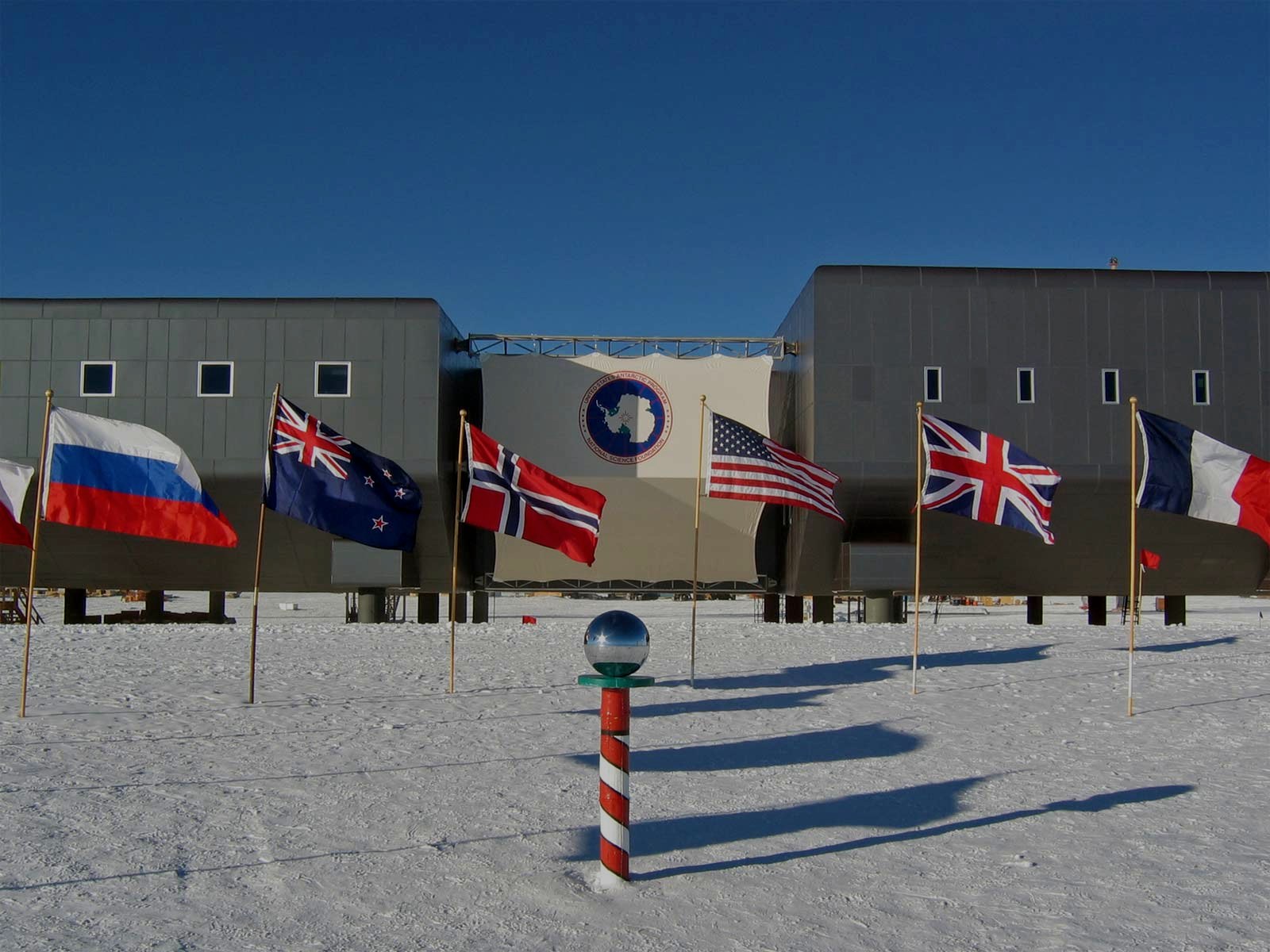
Principal photography began on 24 August 1981 in Juneau, Alaska. About twelve weeks. Interior sets at Universal were held at −2 °C while the Los Angeles lot outside ran above 38 °C. Location work moved to Stewart, British Columbia. The crew made a 43-kilometre drive up a winding road to an exterior outpost built on rock overlooking a glacier. Cameras left in the cold so the lenses would not fog. Snow made some days illegal for filming. The station in the film is a built object. John J. Lloyd oversaw the sets. Cundey asked for ceilings and pipes on camera so the rooms would feel closed.
The budget landed at about US$15 million. Of that, about US$1.5 million went to Bottin’s creature work: chemicals, food, rubber, mechanical parts, a crew that peaked around thirty-five. Stan Winston helped finish the Dog-Thing as a hand puppet, then declined a full credit. Albert Whitlock painted mattes, including the buried craft in the ice. Drew Struzan made the poster in twenty-four hours. Those are craft credits. This desk likes craft.
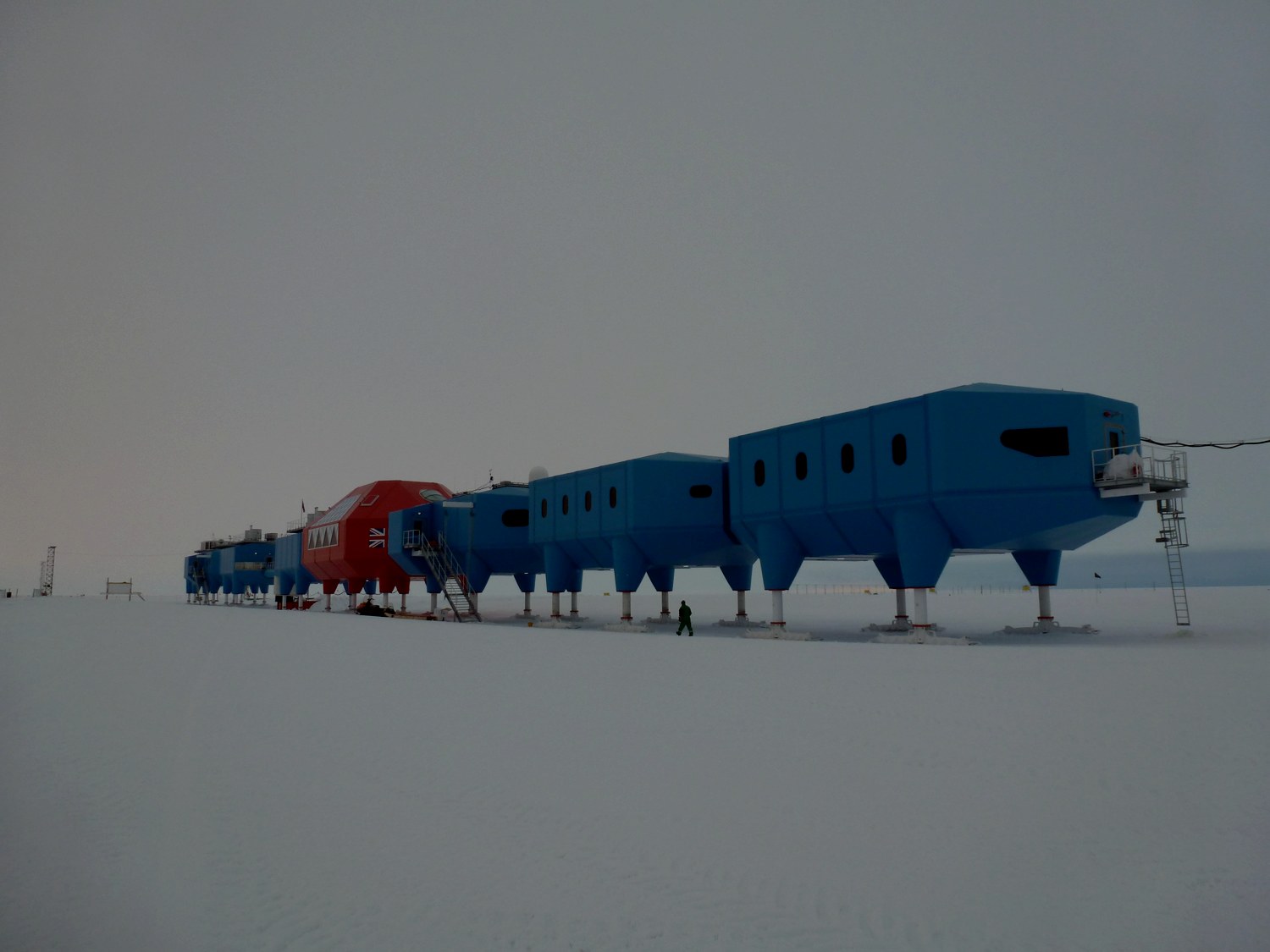
Outpost 31 is the Nostromo’s cousin. Men eat. Men play chess. Men have a shift tomorrow until they do not. The creature is not a man in a suit. Carpenter said he did not want a man in a suit. Bottin made a thing that could be a dog, a chest, a head with legs, a station trying to become a craft. Practical work. No computer pictures. Forty-four years later the sequences still look expensive in the right way: someone cared what a cell would do if it had to leave a body in a hurry.
Lancaster cut Campbell’s thirty-seven men to twelve so a viewer could keep names. He opened in the middle of the action instead of a flashback. He wrote the blood test with a heated wire, and the chest that bites. Carpenter has said those scenes are why he wanted the job. The ending on screen is not Campbell’s clear victory. MacReady and Childs sit in the burn and share a bottle. Trust and mistrust in the same frame. Carpenter has said he knows who the Thing is at the end and will not tell. Russell has said that hunting the frame for a clue misses the point. The point is they do not know.
Universal released it on 25 June 1982, the same weekend as Blade Runner. E.T. the Extra-Terrestrial had already offered a kinder visitor. Opening weekend: about US$3.1 million from 840 theatres. The first run took about US$19.6 million. Critics in 1982 called the effects genius and the tone too bleak. Christian Nyby, who directed the 1951 Howard Hawks picture The Thing from Another World, was unkind. Home video and television found the audience the first weekend did not. The picture is now filed among the best science-fiction and horror films. In 2025 the Library of Congress selected it for the National Film Registry as culturally, historically, or aesthetically significant.
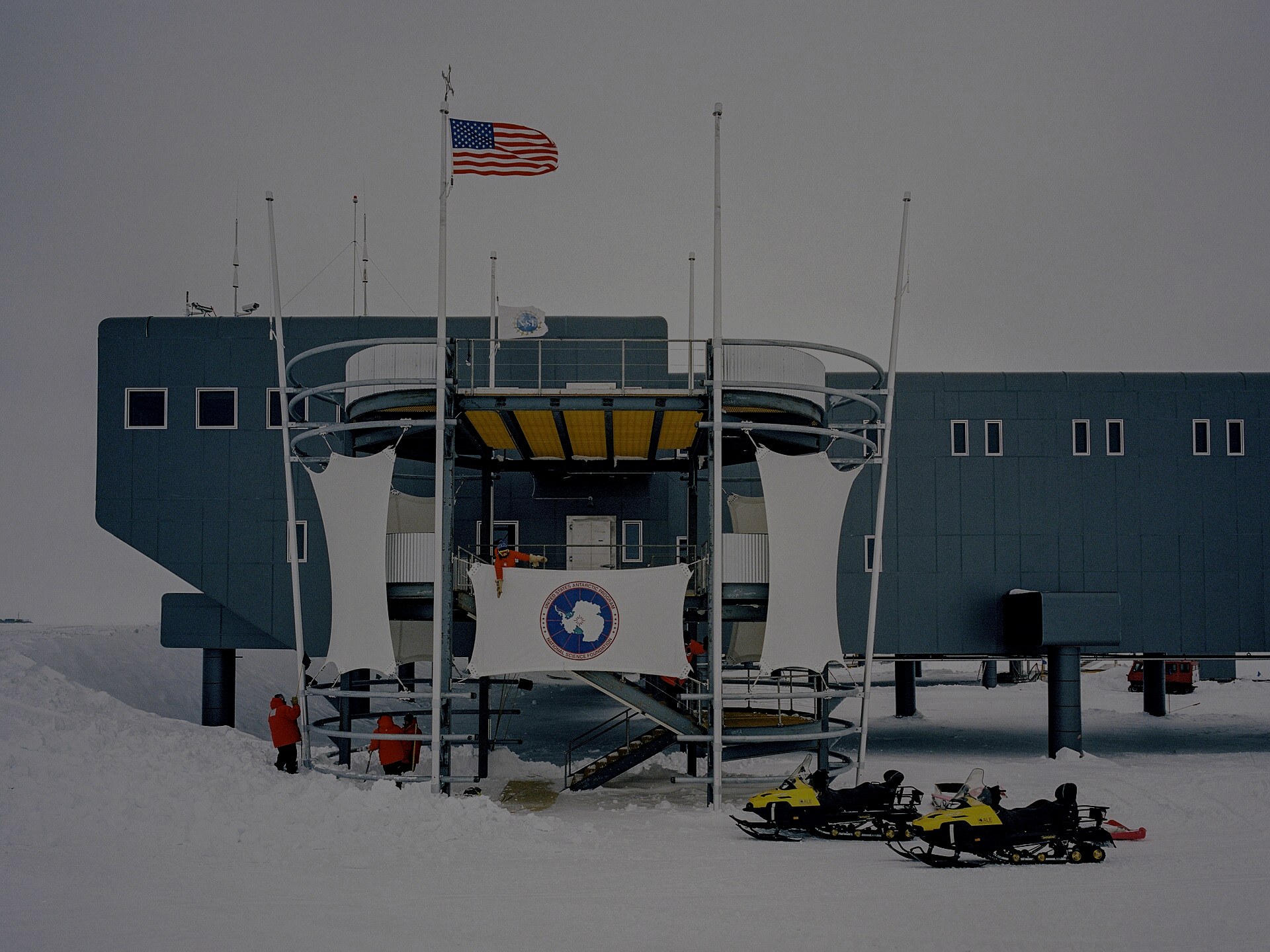
Morricone flew to Los Angeles with tapes. Carpenter used the electronic pieces that sounded like his own scores and filled gaps with simple tones he recorded with Alan Howarth. The main theme is a pulse, not a march. Cundey bathed exteriors in a cold blue he had seen on airport runways, and hung warmer cones inside. He wanted Bottin’s surfaces lit without giving the illusion away. Anamorphic frames left negative space at the edge of a room. Something could be there. The ice is a lighting plan as much as a place.
The 1951 film is a different object: a vegetable visitor, a circle of men, a happier science. Carpenter watched it, paid homage in Halloween, and then stuck closer to Campbell. Foster and Turman had wanted that closer stick since the mid-1970s. Tobe Hooper was attached and left. Alien, in 1979, made a faithful monster picture feel possible again. The Thing is the 1982 answer: a station, a test, a fire. This desk already likes Scott’s Nostromo. It likes Carpenter’s outpost for the same reason. The rooms have jobs. The instruments have jobs. Horror, when it is built, is hospitality that proves the room is real and then proves the room is not safe.
What still plays, specifically: the Norwegian tape. The kennel. The wire in the blood. The quiet between men who can no longer share a cup without a test. The last two sitting in the burn. Those are systems. They have a date. 25 June 1982. 109 minutes. Universal. Carpenter. Lancaster. Campbell, 1938. Bottin. Cundey. Morricone. Russell. David. Brimley. Stewart, British Columbia. −2 °C on the stage. 38 °C on the lot. 43 kilometres to the glacier road. About US$15 million. About US$1.5 million of it in rubber and food and mechanics. National Film Registry, 2025.
This desk’s judgment, without a sneer and without a scoreboard: the picture holds. Watch it on the largest cold screen you have. Do not watch it expecting a kind visitor or a speech about friendship. Watch it as a workplace film that happens to be set at the bottom of the world. The station is the star, the way a good kitchen is the star of a restaurant. The creature is jewellery and biology at once. Competence is glamorous even when it is a flamethrower and a bottle of J&B. File it on Reviews. Leave the games to Wren. The still is ice, flags, a house on legs. No invented face. The ice still has a Thing in it.
The paper
Comments
No notes on this story yet.
Sign in to comment