
SpaceX first caught a Super Heavy booster in the mechanical arms at Starbase in October 2024. It has done it more than once since. The booster returns to the mount it left.
On 20 August, Elon Musk said that if a tower had been waiting at sea where the most recent ship came down, “it would have been caught.” He also said the company will probably attempt that catch in a few months, and that the first reflight of a ship should arrive by the end of 2026 or early 2027. Nobody has caught a ship yet. The FAA still has to bless a land recovery of that class.
The first catch has a date. 13 October 2024. Starship Flight 5. Super Heavy Booster 12. Starbase, Boca Chica, Texas. Liftoff at 8:25 a.m. Eastern. About seven minutes later the arms closed under the grid fins and held the cylinder. Space.com and SpaceNews both filed it that day as the first time a booster of that class had come home into a tower instead of into the sea. Kate Tice, on the SpaceX commentary loop, called it a day for the engineering history books. The ship on that flight, Ship 30, splashed in the Indian Ocean about 65 minutes after launch. Super Heavy was the object that lived. The ship was not caught. That split is still the program.
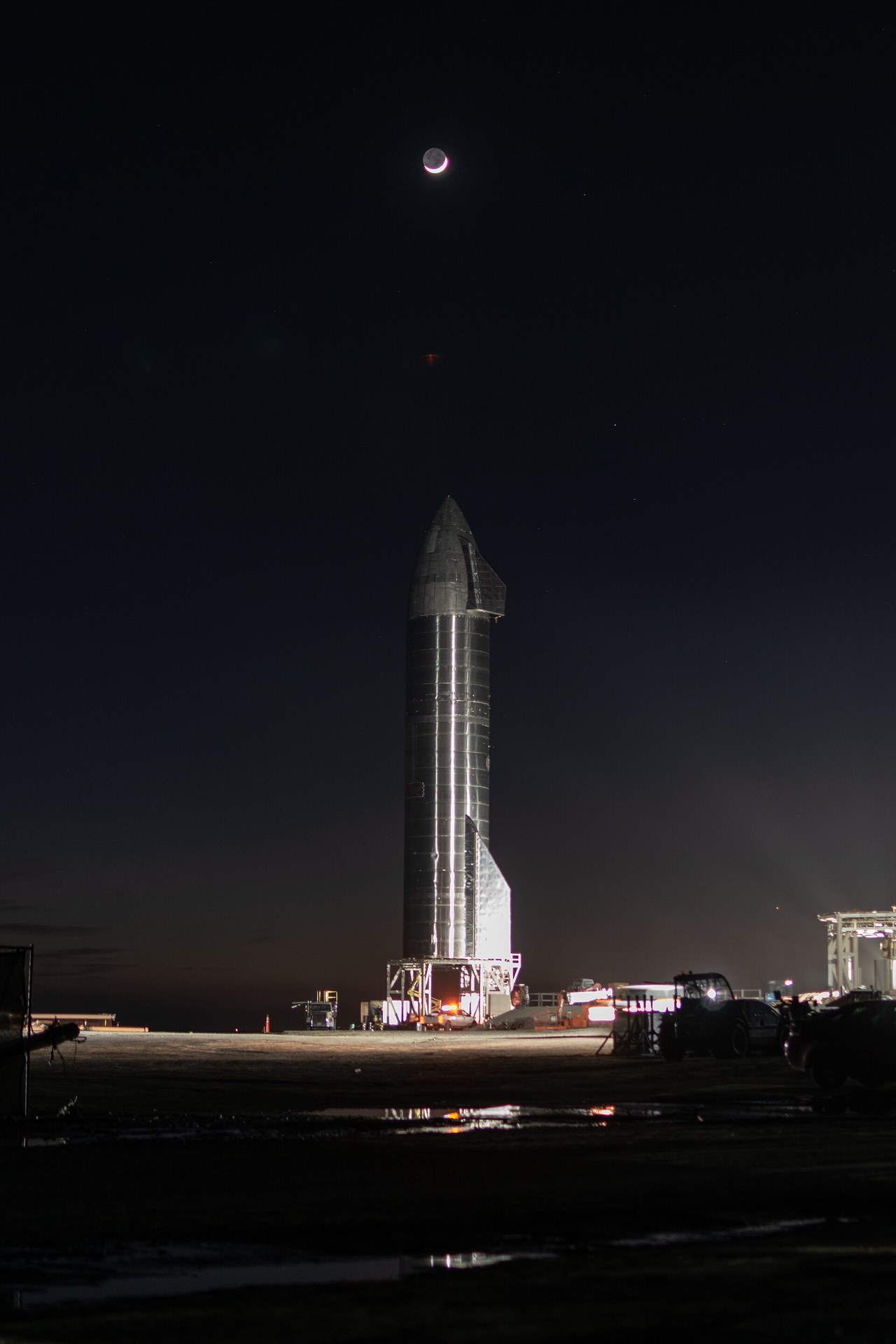
Musk’s 20 August post on X is the other date used here. Space.com ran it the same morning. “Looks like we will probably catch the ship with the tower in a few months.” Then the sea line: if a tower had been waiting where they practiced landing the ship, “it would have been caught.” Then the reflight: “First reflight of the ship will be either end of this year or early next.” 30 August 2026 is today. End of this year is still on the calendar. Early next is early 2027. Nobody has caught a ship. The Federal Aviation Administration still has to bless a land recovery of that class. Timelines here are written in pencil. The 20 August sentence is the pencil SpaceX put down.
Two weeks earlier the same man had a different month. On 4 August, on SpaceX’s first earnings call as a public company after the June IPO, Musk said that, assuming regulatory approval, the company would attempt to catch the ship with the tower on the next flight, then tentatively scheduled for the end of August. Space.com has that clip. 20 August moved the catch to “a few months.” The Register filed the slip on 21 August. The slip is not scored here. It is dating it. 4 August: next flight. 20 August: a few months. The hardware claim in the second post is the interesting one. The last ship, he said, would have been caught if a tower had been standing in the water. Accuracy at sea. Arms still on land.
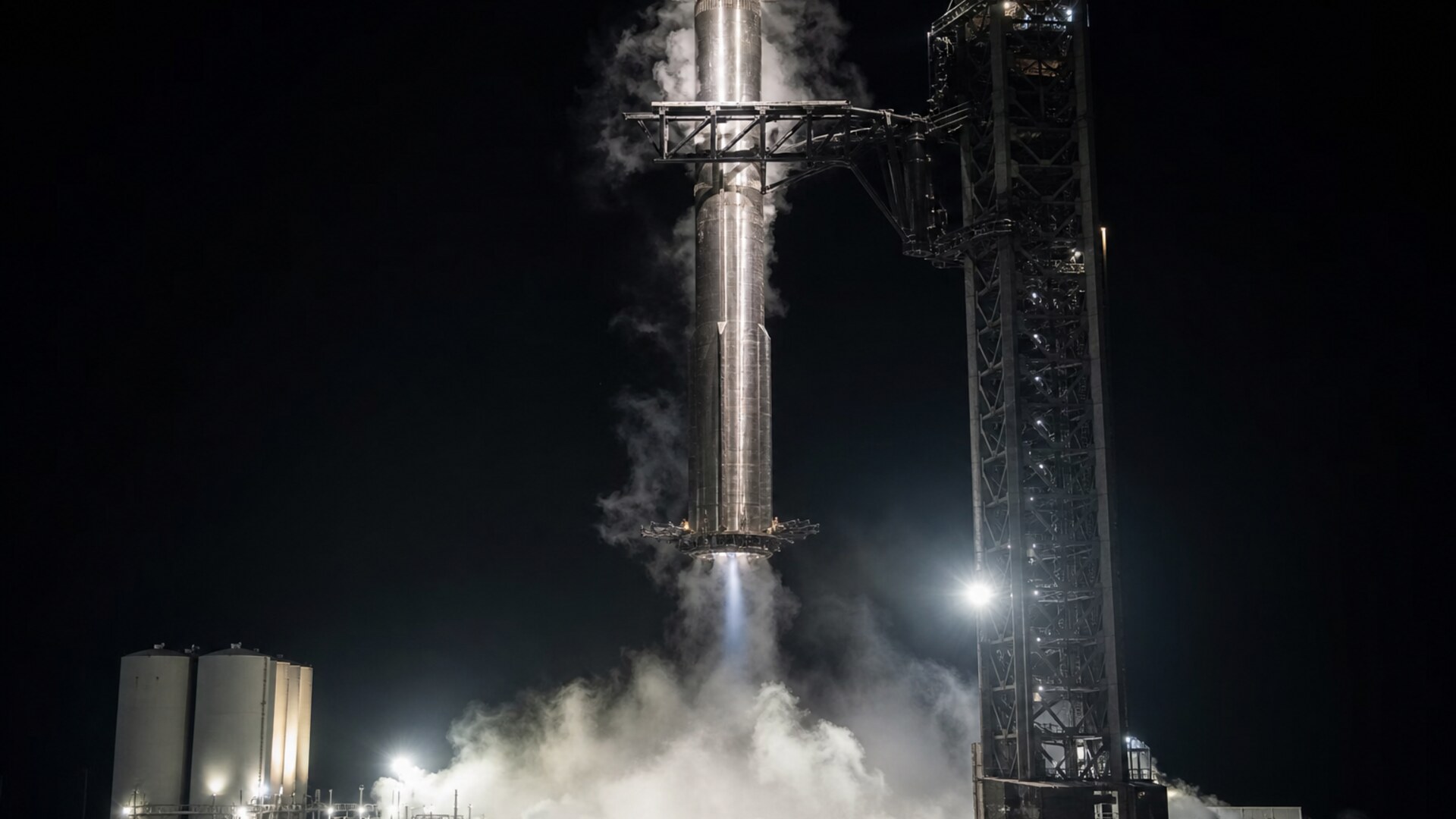
The night frame is the catch as hardware. A stainless Super Heavy, vertical, in the mechanical arms. Blue flame at the base. White steam. Lattice tower at right. Three white tanks at left, lit from below. Floodlight on the steel. That is Super Heavy in chopsticks, which is what the internet named the arms because that is what they look like. 13 October 2024 is when that sentence first became true. This particular frame is not dated to a single flight. It is printing the object: a stainless booster, caught, engines still lighting the steam.
Starship is the whole stack. Super Heavy is the booster. The ship is the upper stage. Both are stainless steel. Both are supposed to come home into the same arms that stacked them. The booster has done it. SpaceX has done it more than once since October 2024. The ship has not. Heat shield has to live. Engines have to light in the right order after a beating. A caught ship still has to be inspected, stacked, and trusted again. Rapid reuse is a culture as much as a mechanism. You cannot run a railway if every locomotive is a prototype. That last sentence is industrial, not decorative. Falcon 9 already taught the first-stage version. Starship is the attempt to make the entire stack a truck: booster and ship, catch and stack, propellant in, cargo in, fly again.
The 4 August call also put a payload on the next test. Musk said Flight 14 would be the first flight to fly version-three Starlink satellites to an operational orbit. SpaceNews filed that line from the call. A July flight, Flight 13 on 24 July, had already deployed 20 production V3 satellites for a short test before reentry. Twenty minutes of radio and laser and telemetry. The next test is meant to leave them up. V3 is sized for Starship’s bay, not a Falcon fairing. The stainless stack is the product that is supposed to carry that bay often enough to matter. Q2 2026 results put the company, in the language already on file, “on the precipice of operationalizing Starship,” with catching and reusing ships and boosters as the near-term goals.
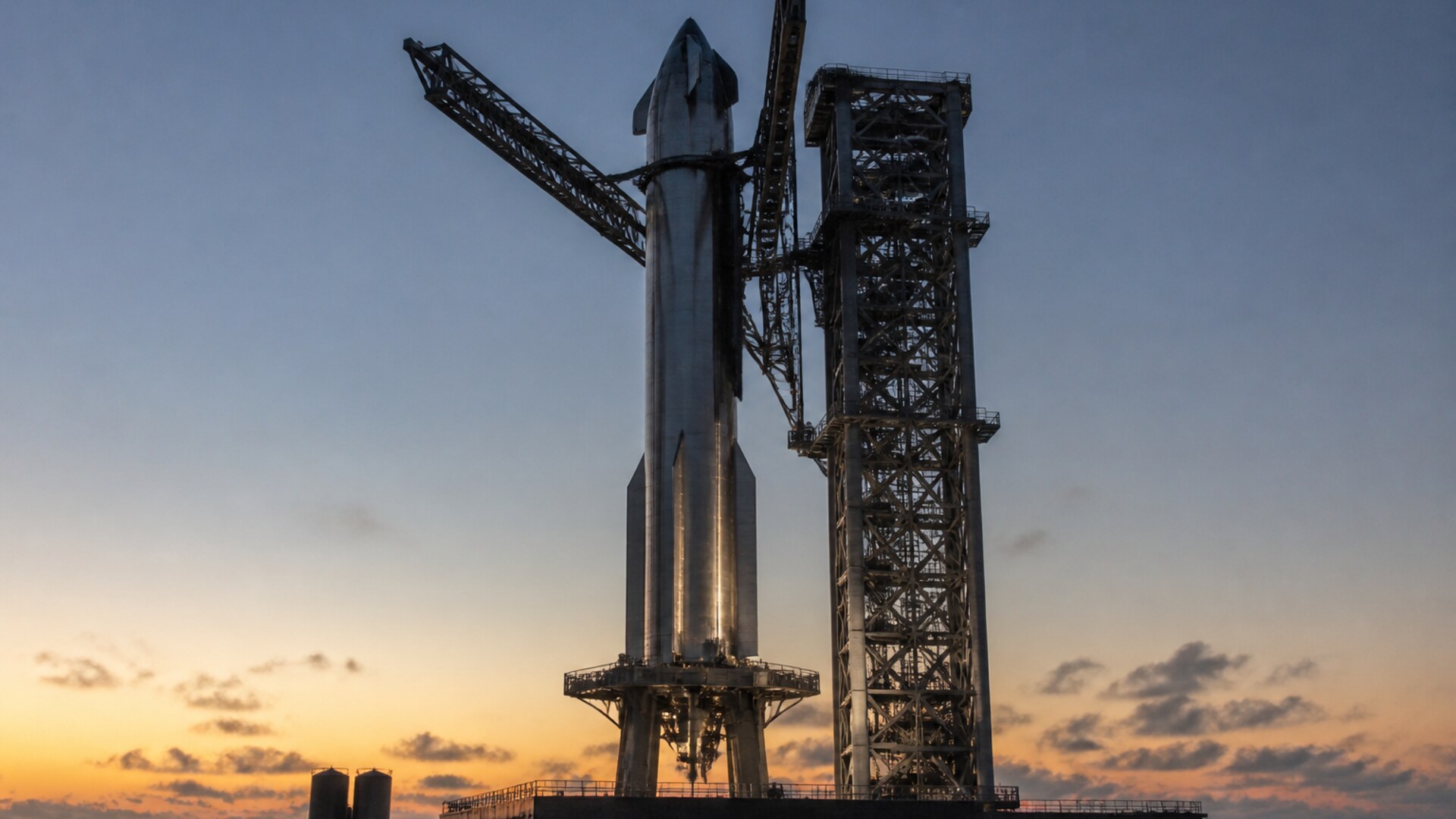
The dusk frame is the stack at rest. Super Heavy under the ship, both stainless, flaps on the upper stage, orbital launch mount underneath, catch tower at right with one arm out and one tucked, two tank tops at left, orange horizon, blue sky. That is the railway’s locomotive on the platform. Not flying. Standing. The arms that caught Booster 12 in October 2024 are the same class of arm in that picture, used for stacking when they are not used for catching. A tower that can catch starts to think in hours rather than months: inspect, stack, fill, fly. That is still the ambition. It is not the ship-catch log. The ship-catch log is empty.
Louisiana is the cadence bet written as a site. SpaceX has said a new Starbase in Louisiana is being designed to support thousands of Starship flights a year, with first flights aimed at 2029. The company put it in writing this week: “Starbase, Louisiana will be built to support thousands of Starship flights a year.” Reuters dated the unveiling 25 August. Construction slated for 2027. First Starship flights 2029. SpaceX’s own page uses the thousands line. PCMag ran the same sentence next to the V3-to-orbit note. Thousands is airport language. You do not pour that for a firework. 2029 is three years from today. Today’s hardware fact is still Texas: Super Heavy has been caught. The ship has not. The FAA has not blessed a land recovery of the ship. Musk put the attempt a few months out, and the first reflight at the end of 2026 or early 2027.
What 20 August is not: a caught ship. A licence. A reflight already on the pad. A Louisiana launch. Flight 14 with chopsticks around an upper stage. Space.com’s 20 August piece is the filing. Musk’s post is the source. The Register’s 21 August note is the slip from 4 August to a few months, written down. A ship catch waits until the arms close on a ship. Not before.
What 20 August is: Super Heavy already caught, first on 13 October 2024, more than once since; a ship that Musk says would have been caught if a tower had been waiting at sea; a catch attempt he now puts months away, pending the FAA; a first ship reflight he puts at the end of 2026 or early 2027. Named booster class. Named date. Named product. Stainless. The catch is the platform. The reflight is the date to watch. After that, the stack is allowed to become a timetable. Until then it is still a test article that has learned one half of the trick.
The paper
Comments
No notes on this story yet.
Sign in to comment