
President Trump said on Sunday, 30 August, that Venezuelan crude will go into the Strategic Petroleum Reserve. The Truth Social post is the primary. “One of the things I am going to do with the Venezuelan Oil is fill up the Strategic National Reserves which, because of Sleepy Joe Biden, has been virtually emptied.” He called the topping-out “a Gift from Venezuela to the People of the United States” and said it would begin “very shortly.”
The reserve held about 289.7 million barrels as of 21 August, Anadolu Ajansı and Bloomberg both printed that figure. Authorised capacity is 714 million barrels. That is roughly 40 percent full. Reuters, in the same Sunday round, had the stockpile near 290 million and near a 44-year low. The Washington Times, using a Department of Energy August note, had a 6.1 million-barrel drop to 298.7 million. This page is using 289.7 million on 21 August as the Sunday consensus number, and flagging the Times’ 298.7 as the other printed stock.
Friday 28 August is the deal the oil is supposed to come from. Trump said the United States, with private partners, had secured majority control of more than 65 billion barrels of proven Venezuelan reserves. Interim President Delcy Rodríguez’s statement said 17 fields, a $100 billion investment draw, and more than $209 billion in tax if oil is $65 a barrel. A White House official told reporters the new venture gives the United States 55 percent of effective output — an ownership slice plus the right to buy oil at cost.
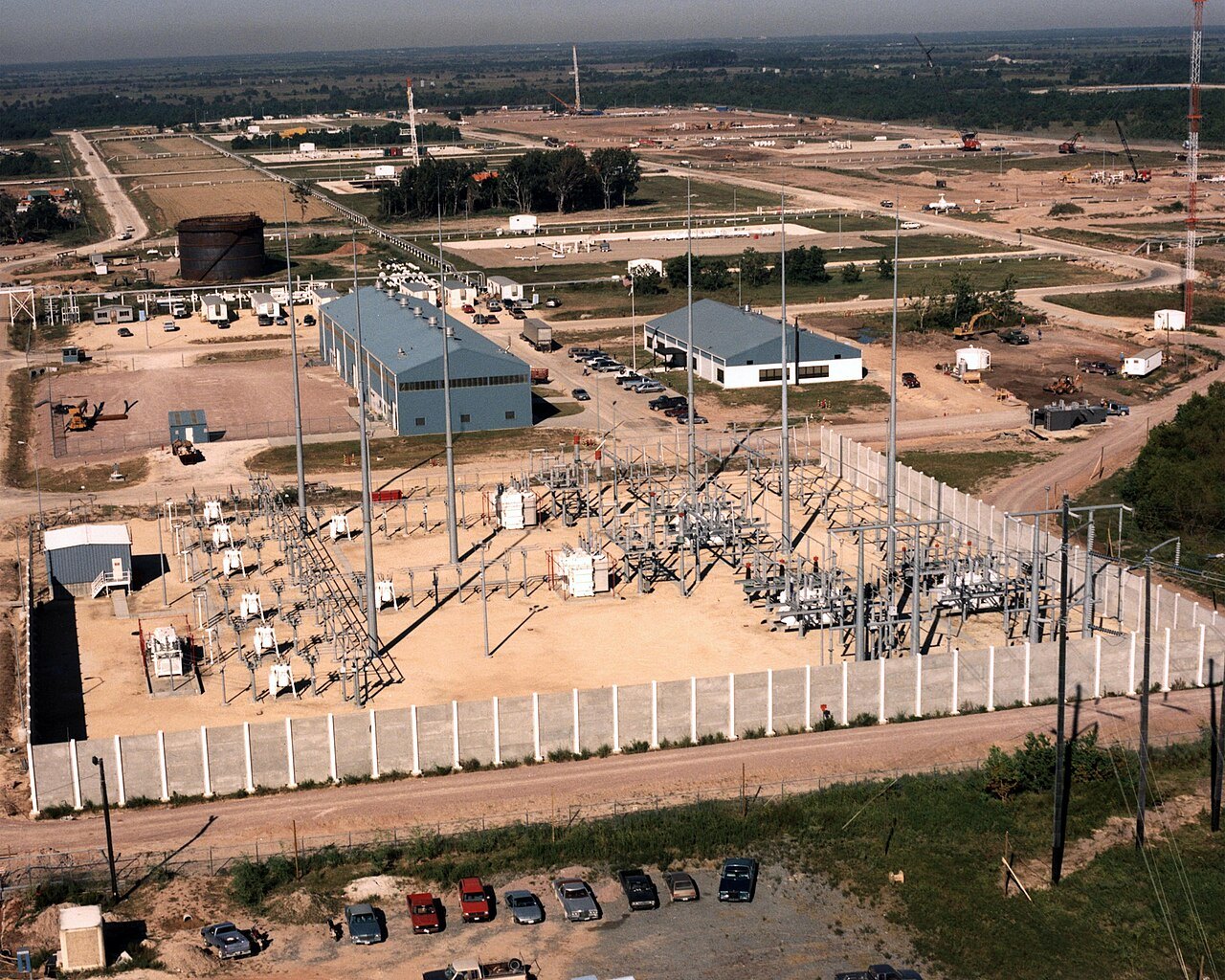
The caverns are in Texas and Louisiana. Bryan Mound, Brazoria County, about three miles southwest of Freeport, has 19 caverns and an authorised 247.1 million barrels. West Hackberry, Cameron Parish, has 22 caverns and 227 million. Those are Department of Energy site figures, not Sunday rhetoric. The oil, if it arrives, has to go into salt.
Anadolu time-stamped the Sunday file 30 August. Bloomberg’s Energy Connects reprint is the same day. The Washington Times and BOE Report carried the Truth Social sentences. ABC News Australia filed a Friday-deal explainer on Sunday afternoon. Associated Press had the 55 percent split from an official not authorised to be named. This page is treating the post, the 21 August inventory, the 714 million capacity, and Rodríguez’s 17 fields as the metric set.
Rodríguez, who took over in January after American forces captured Nicolás Maduro, has given the pact a 25-year life and a production target above 1.5 million barrels a day. Other write-ups, including CNN’s Friday night file, have called it a 100-year field lease. Both numbers are in the clips. No text of the agreement has been released. This paper will not pretend it has read a contract that is not on the wire.
The 55 percent is a stack, not a single share certificate. The Wall Street Journal’s account, as Asia Business Daily reprinted it, had the United States seeking a 35 percent stake in North American Blue Energy Partners, a private operator in Venezuela, plus priority rights to 20 percent of that company’s crude at cost. Thirty-five and twenty is fifty-five. That arithmetic matches the White House official’s “effective output” line. The operator’s name is in the secondary. The official text is not.
How fast the oil can move is the open question every energy desk put under Sunday’s post. Kevin Book at ClearView Energy Partners told ABC the industry did not expect volume quickly. David Oxley at Capital Economics said that on its face the deal could double U.S. oil reserves and cut reliance on Canada and Mexico, and also said Venezuela’s reserve numbers may have been stretched under Hugo Chávez. Trump has said the crude will help petrol prices. The Iran war that began on 28 February has left the Strait of Hormuz, in Anadolu’s Sunday phrasing, stranded. A Gulf Coast cavern does not fill on a social-media clock.
The drawdown history is why 290 million looks small. The biggest modern release was 2022: a million barrels a day for six months under the previous administration, with about 45 percent of the stockpile gone by late 2023. Trump ordered 172 million barrels out in March, the Washington Times said, after the Iran war pushed prices. Both presidents used the reserve as a tap. Sunday is the first time this White House has pointed at a named foreign barrel as the refill.
Bryan Mound can, on the Department of Energy’s own site card, draw down more than a million barrels a day. A 36-inch brine line runs 12.5 miles into the Gulf. The salt column is 1.5 cubic miles down to 10,500 feet. West Hackberry is tied to the Texoma system toward Cushing. Those are the pipes a topping-out has to use. The Department of Energy had not, as of Sunday’s Anadolu file, issued technical guidelines for the Venezuelan transfers.
Friday’s announcement also said the arrangement came at no cost to the American taxpayer. Who pays to rebuild Venezuelan fields is the sentence the clips do not have. ExxonMobil and ConocoPhillips were cautious when the administration asked them back in, citing old infrastructure, security, and law. Chevron was already talking about expanding. A 55 percent claim on 65 billion barrels is a reserve number. A well that pumps is a different number. Sunday’s post is about the first number going into the second place: the SPR.
This is not the LNG-jetty file. That story was export licences. This one is import into a cavern. 289.7 million barrels on 21 August. 714 million of room. 65 billion barrels named on Friday. 17 fields. 55 percent effective. $100 billion of hoped-for investment. $209 billion of hoped-for tax at $65. Sunday’s sentence is shorter than all of that. The President said the topping-out starts shortly. The salt is in Texas and Louisiana. The oil is not in the caverns yet.
Sunday is 30 August. Friday is 28 August. The inventory date is 21 August. Three dates, one cavern system, one social-media sentence about a topping-out that has not yet been given a Department of Energy procedure. When DOE prints a transfer notice, that notice becomes the next file. Until then the metrics are the ones already on the paper: 289.7 million in the salt, 714 million of room, 65 billion named in Caracas, 55 percent effective, 17 fields, and a President who said the gift starts shortly.
The paper
Comments
No notes on this story yet.
Sign in to comment