
On 6 August ESA posted six seconds of film from Thales Alenia’s hall in Turin. A full-scale model of the ExoMars landing platform pops two legs, then the other two, each pair in less than a second, non-explosive actuators, the way they will fire after the front shield is jettisoned.
The four legs match the structure and dimensions of the ones that will fly. Sener in Spain designed and built them. Airbus is building the platform. Thales Alenia is the industrial lead.
The film is the news. ESA titled it “ExoMars stretches out its legs.” Released 6 August 2026. Length: six seconds. Copyright line: ESA/TAS-I/Airbus/Sener. The agency’s caption is a sequence, not a speech. Simultaneous deployment of two landing legs, in two sequential pairs. The legs travel stowed. They deploy automatically after the front shield is jettisoned. Non-explosive actuators. Each pair in less than a second. Full-scale model, Thales Alenia facilities, Turin, Italy. Four legs that replicate the structure and dimensions of those that will fly to Mars. That is the whole clip. The clip is the news.
Sener is the leg house. Spain. Designed and built the landing gear. Airbus provides the landing platform. Thales Alenia Space is the industrial lead of the mission. ALTEC, also in Turin, has been the drop-test hall. Those names are the supply list. A European landing on Mars is a supplier diagram before it is a photograph of rust-colored dirt. 6 August is the day the diagram unfolded in public, on purpose, in pairs.
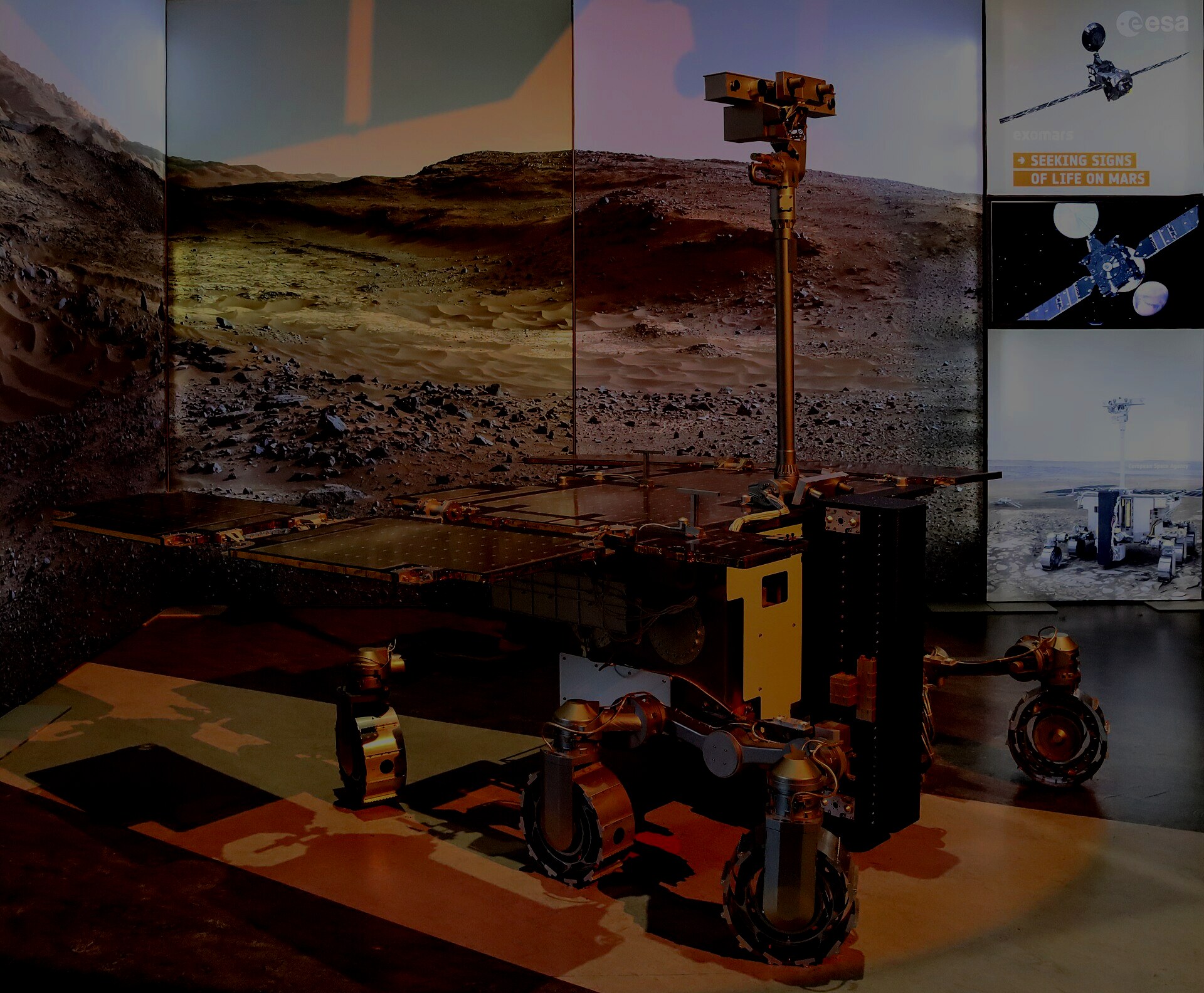
Those legs are for Rosalind Franklin, the rover that will drill as deep as two metres under Mars and look for the chemistry a surface wind would have ruined. Two metres is the scientific number. ESA’s own project page puts the drill’s maximum vertical reach at 2 m, with three extension rods coupled to the tool to get the full length. The deepest anyone has gone for organic molecules on Mars, that page notes, is still on the order of 15 centimetres, a Viking-era mark. Surface radiation ruins biomarkers in the top half-metre. The two-metre hole is the reason the rover exists. The legs are how the rover is supposed to arrive upright enough to drill.
Touchdown is 2030. The ride leaves in late 2028. NASA has booked a Falcon Heavy for the launch, from Kennedy, under the arrangement the two agencies formalized after Europe lost the old Russian ride. Ars Technica filed NASA’s confirmation in April: SpaceX on Falcon Heavy, perhaps as soon as late 2028. The trajectory is the long one, about two years, timed so landing falls in northern-hemisphere spring and misses the global dust season. Parachutes and engines do the slowing. The legs do the last honest metre. After the front shield goes, the pairs fire, the platform hangs on four points, the throttleable engines NASA is supplying cut the last speed, touchdown sensors in the legs tell the engines to shut down so the plumes do not dig a pit and tip the craft. Then ramps. Then a rover named for a chemist.
Turin has been practicing that last metre for months. In January ESA posted “Legs made for a Mars landing”: more than a month of vertical drops at ALTEC, Thales Alenia and Airbus teams, a full-scale model onto hard surfaces and onto powdery Mars-like soil, speeds and heights changed by centimetres. Lightweight, deployable, interconnected legs with shock absorbers. Touchdown sensors in all four. In May the agency’s To Mars and Back blog filed the sideways campaign: a magnetic sled, up to four metres per second, a platform tilted 20 degrees, every test absorbed by the four legs. Pietro Baglioni, ExoMars rover team leader, called it proof of how robust the landing system is. Teams are feeding those results into computer models of further Martian cases. 6 August is not a drop. It is the unfold. Different test. Same hall city. Same four legs.
Ramps went into a vacuum chamber in Italy in July. NASA has already handed over the first braking engines. Those two sentences were already on this desk’s file. They stay. The unfold does not replace them. It adds the deployment that has to happen in flight between shield-jettison and engine-on. Non-explosive actuators. Less than a second per pair. Two pairs. Four legs. If the actuators are slow, the rest of the landing timeline slips. If they fire as the Turin model fired, the platform has a stance before the engines finish the job. A sky that practices is a sky that intends to land. The practice this month was six seconds of film.
The landing platform will not live long on Mars. Airbus’s European Entry Descent and Landing Module is a delivery truck. No solar panels of its own, in the current description. A few sols of environmental data — pressure, temperature, a microphone — while the rover drives off one of two opposite ramps. Then the platform is done. Rosalind Franklin is the continuing machine. Oxia Planum is the landing region on the books. The drill, the two metres, the chemistry under the ruined surface: those wait on a stance. 6 August is the stance in a hall.
The landing numbers around those legs are already on ESA’s books. The platform is supposed to come down from about 45 metres per second to less than 3 metres per second on parachutes and retro rockets before touchdown. Sensors in all four legs detect the surface and shut the engines down so the plumes do not excavate a crater and flip the craft. Airbus is building that platform at Stevenage as the European Entry Descent and Landing Module, the replacement for the lander Europe lost when cooperation with Roscosmos ended. NASA’s contribution, besides the Falcon Heavy ride, is the throttleable braking engines, radioisotope heater units for the rover’s nights, and pieces of the MOMA instrument that will look at the drilled samples. Three American lines. Two of them, ESA’s exploration director told a Council briefing this summer, already in hardware motion, with the first braking engines delivered. The 6 August film is not those engines. It is the stance the engines will lower.
Oxia Planum is the landing region. The Trace Gas Orbiter, launched in 2016, is the data-relay already on station. Rosalind Franklin will not have a Russian surface platform sitting beside it. It will have a European truck, a few sols of PACIS weather — pressure, temperature, a microphone — and two ramps, opposite sides, so the rover can pick a way down. Then the truck goes quiet. The drill, two metres, three extension rods, autonomous coupling, is the continuing experiment. Viking’s 15 centimetres is the depth record this rover is built to beat. Surface chemistry is the enemy. The legs are not the science. The legs are how the science is allowed to begin standing up.
What 6 August is not: a launch. A 2028 window opened. A 2030 touchdown. A rover on Oxia Planum. A claim that Sener’s flight legs have already flown. The film is a full-scale model. ESA said so. The four legs match the structure and dimensions of the flight set. Matching is not flying. This desk will take the unfold as the news and leave the Earth-departure date where ESA and NASA have it: late 2028, on a Falcon Heavy, if the window holds.
What 6 August is: six seconds from Thales Alenia’s hall in Turin, ExoMars landing platform, two pairs of legs, each pair in less than a second, non-explosive actuators, Sener’s gear, Airbus’s platform, Thales Alenia the industrial lead, Rosalind Franklin the rover, two-metre drill, 2030 the landing year. Named test. Named city. Named suppliers. Named product. A window that is still two years out just grew a set of knees. The last honest metre now has a film.
The paper
Comments
No notes on this story yet.
Sign in to comment