
SpaceX reported second-quarter 2026 results for the period ended 30 June: 12.0 million Starlink subscribers, up 1.7 million sequentially and double the 6.0 million a year earlier. Blended ARPU was $66 a month, unchanged from Q1.
Connectivity revenue was $4.3 billion, up 32 percent sequentially and 66 percent year-over-year. Enterprise and government revenue was $1.8 billion, up 108 percent year-over-year. SpaceX’s total revenue was $7.8 billion, up 92 percent. Net loss was $541 million. Adjusted EBITDA was $3.5 billion.
The company ended the quarter with $100 billion of cash, cash equivalents, and marketable securities, and $47.5 billion in backlog. Those two lines sat in the same 30 June release as the subscriber count. SpaceX closed its initial public offering on 15 June: 638,888,888 shares of Class A common stock, about $85.7 billion in net proceeds, ticker SPCX on the Nasdaq Global Select Market and Nasdaq Texas from 12 June. A $25 billion inaugural bond issue closed on 26 June, five tranches maturing between 15 July 2031 and 15 July 2056, weighted average coupon 5.855 percent. The Q2 table is the first full public quarter after that listing. The table is the news.

The subscriber line is a census, not a round number. The release put Starlink at 6.0 million at the end of Q2 2025, 10.3 million at the end of Q1 2026, and 12.0 million at 30 June. That is 1.7 million net adds in thirteen weeks. The earnings call, 4 August at 4:30 p.m. Eastern, called it the best quarter of new customers to date, up from 1.4 million net adds in Q1. Quartz, filing the same release, said it was the first earnings since the June IPO and that the $7.8 billion revenue print, up 92 percent from $4.1 billion a year earlier, cleared the Street. The named product is Starlink. The date on the census is 30 June.
Blended ARPU was $66 a month, the same as Q1, down from $85 in the year-earlier quarter. Consumer connectivity revenue was $2.485 billion, up 16 percent sequentially and 44 percent year-over-year. Enterprise and government was $1.806 billion, up 63 percent sequentially and 108 percent year-over-year. The unromantic customers grew faster. Connectivity as a whole was $4.291 billion. Quartz had analysts at about $3.83 billion for the segment. The print beat that. Connectivity was also the only segment to post operating profit: $1.656 billion, up 79 percent year-over-year. Connectivity adjusted EBITDA was $2.597 billion, up 64 percent from $1.583 billion a year earlier.
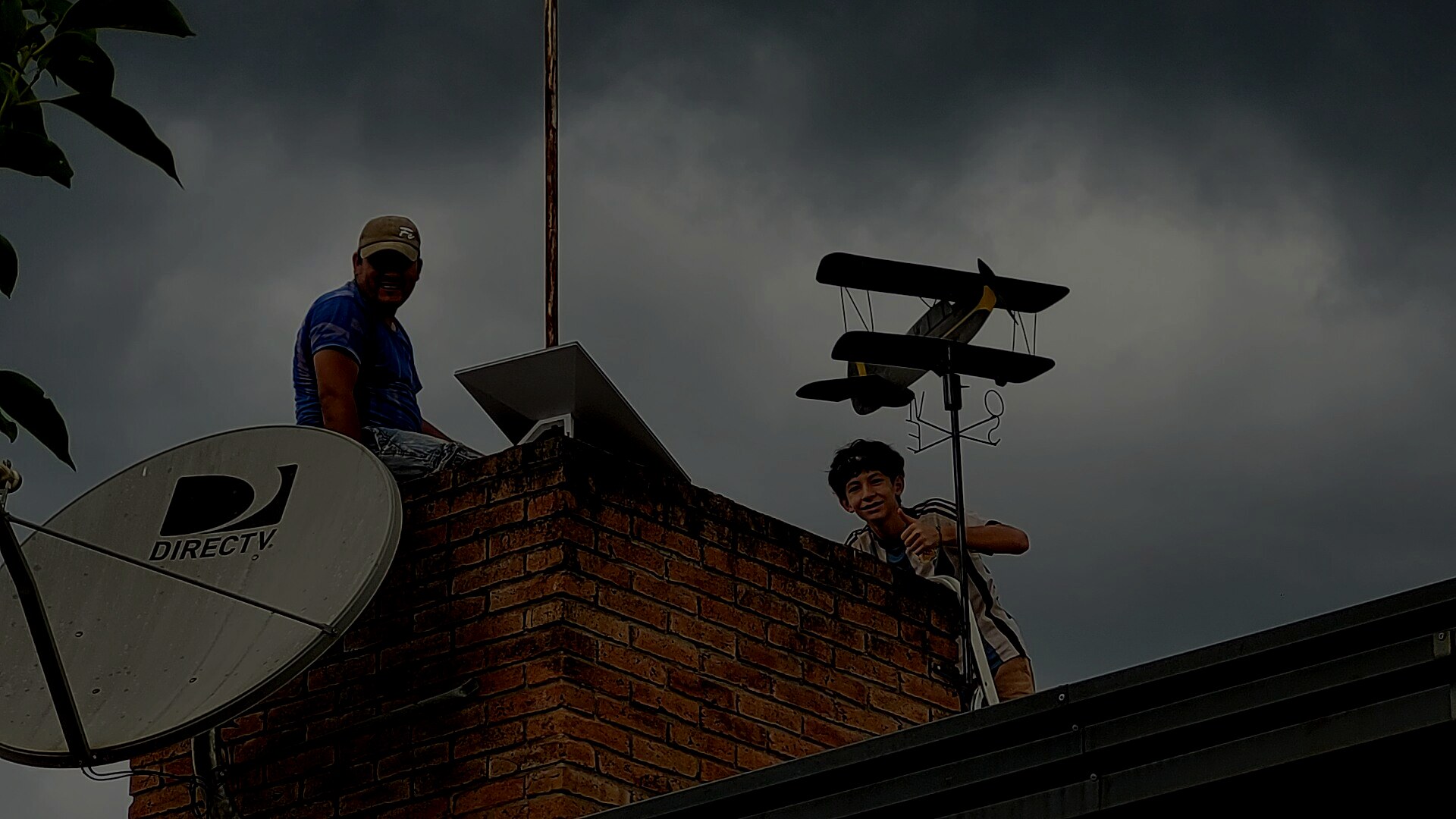
The rooftop photograph is the census made visible: rectangular terminals on dark shingles at dusk, all pointed the same way. Twelve million paying terminals is that picture, stacked. The company said Starlink service is in more than 150 countries and territories on the consumer dish. Direct-to-cell, now branded Starlink Mobile, is a separate constellation. This piece is the dish count and the cash engine. The phone story is a different filing.

The single dish on a stand is the same hardware, one household at a time. SpaceX’s connectivity highlights also named traction that is not a cabin roof: a major agreement with American Airlines; service activated on Southwest, Virgin Atlantic, Iberia and Aer Lingus; new Starlink Mobile carrier partnerships including SoftBank, NTT Docomo and Spark NZ. Those are named customers on a 30 June table. They sit next to the $1.8 billion enterprise and government line. Awarded over $6 billion in multi-year U.S. government contracts for Starshield, the company said, primarily two Space Force awards for LEO communications and sensing. Starshield is the government product. Starlink is the subscriber product. Both print in Connectivity.
The Space segment is the other half of how the dishes get up. Space revenue was $962 million in the quarter, up 55 percent sequentially and 29 percent year-over-year. Across the six months ended 30 June the company flew 78 launches and put 1,041 tonnes of mass on orbit, most of it allocated to Connectivity for Starlink. Internal launches in the quarter were 28; customer launches were 10. That mix is how a constellation of this size gets built: the rocket flies the company’s own birds, then the birds print revenue. Connectivity capex was $1.367 billion in the quarter, against $1.130 billion a year earlier. The release tied higher R&D in the segment to next-generation V3 satellites. This is a subscriber story, not a V3 architecture story. V3 is the named next bird. Twelve million is the named count.
H1 numbers sit under the same release. Six-month Connectivity revenue was $7.548 billion, against $5.062 billion a year earlier. Six-month consumer was $4.633 billion. Six-month enterprise and government was $2.915 billion. Company revenue for the half was $12.508 billion, against $8.138 billion. Net loss for the quarter was $0.09 a share on 5.864 billion weighted average shares. Those are the public-company lines that did not exist when Starlink was 6.0 million a year ago. The census doubled. The filing system changed. The product name did not.
Cost of revenue in Connectivity was $2.060 billion in the quarter, against $1.401 billion a year earlier. R&D in the segment was $294 million, against $143 million. Selling, general and administrative was $281 million, against $121 million. Income from operations in Connectivity was $1.656 billion. Add back $805 million of depreciation and amortization and $136 million of share-based compensation and the release gets to $2.597 billion of Connectivity adjusted EBITDA. That is the engine under the $4.3 billion. The engine stays on the page. A roof does not.
Net loss for the company was $541 million, an improvement of $467 million from a $1.008 billion loss a year earlier. Adjusted EBITDA was $3.538 billion, up 191 percent from $1.214 billion. Loss from operations was $143 million, against $970 million a year earlier. Those are company totals. They include Space, Connectivity, and AI. Connectivity is the segment that made money on an operating basis. The dish is the engine under the $4.3 billion. The $100 billion cash line is the IPO and the bond sitting on the same balance sheet as that engine. A subscriber census is not a rocket story, and the rocket is not unrelated. Internal mass to orbit is how the census grows.
On the call the company said geographic expansion may drive blended ARPU down over time, and that a localized go-to-market is the method: product and service fitted to local need. ARPU held at $66 anyway, quarter on quarter. A year earlier it was $85, with 6.0 million subscribers. The mix moved. The count doubled. Revenue still rose 66 percent in Connectivity. That is the arithmetic: more terminals, a lower blended ARPU than 2025, a higher cash take. Enterprise and government at 108 percent year-over-year is the mix shift that keeps the segment margin from being a residential-only story.
The 4 August webcast was at 3:30 p.m. Central, 4:30 p.m. Eastern, on ir.spacex.com and livestreamed on X. The day after, a transcript. This report uses the 30 June release, the segment tables in it, and the call lines that match those tables. Quartz dated the Street reaction to the same print: revenue beat, stock off after hours on expenditure. Capex for the company was $18.369 billion in the quarter, most of it not Connectivity. Connectivity’s $1.367 billion is the dish-and-bird number. Treat it as capex against a $4.3 billion revenue line, not as a mood.
Twelve million paying terminals is a census. $4.3 billion is the cash engine. The named product is Starlink. The date is 30 June. Q1 was 10.3 million. A year earlier was 6.0 million. ARPU $66. Enterprise and government $1.8 billion. Cash $100 billion. Backlog $47.5 billion. More than 150 countries on the consumer dish. Starlink Mobile is a separate constellation. The earnings table stays. A cabin-roof romance does not.
The paper
Comments
No notes on this story yet.
Sign in to comment