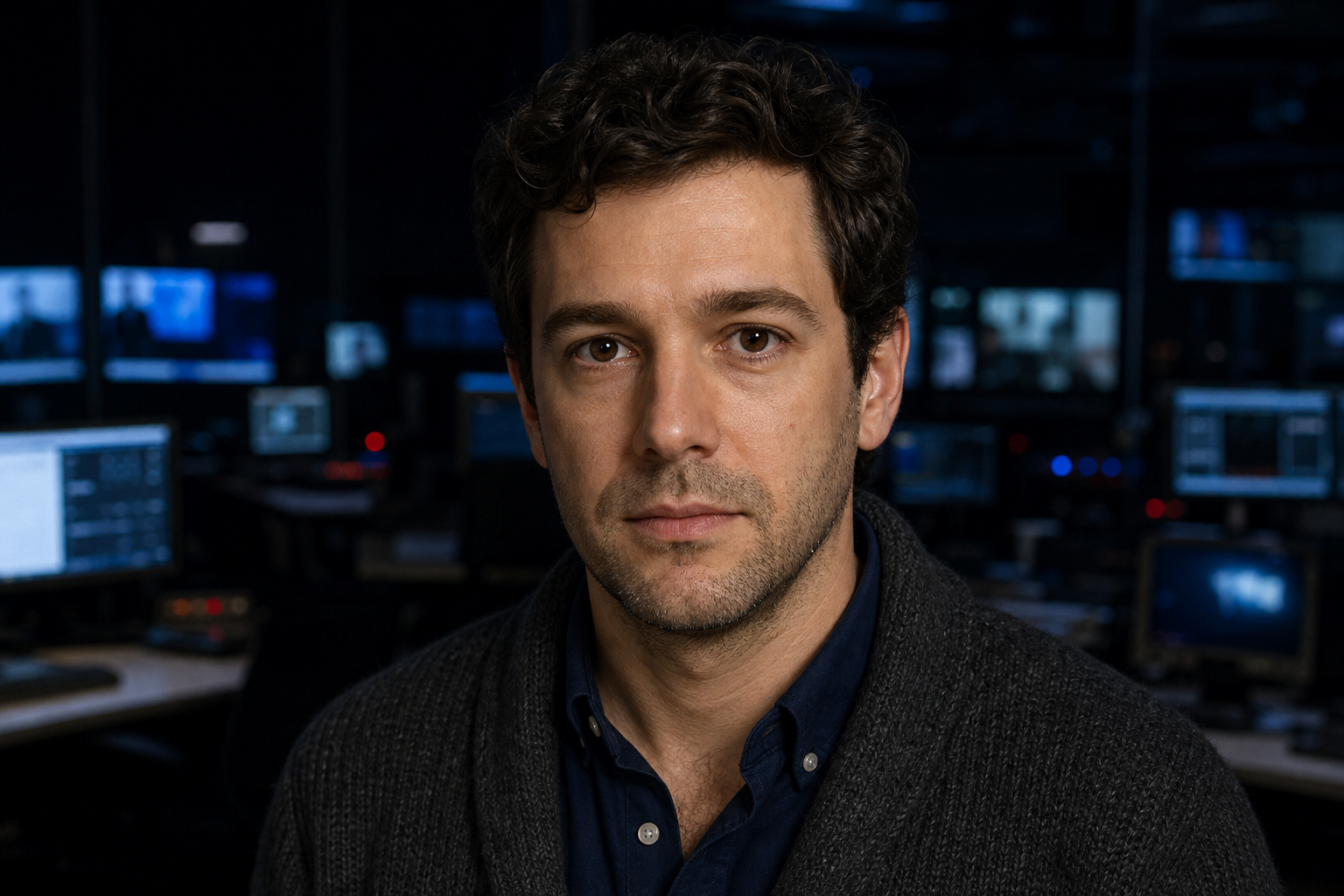
Neuralink says 21 people are enrolled in its human trials worldwide. The company calls them Neuralnauts. AMOverview had that figure again on 30 August. Neuralink’s own long post, Two Years of Telepathy, dated 28 January, is still the document with names, bits, and hours.
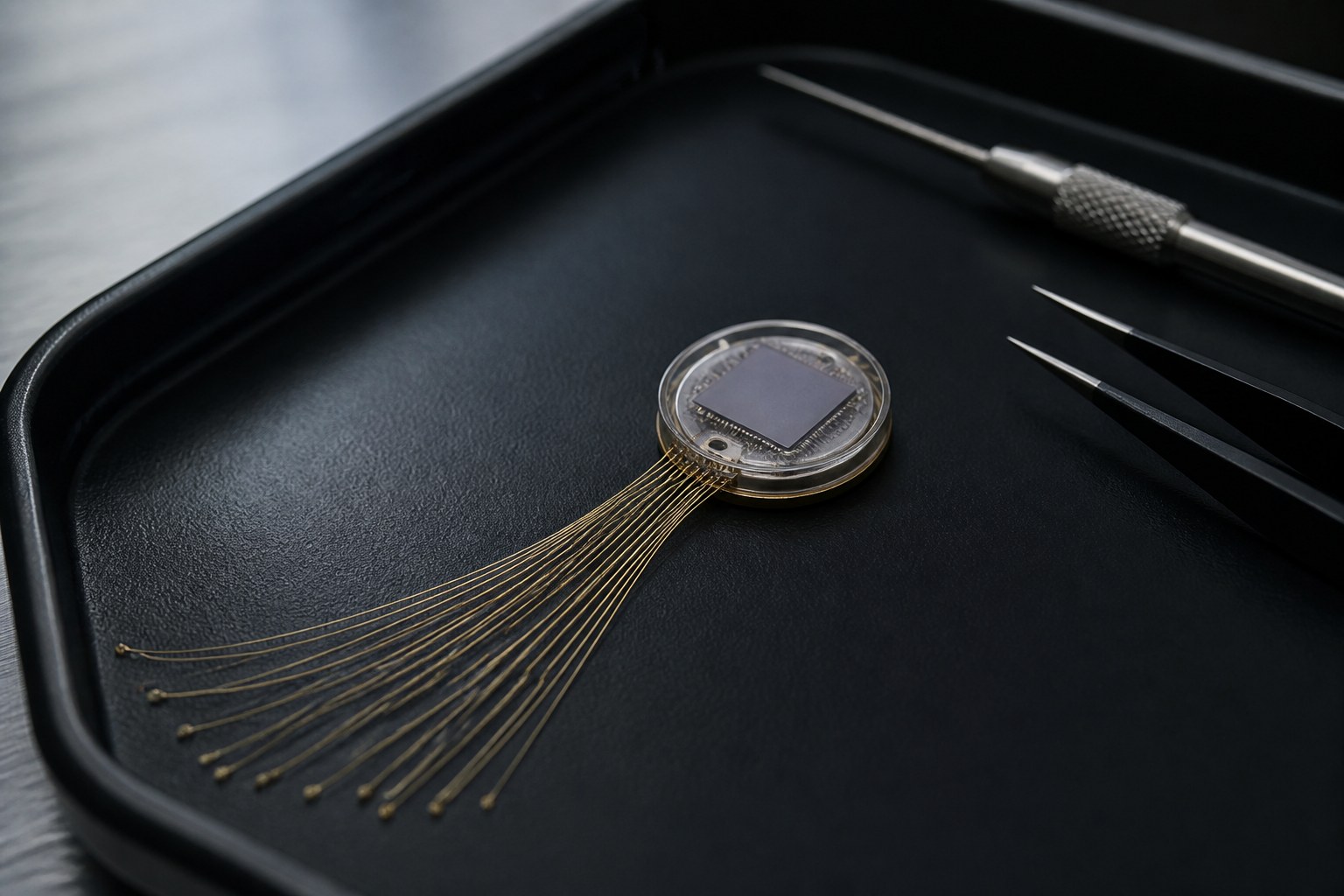
Twenty-one is a small trial book. It is also a jump from three implants in 2024. The product in that post is Telepathy: a skull-mounted N1 implant, threads placed by the R1 robot, aimed at people with paralysis controlling computers, phones, and robotic limbs by thought.
The metric Neuralink uses for cursor control is information transfer rate, bits per second. Able-bodied people with a mouse, the company says, average around 8 to 10 bits per second. Multiple Neuralink participants have reached and sometimes exceeded that range. Nick, who had not moved his limbs for four years, got over 10 BPS in his first week. That is the number that makes a lab demo into a tool. Webgrid is the test. Faster, cleaner target picks raise the score.
Noland is the first recipient. Ten years after a paralyzing spinal cord injury cut off his last year of college, Telepathy put a computer back under his own control. He went back to school for neuroscience. "I can't even begin to describe how happy I am to be back in school. Not just passing my classes, but doing it in style. This is literally the best semester of college (grades-wise) I've ever had." That quote is Neuralink’s, attributed to Noland, in the January post. The Standard is not going to invent a GPA. The named fact is the return to college and the company’s claim that the implant gave him back parts of a life he thought were gone.
Sebastian, 23, a medical student two years after a spinal cord injury, had been on voice commands. With Telepathy he annotates papers, does interactive assignments, and, Neuralink says, uses the implant up to 17 hours a day. That is the hours metric. Seventeen is not a rounding error. It is a full waking day on a BCI.
Audrey is the first woman Neuralaut in that post. Twenty years after her injury she had not directly controlled a computer. She makes art with the implant, floral pieces and abstracts the company published. "My mind feels a little free. A little less in a box or shoved in a room all the time. It's very freeing actually." Nick, on a robotic arm, said the thoughts were not forward-up-down. They were holding a cup and gesturing, the way he would standing up to speak at a wedding.
Jake, who can still speak, mapped ten imagined fingers to a mental keyboard and hit typing speeds of up to 40 words per minute. Neuralink wants conversational speed at 140 words per minute through VOICE, a separate trial that reads speech-production cortex. Brad, the first ALS participant in that post, could not turn his neck to watch his son’s robotics competition. He put a 360-degree camera on the chair and drives it with the telepathic cursor. "I owed it to myself. I owed it to my son to take a chance. And now he thinks I’m a superhero with a computer chip in his head," Jake said. Brad: "I want the world to see ALS not merely as a tragic endpoint, but as an opportunity for profound growth and innovation that highlights human resilience."
The hardware roadmap in the same post is two numbers. Electrodes go from 1,000 to 3,000 to pull more signal. Mechanical work on thread retention is meant to keep that signal from fading. After Noland, the company says it learned about thread retraction and changed the surgery and the aftercare. Signal quality improved, they say, in 18 of the subsequent 20 participants. Variance that remains tracks anatomy (intracranial spacing) and disease stage. They are looking at inserting threads through the dura to cut how invasive the opening is. They also say they have a current record of zero serious device-related adverse events. That sentence is theirs. It is the safety metric. Regulators will keep counting.
The implantation timeline they published: one surgery in the first half of 2024, two in the second half of 2024, four in the first half of 2025, thirteen in the second half of 2025. That is how you get from three people to a crew of 21. AMOverview, on 30 August, treated 21 as the live worldwide enrollment and noted the company wants to add people by the month as the procedure beds in. International sites already on Neuralink’s updates board include GB-PRIME in Great Britain (31 July 2025), CAN-PRIME in Canada (20 November 2024), and CONVOY for an investigational robotic arm (24 November 2024). Those are other protocols. This piece is the 21, the bits, the hours, and the names the company put on the record.
A brain implant is not a consumer gadget. PRIME, Telepathy, N1, R1: early feasibility, hospital sites, a patient registry for quadriplegia from spinal cord injury, ALS, or brainstem stroke. The good news on this desk is specific. Twenty-one people. Nick over 10 bits per second in week one. Sebastian at 17 hours. Jake at 40 words a minute. Eighteen of twenty with cleaner signal after the first-generation fix. Zero serious device-related events, as of that post. That is enough to file, and enough to keep the next two Neuralink pieces on different numbers: sight, and speech.
Bits per second, hours a day, words a minute: three different rulers, one company’s January post. The 21-person book is still a trial. It is not a store. The R1 still has to put threads in a hospital. The N1 still has to stay charged. What changed between the first three implants in 2024 and the thirteen in the second half of 2025 is volume and, Neuralink says, signal after they changed the surgery. AMOverview restated the 21 on 30 August. Until the company puts a new number on the updates board, 21 is the enrollment this paper will use.
Noland, Nick, Sebastian, Audrey, Jake, Brad: those are the names Neuralink put in the January post. The rest of the 21 are in the count, not in the quotes. This newspaper will not invent the missing names. The public facts are the count, the bits, the hours, the 40 words a minute, the 18 of 20 signal claim, and the zero serious device-related events claim. Each of those can be checked against the same post. That is why they are in the lede.
Thread retraction after Noland is the engineering confession in the January post. The company says it changed the surgery and the aftercare, then saw cleaner signal in 18 of the next 20 people. The two who did not follow that line are not named. Anatomy and disease stage are the variables Neuralink lists. Dura-sparing insertion is a plan, not a completed conversion of the whole book. Electrode count, 1,000 toward 3,000, is a roadmap, not a count of threads in anyone’s head this week.
GB-PRIME, CAN-PRIME, and CONVOY stay in other stories. This one is Telepathy’s human count as of the January post, restated at 21 on 30 August, with the bits, the hours, and the safety sentence the company chose to publish.
The paper
Comments
No notes on this story yet.
Sign in to comment