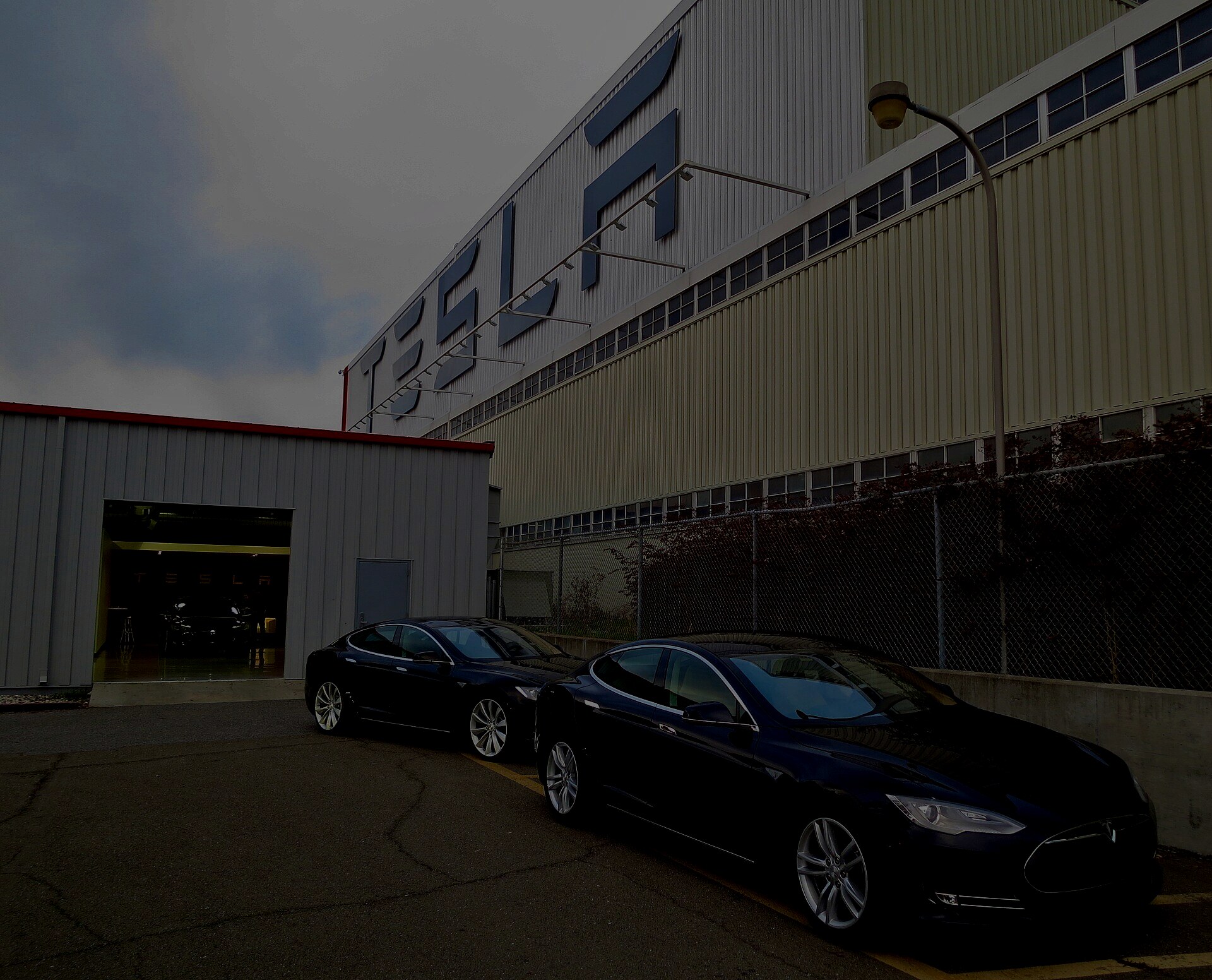
Tesla walked JPMorgan through Fremont in August and called Full Self-Driving v15 a step-change, the same size of jump as v13 to v14. Seven core technologies. About 40 percent of them already running in the Austin robotaxi fleet. Early feedback, the bank wrote, was encouraging.
v14 shipped in October 2025. The computer in the car is still HW4, which Tesla now calls AI4. The company told the bank that box is enough to run v15 and unsupervised Full Self-Driving.
Electrek filed the JPMorgan note on 20 August. TeslaMagz followed the next day. The walk was at Fremont. The analyst on the note is Rajat Gupta, who sat with Tesla’s investor-relations team at the plant. JPMorgan kept a Neutral rating and a price target around $445. This is not a ratings story. The useful lines are Tesla’s, said on a factory floor to a bank, then written up for clients. That is a manufacturer statement. It is not a customer over-the-air update on a random Tuesday.
Tesla told the bank Full Self-Driving v15 is a major jump in capability, built on seven core technologies, with about 40 percent of them already running in the robotaxi fleet in Austin. Early feedback, Electrek quoted the note, was “encouraging.” Those are the bank’s words for Tesla’s test. TeslaMagz, reading the same note, said Tesla also told the bankers it is working to avoid regressions in everyday driving as it adds the new work, and that it sees v15 as the main path toward scaling unsupervised Full Self-Driving more broadly. Tesla has not published the list of those seven technologies. There is none on the record.
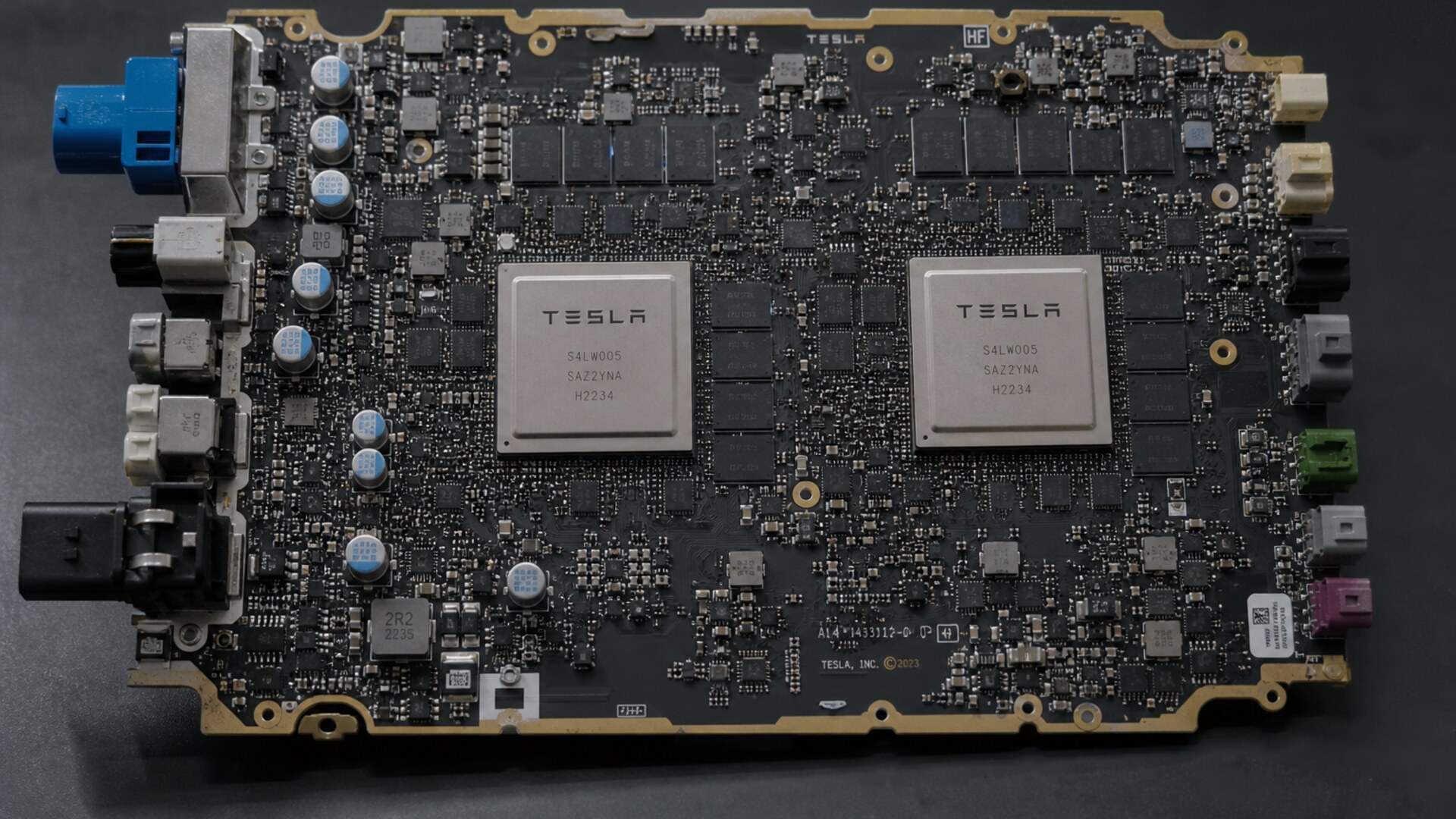
The computer in the car is still Hardware 4. Tesla now calls that box AI4. The board in the photograph is that computer: two Tesla-branded processors side by side, a 2023 copyright on the silk screen, part number A14-1433112-01. Tesla told JPMorgan this computer is enough to run v15 and unsupervised Full Self-Driving. That is the overnight-build claim. The version number is software. It does not need a new windshield to be true.
A follow-on, AI4.5, is rolling with roughly 10 percent more compute and about twice the memory. Electrek took those figures from the same Fremont note. TeslaMagz added that Tesla described the extra capacity as preparation for larger robotaxi models and longer context windows. Those are Tesla sentences about a next computer. They are not a requirement Tesla stated for running v15 on the AI4 cars already sold. Not a Tesla App, filing the same week, used AI4+ for that follow-on and put the same numbers on it: about 10 percent more FLOPS and about twice the memory. AI4.5 is the name Electrek and TeslaMagz took from the bank note. The point is the same either way. Tesla is telling investors the current AI4 box can carry v15, and a slightly larger box is coming behind it.
v14 is the last customer build Tesla actually shipped. Electrek dated that rollout 7 October 2025 and called it the first significant Full Self-Driving update in a year. Tesla Oracle the same day: Tesla’s head of AI, Ashok Elluswamy, posted that FSD 14.1, the first in the v14 series, had started rolling out to customers, firmware 2025.32.8.5, on AI4 cars. v13 had gone to Hardware 4 owners in late 2024. v14 was the next supervised drop, about a year later, still on that same computer.
Tesla’s own release notes, as Electrek printed them, added Arrival Options so the car can park in a parking lot, on the street, in a driveway, in a parking garage, or at the curbside. They added handling to pull over or yield for police cars, fire trucks, and ambulances. They put navigation and routing into the vision network for blocked roads and detours. They added a SLOTH speed profile, slower and more conservative than CHILL. They improved gates, road debris, unprotected turns, lane changes, cut-ins, and school buses. They added automatic narrow-field washing for the front camera and an alert if residue on the interior windshield might block it. They added a Start Self-Driving button on the screen. The notes still said Full Self-Driving (Supervised). They still said it does not make the vehicle autonomous. You stay attentive. That is what v14 actually was: a supervised owner product, on AI4, with a parking menu and a slower speed profile and better manners around sirens. Tesla shipped it. Owners downloaded it.
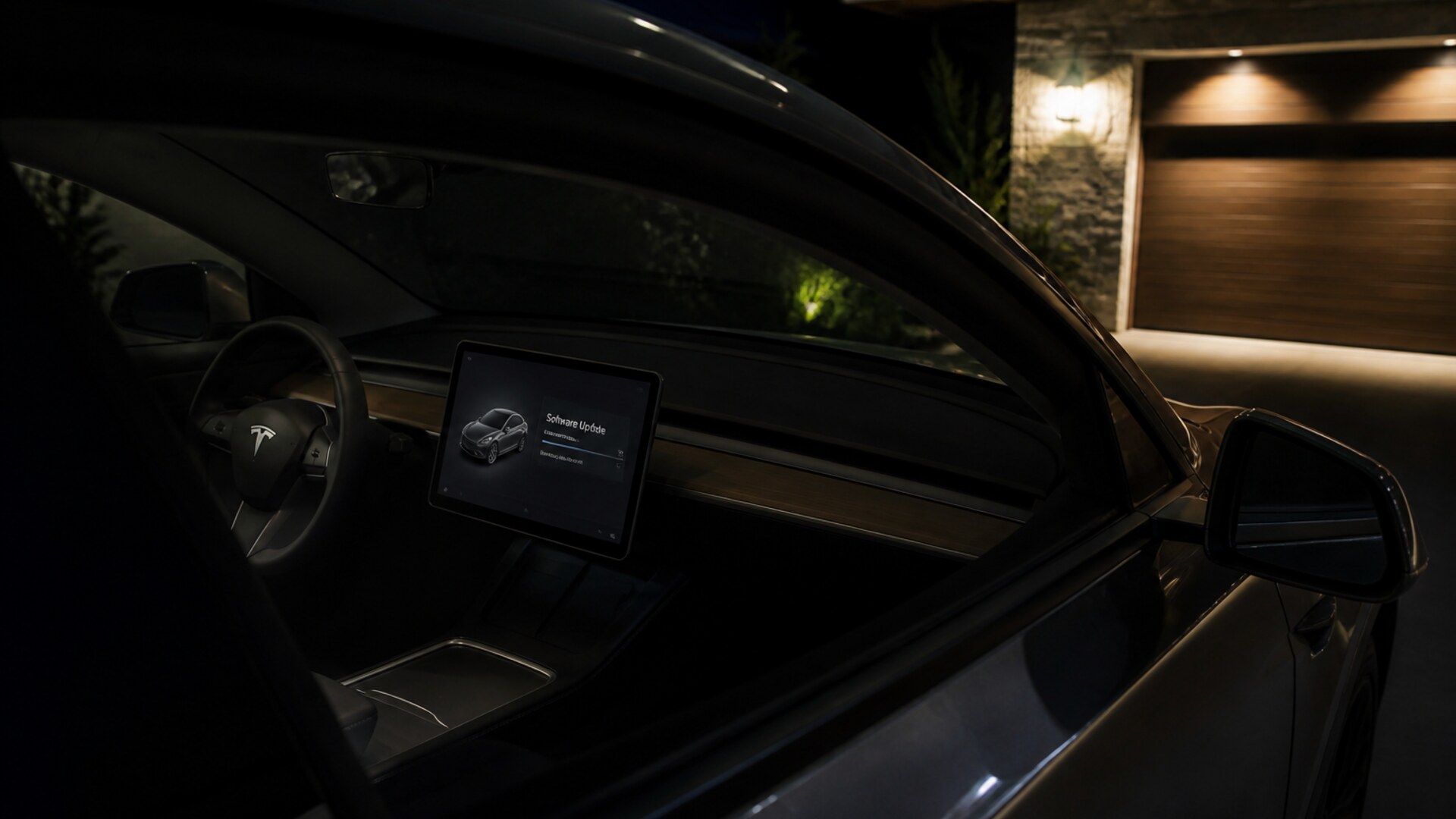
The overnight screen in a driveway is how owner software actually arrives. A Model Y on the left of the display, a blue bar, Preparing update. Tesla has not published a public v15 date for those cars. There is none on the record. What Tesla has said, twice, is that early v15 is already running on the robotaxi fleet.
The first time was not Fremont. It was the second-quarter earnings call on 22 July. Elluswamy told investors the currently operating robotaxi fleet was already running early versions of the v15 software. For v15, he said, Tesla had planned roughly seven major improvement tracks, all in parallel. The early builds on robotaxi had about 40 percent of those tracks merged. The Globe and Mail’s transcript and Roic AI’s transcript carry the same lines. That is the same 40 percent, and the same seven, that Tesla walked JPMorgan through a few weeks later. The August note added the size of the jump: Tesla called it a step-change on the order of v13 to v14. The July call had already named the test bed.
Austin is that test bed. Tesla launched robotaxi there in June 2025 on Model Y. The service is mapped. It is not the open country. In June 2026 Tesla’s Robotaxi account posted that unsupervised robotaxi now covered the entire Austin metro. Electrek filed that expansion the same day and noted the fleet serving it was still small. Tesla’s Q2 materials put unsupervised robotaxi in seven metropolitan areas. Not a Tesla App’s call summary named Miami, Orlando, and Tampa as commercial unsupervised launches in the quarter, with Austin’s geofence expanded, and the San Francisco Bay Area still running with a safety driver under California’s TCP permit. The Verge, later in August, reported unsupervised Model Y rides in Austin, Dallas, and Houston as well. A handful of U.S. metros. Still Model Y. That is the unsupervised product. It is not the owner car on a Tuesday.
Tesla also told JPMorgan it is intentionally holding back on adding more Model Y units to the robotaxi fleet, confident it can scale Cybercab in the near term. Electrek, TeslaMagz, and Not a Tesla App all carried that line. That is a fleet decision, not a v15 ship date. The cars already in Austin are the ones running the early build. Tesla is using them as the test, not as a mass conversion program. The 40 percent figure is a fleet figure. It is not a download percentage for customer cars.
Supervised Full Self-Driving remains the owner product. Unsupervised robotaxi remains a limited, mapped service in a handful of U.S. metros, still on Model Y. If v15 reaches the AI4 cars Tesla already built, the news is the version number and the computer that can run it. Tesla has not said when that download happens. It has said, to a bank at Fremont in August, that the computer is enough, that about 40 percent of the new work is already in Austin, and that early feedback is encouraging. Those are manufacturer sentences. They stay manufacturer sentences.
The Fremont visit is the when. AI4 is the named computer. v15 is the named build. Seven core technologies. Forty percent. A step-change Tesla sized against v13 to v14. Not a customer OTA on a random Tuesday. A factory walk, a bank note, and a fleet in Austin already running part of the next thing.
The paper
Comments
No notes on this story yet.
Sign in to comment