
Bit Reactor put Star Wars Zero Company on PlayStation 5, Xbox Series X|S, and PC on 27 August 2026. Electronic Arts published. Respawn Entertainment collaborated. Lucasfilm Games is on the licence line. The genre is single-player turn-based tactics. You play Hawks, a former Republic officer, leading Zero Company: professionals for hire, hired into the twilight of the Clone Wars. The official announce trailer sits on the Star Wars YouTube channel as Ggo6OKeKNAY. This is a review of the table that shipped last Thursday.
WCCFTech filed its review the same day, 27 August, on PC, copy from the publisher. Chris Wray’s piece is one of the public records for how the table actually behaves: cover, three action points, The Den between missions, injuries, and the rest.
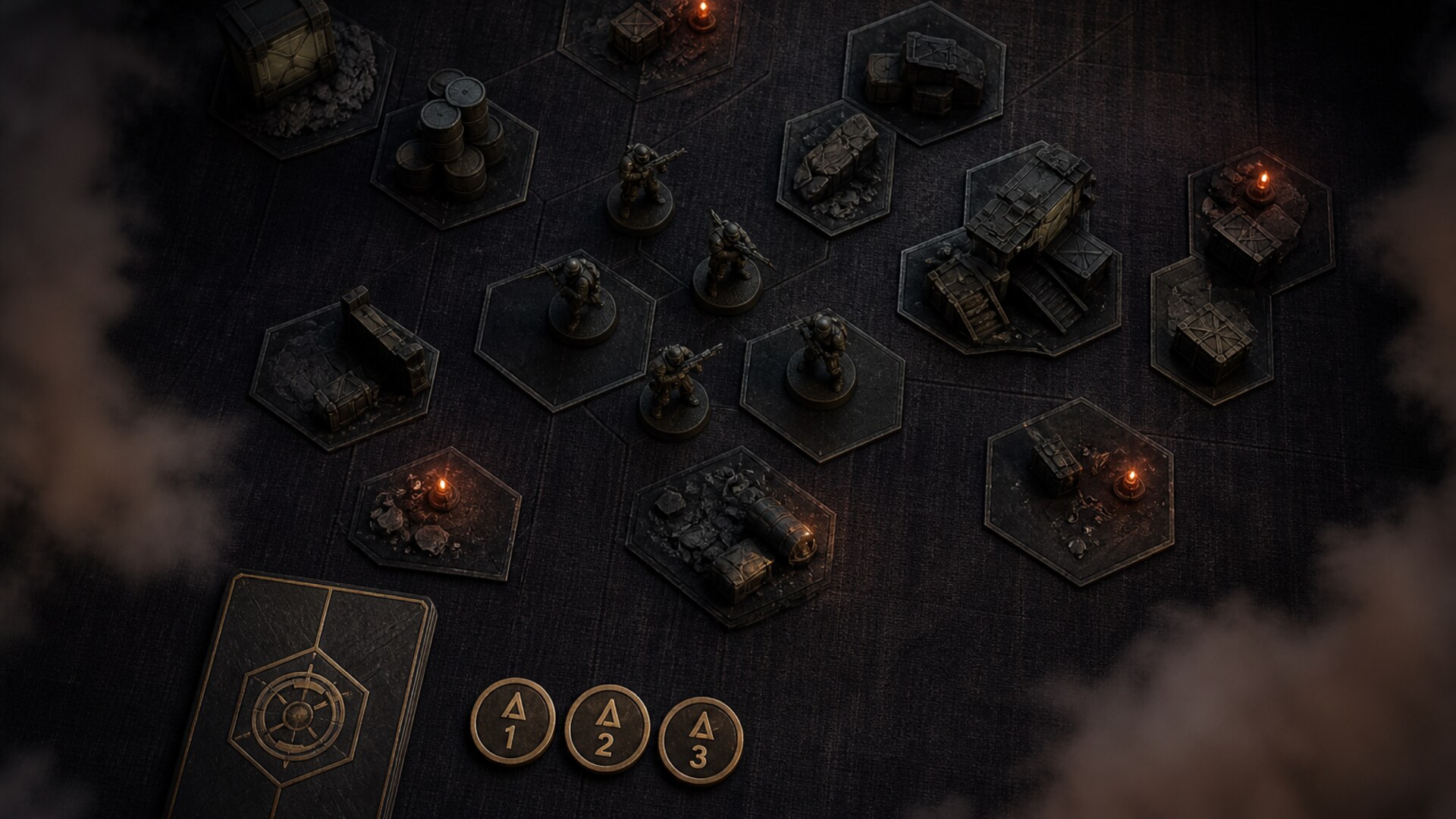
The fight is a board. Fog of war is off. You can see the enemy from the start of an engagement, which moves the skill out of scouting and into line of sight, cover, and the order you spend your three action points. Movement can eat all three if you run far. A shot, a utility item, a grenade, an ability: each prints its AP cost. Some skills gift a point back. Some recover AP if they kill. Advantage points, which are not AP, build during the fight and pay for specials and ultimates. Overwatch is here, and it is not a souvenir. A melee shove that forces a shielded droid to move can drop the shield and let the overwatch fire into meat. Destructible cover is here. Exploding crates are here. You can be clever. You can also be greedy with a dash and watch a squadmate eat a round they should have spent behind a crate.
The Infinite Coil is the named opposition, a Separatist-aligned cult under Kundri Fathom on the EA note of 5 June 2026. WCCFTech’s 27 August filing describes the human Coil as a stack problem: kill one and a pulse of what the game treats as life-force, Resonance in other public write-ups, walks into the nearest humanoid. Enough stacks and the survivor surges — extra abilities, recovered health, a worse night. The tactic is to drop several at once, or to isolate, or to decide that a droid with mines is preferable to a droid with evasion because the campaign will let you stop only one of those upgrades. That last choice is the campaign talking. Operations and missions offer forks. You do not get both mercies. Later enemies are harder because the calendar says so and because you picked the wrong mercy three missions ago.
Hawks is customisable, including the apparent gender, combat class, voice, and look. Operators can be authored characters or ones you make. StarWars.com’s 19 April 2025 announce, from Celebration Japan, named four of the authored roster: Trick, a clone; Luco Bronc, a sharpshooter from Umbara; Cly Kullervo, a Mandalorian of Clan Verminoth; Tel, a Tognath Jedi Padawan. EA’s June note adds the species list you can build from: Devaronian, Human, Neimoidian, Ovissian, Togruta, Twi’lek, Weequay, Zabrak. Bonds are a combat statistic. Send two people on enough jobs and you unlock support abilities and cross-training that change the numbers. Call for Backup is a follow-up shot. A heavy like Kabb Uppercut can throw a droid through cover or off a ledge. Roundtable Co-Op’s 27 August PC review, playing a Steam key from EA Australia, is the public source for that melee and for the missing fog. Those verbs are from the public reviews, not from a studio quote invented here.
Between fights you are in The Den. Official copy puts the base on the Ring of Kafrene. The holotable is how you pick the next job. You recruit. You spend focus points on skills. You buy weapon mods and utility items with credits, including from a black market. Intel launches operations. Capacitors pay for certain Den upgrades. Contacts shove influence in a sector. Influence itself is a meter: text operations and some combat missions raise it, and 100 influence in a sector unlocks the three awards on that sector. A Den level caps which upgrades you are allowed to buy. Stations in the room are the other half of the campaign. WCCFTech is specific, and useful, about the limit on weapon complexity: upgrades live in The Den, and you may run at most three at once, the later slots arriving only after you have built toward them. That is a design, not a bug. A tactics game that let you stack every mod on every gun by hour four would stop being a table.
Injuries are the permadeath clock, and they are sourced. Get knocked to zero and you can be revived with an injury. Three injuries become a death. The med-bay in The Den clears injuries, on a delay measured in cycles; each mission spends a cycle, so a favourite operator can be in a bunk while you take a job with the second string. Unused people do not rot as hard as they do in some cousins of this genre. Hawks is the exception that keeps the campaign a campaign: lose Hawks and the mission restarts rather than deleting the protagonist. Permadeath is on by default. You can switch it off at the start of a run. GameRant’s guide after launch is the public note for that toggle, and for the memorial in The Den if someone does not come back. Beskar mode is the ironman name. This review will not tell you which box to tick. It will tell you the table was built with the box ticked.
The galaxy map is large on purpose. EA’s 5 June note says more than 150 planets, an ever-changing board where a choice of job can change the journey. StarWars.com named some of the dirt: Serolonis, Vandor, Mapuzo, among others. The ship is the Caisson. The pilot droid is M-3VO. Third-person walking shows up between some engagements, corridors with glowing pickups for intel and advantage. WCCFTech found those tunnels pretty and not worth the production, and found optional side jobs repetitive once you have done enough of them to feed The Den. Those are fair notes from a same-day PC review. The core stages, the ones with multiple beats and guest furniture, are the reason to sit down. The side board is how a completionist pays for a med-bay. Play the jobs that change a bond. Skip a few that only change a crate.
Money, because a review that will not print a score should still print a price. EA’s 5 June release listed Standard at $49.99 on PC and $59.99 on PlayStation 5 and Xbox Series X|S. Deluxe at $59.99 on PC and $69.99 on consoles, with extra cosmetic packs and painted weapon themes. Pre-order extras named a Crystalline Astromech set. Gordy Haab’s score shipped the same day, 27 August, on Walt Disney Records. Thursday is the street date. Three machines. One player.
What the table does well is the thing XCOM veterans already have a muscle for, restated in Clone Wars furniture without pretending the furniture is the joke. Cover is cover. A bad dash is a bad dash. A Coil human you leave standing beside a friend is a problem you caused. A Den you starve of cycles is a Den that cannot clear an injury before the next story beat. A bond you invest in is a free shot you did not have in mission one. Bit Reactor’s room, stood up in 2022, is staffed by people whose credits include XCOM, Civilization, Gears of War, and The Elder Scrolls Online; Greg Foertsch, who art-directed the modern XCOM games, is CEO and creative director here. Aaron Contreras is on the words. Vince Zampella’s Respawn invitation is the public origin story. The 27 August cart plays like a tactics game that knows what a crate is for.
Buy it if you want a Clone Wars night that is a squad on a table, with a hired captain, a Den that takes maintenance, and a cult that gets worse when you kill it sloppily. Do not buy it if you need fog of war, or if a third-person corridor between fights will sour you, or if permadeath — even with a toggle — is a deal-breaker you will resent either way. Platforms as of Thursday: PS5, Xbox Series X|S, PC. Developer: Bit Reactor. Publisher: Electronic Arts. Collaboration: Respawn Entertainment, Lucasfilm Games.
The paper
Comments
No notes on this story yet.
Sign in to comment